Audio as a hobby sits in an interesting place in the world. There are hard numbers and objective measurements made with lab equipment on one end, and on the other end you have the subjective and variable linguistic descriptions assigned to amplifiers, speakers, and even cables and wires on the other.
Sadly, I find myself in the position of having to clear up some pretty serious misconceptions for people after questions and comments to this effect have popped up on several forums, an e-mail to the shop, and a rather rude note (with very poor grammar and spelling) accusing me of “ruining the vintage sound” on a piece of gear by daring to replace faulty components with new ones.
So, to that end, a few points of clarification:
1. When your vintage amplifier was new, it used new parts.
That’s right. Your vintage amplifier used to be a shiny, new amplifier using the best materials and engineering techniques the factory could muster. For most amplifiers made in the 1970s, there’s not a huge difference in the quality and operation of components then and now. Capacitors are a bit smaller now, and generally are built to tighter tolerances with some different materials, but their fundamental principle of operation remains the same. It’s true that some exotic parts could have a noticeable performance impact, but these aren’t common and are hard to buy by mistake.
Stick with decent quality components from a reputable brand, like CDE, ELNA, Nichicon, Panasonic, Sprague or Vishay and you’ll get parts that are significantly similar to whatever the manufacturer picked out when your gear was new.
2. The sound signature of your amp depends more on the circuit design than the passive component choices.
That’s right: passive components don’t really change that much, if anything. The layout of the components on the circuit board, the choice of circuit topologies used to fulfill the various functions and needs, the design of the power supply and the enclosure, and the cable routing inside the housing are the biggest contributors to an amplifier’s unique sound signature.
The brand of capacitors you used (assuming you’re using good-quality parts) has almost no impact on the sound whatsoever.
Active devices can cause a bigger change in sound than passives. The selection of active devices – the specific transistor used and it’s group/rank if acceptable can make a difference in the sound, which is why it’s important to replace active components with replacements as similar as possible to the originals. In general, though, even substituting transistors won’t significantly change the sound of an amplifier unless you’ve replaced a whole lot of them, or they were somewhere very sensitive in the circuit. Since the vast majority of repairs require no transistor replacements whatsoever, this tends not to be a real problem.
3. If your gear really has a “vintage sound” to it, you’re most likely hearing the amp’s problems and not the amp as its designers intended.
Pre- and Non-Hifi gear aside, if your amp or other stereo component hasn’t been serviced in a long time and has a specifically colored sound signature that you’re calling “vintage sound”, you’re hearing problems in the circuit. Leaky and failing caps throw off response curves, cut bass response, rob the amplifier of stable power, can throw off bias introducing distortion, and generally make a mess of things.
Amplifiers in the heyday of stereo, just as today, were designed to deliver accurate and lifelike reproduction of recorded audio, and the manufacturers generally tried for as flat a frequency response and as low of a distortion figure as possible given their engineering constraints and target market/price.
In Conclusion
If you like your music to be clouded in unpredictable ways by failing components in an out-of-adjustment amplifier, by all means, don’t replace old parts, or replace them only with NOS parts. You’ll have an amplifier that’s constantly in and out of the shop until one day it finally dies a final death at the hands of faulty parts destroying something unobtainable.
Alternatively, do you want to listen to your vintage gear sounding as it’s manufacturer intended it to sound when it was new? Do you want to listen to your music the way it was recorded and the way the band and the recording engineer wanted it to be heard? Do you want to use an amp that’s safe and reliable to operate? If you answered yes to any of these questions, then professional service with quality replacement parts is the answer.
What do you think?



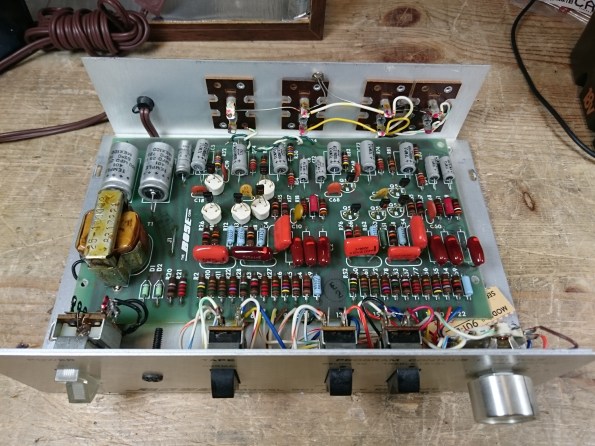
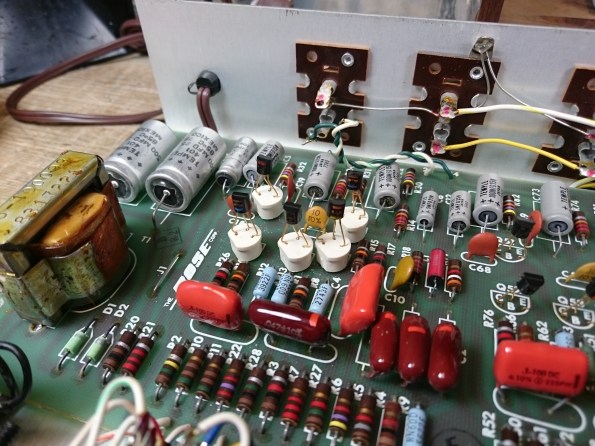 Unfortunately, there’s no strict “before” measurement since the vintage caps are dead and this unit isn’t producing any output right now (the overwhelming case on Series I equalizers), but I’ll take some good measurements with the bare minimum components needed to do a successful test as the baseline and see where it goes from there.
Should be interesting!
Unfortunately, there’s no strict “before” measurement since the vintage caps are dead and this unit isn’t producing any output right now (the overwhelming case on Series I equalizers), but I’ll take some good measurements with the bare minimum components needed to do a successful test as the baseline and see where it goes from there.
Should be interesting!

![00D0D_aF7G9mNX4Dq_600x450[1]](https://retrovoltage.com/wp-content/uploads/2016/03/00d0d_af7g9mnx4dq_600x4501.jpg?w=595)
![00k0k_62RV564SIyc_600x450[1]](https://retrovoltage.com/wp-content/uploads/2016/03/00k0k_62rv564siyc_600x4501.jpg?w=595)
![00a0a_d3M6mJRK5KG_600x450[1]](https://retrovoltage.com/wp-content/uploads/2016/03/00a0a_d3m6mjrk5kg_600x4501.jpg?w=595)
![00V0V_kXa7ib2huvo_600x450[1]](https://retrovoltage.com/wp-content/uploads/2016/03/00v0v_kxa7ib2huvo_600x4501.jpg)
![00505_boKYhZNzNg_600x450[1]](https://retrovoltage.com/wp-content/uploads/2016/03/00505_bokyhznzng_600x4501.jpg)
![00707_hoStwUxwqpy_600x450[1]](https://retrovoltage.com/wp-content/uploads/2016/03/00707_hostwuxwqpy_600x4501.jpg)
![00m0m_ahZCMT8oake_600x450[1]](http://images.craigslist.org/00m0m_ahZCMT8oake_600x450.jpg)
![00I0I_7cXSV6pSLaJ_600x450[1]](https://retrovoltage.com/wp-content/uploads/2016/03/00i0i_7cxsv6pslaj_600x4501.jpg)
![00a0a_jDYzu7v3I8F_600x450[1]](https://retrovoltage.com/wp-content/uploads/2016/03/00a0a_jdyzu7v3i8f_600x4501.jpg?w=595)
![bench[1]](https://retrovoltage.com/wp-content/uploads/2016/02/bench1.jpg?w=595)
![penny[1]](https://retrovoltage.com/wp-content/uploads/2016/02/penny1.jpg?w=300)
![DSC_0539[1]](https://retrovoltage.com/wp-content/uploads/2016/02/dsc_05391.jpg)
![DSC_0544[1]](https://retrovoltage.com/wp-content/uploads/2016/02/dsc_05441.jpg)
![FTPE3T8HJAHF15D.LARGE[1]](https://retrovoltage.com/wp-content/uploads/2016/02/ftpe3t8hjahf15d-large1.jpg)


“Won’t that ruin the vintage sound?”
Audio as a hobby sits in an interesting place in the world. There are hard numbers and objective measurements made with lab equipment on one end, and on the other end you have the subjective and variable linguistic descriptions assigned to amplifiers, speakers, and even cables and wires on the other.
Sadly, I find myself in the position of having to clear up some pretty serious misconceptions for people after questions and comments to this effect have popped up on several forums, an e-mail to the shop, and a rather rude note (with very poor grammar and spelling) accusing me of “ruining the vintage sound” on a piece of gear by daring to replace faulty components with new ones.
So, to that end, a few points of clarification:
1. When your vintage amplifier was new, it used new parts.
That’s right. Your vintage amplifier used to be a shiny, new amplifier using the best materials and engineering techniques the factory could muster. For most amplifiers made in the 1970s, there’s not a huge difference in the quality and operation of components then and now. Capacitors are a bit smaller now, and generally are built to tighter tolerances with some different materials, but their fundamental principle of operation remains the same. It’s true that some exotic parts could have a noticeable performance impact, but these aren’t common and are hard to buy by mistake.
Stick with decent quality components from a reputable brand, like CDE, ELNA, Nichicon, Panasonic, Sprague or Vishay and you’ll get parts that are significantly similar to whatever the manufacturer picked out when your gear was new.
2. The sound signature of your amp depends more on the circuit design than the passive component choices.
That’s right: passive components don’t really change that much, if anything. The layout of the components on the circuit board, the choice of circuit topologies used to fulfill the various functions and needs, the design of the power supply and the enclosure, and the cable routing inside the housing are the biggest contributors to an amplifier’s unique sound signature.
The brand of capacitors you used (assuming you’re using good-quality parts) has almost no impact on the sound whatsoever.
Active devices can cause a bigger change in sound than passives. The selection of active devices – the specific transistor used and it’s group/rank if acceptable can make a difference in the sound, which is why it’s important to replace active components with replacements as similar as possible to the originals. In general, though, even substituting transistors won’t significantly change the sound of an amplifier unless you’ve replaced a whole lot of them, or they were somewhere very sensitive in the circuit. Since the vast majority of repairs require no transistor replacements whatsoever, this tends not to be a real problem.
3. If your gear really has a “vintage sound” to it, you’re most likely hearing the amp’s problems and not the amp as its designers intended.
Pre- and Non-Hifi gear aside, if your amp or other stereo component hasn’t been serviced in a long time and has a specifically colored sound signature that you’re calling “vintage sound”, you’re hearing problems in the circuit. Leaky and failing caps throw off response curves, cut bass response, rob the amplifier of stable power, can throw off bias introducing distortion, and generally make a mess of things.
Amplifiers in the heyday of stereo, just as today, were designed to deliver accurate and lifelike reproduction of recorded audio, and the manufacturers generally tried for as flat a frequency response and as low of a distortion figure as possible given their engineering constraints and target market/price.
In Conclusion
If you like your music to be clouded in unpredictable ways by failing components in an out-of-adjustment amplifier, by all means, don’t replace old parts, or replace them only with NOS parts. You’ll have an amplifier that’s constantly in and out of the shop until one day it finally dies a final death at the hands of faulty parts destroying something unobtainable.
Alternatively, do you want to listen to your vintage gear sounding as it’s manufacturer intended it to sound when it was new? Do you want to listen to your music the way it was recorded and the way the band and the recording engineer wanted it to be heard? Do you want to use an amp that’s safe and reliable to operate? If you answered yes to any of these questions, then professional service with quality replacement parts is the answer.
What do you think?
Share this: