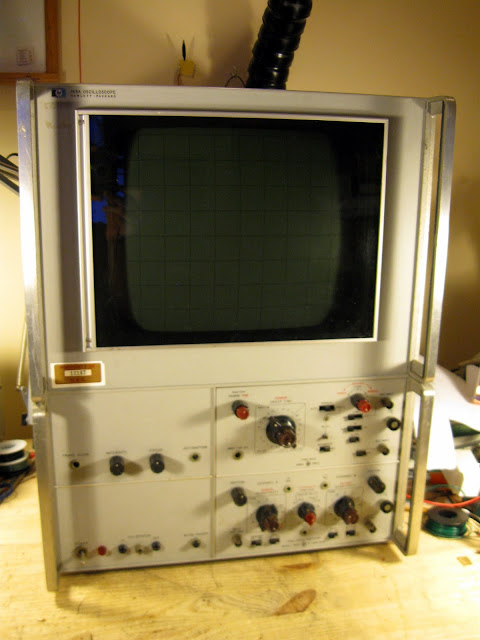
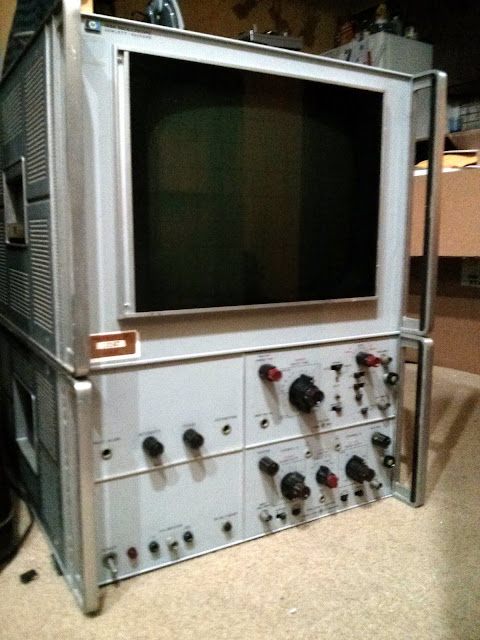
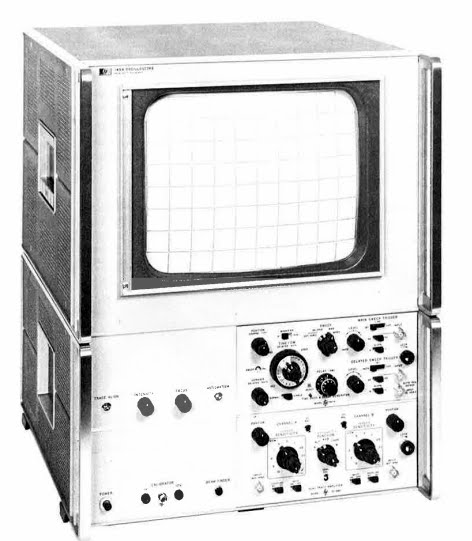
I’m fixing up an HP 143A Wide-Screen Mainframe Oscilloscope, which has a very big selection of plug-ins to provide a variety of functions. The oscilloscope has symmetrical vertical and horizontal circuits, so it can be used as an X-Y amplifier if suitable vertical amplifier plug-ins are installed in each bay. I’m looking to buy 1400-series vertical amplifier plugins like the 1402A, 1404A and 1405A and came across an interesting bit of a mystery while doing research.
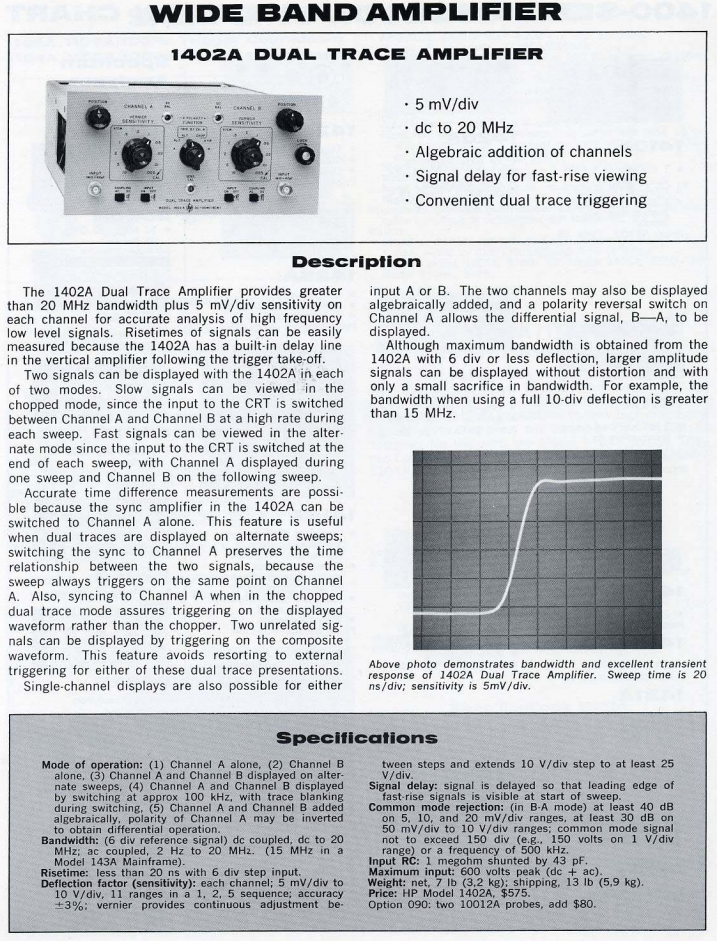
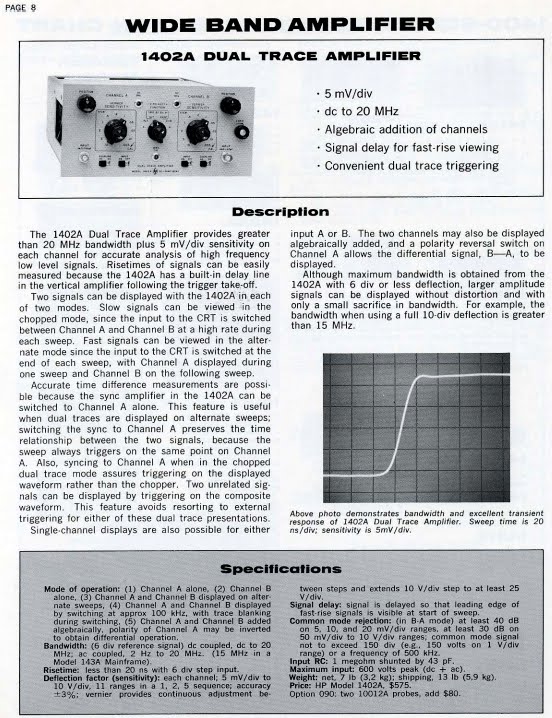
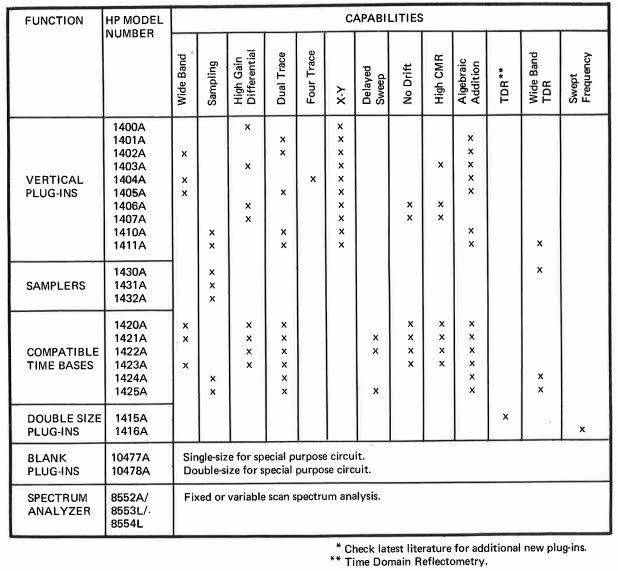
HP’s General Purpose Plug-in Oscilloscopes catalog for the 140 system, dated March 15th 1971, lists the 1405A dual trace amplifier plug-in as a DC-5MHz plugin with 5 mV/div sensitivity, more or less a down-rated version of the 1402A plug-in.
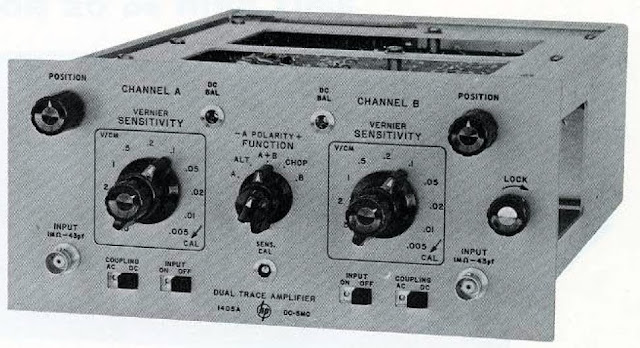
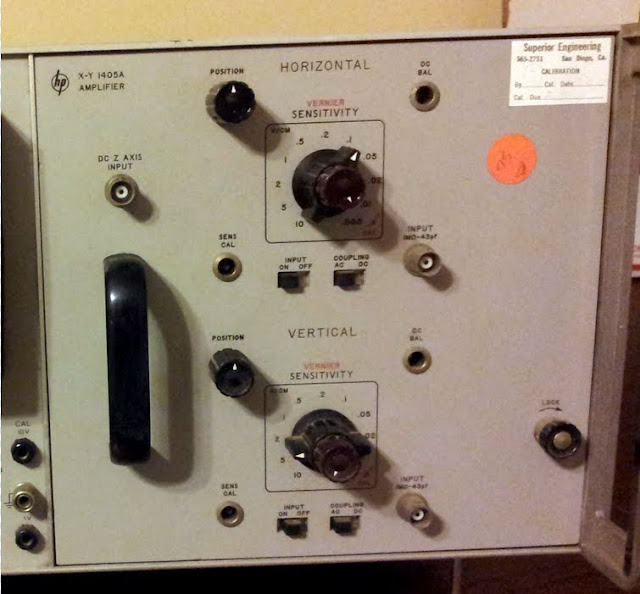
In my research I did find a photo of an HP 140B oscilloscope mainframe loaded with an HP 1405A amplifier plug-in…but in this photo, it’s a double height dedicated X-Y amplifier.
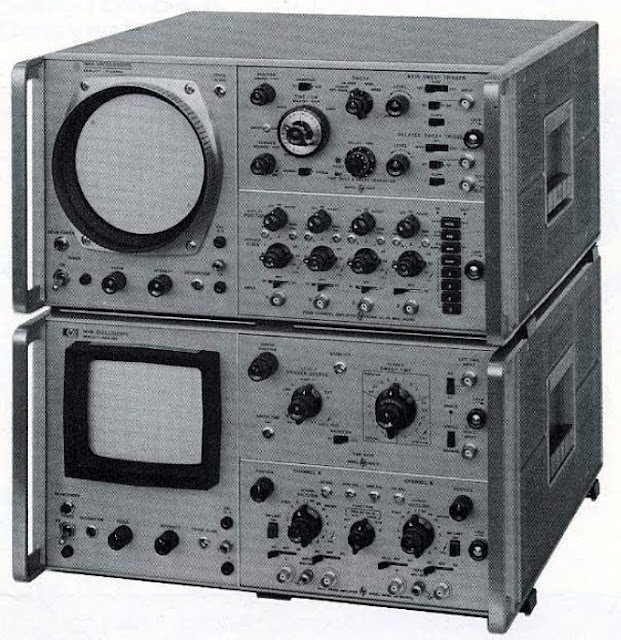
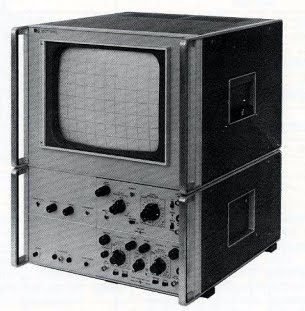
That’s definitely a compatible mainframe, shown right in the plug-in guide on the bottom (with the 140A on top, the only difference being a circular vs. square display area.)
This panel clearly fits in the double height 140-system plugin opening, and has the same style of knobs and controls so there’s no question it’s period correct. I’ve been unable to find any mentions of it on the web or at the HP Memory Project.
Personally, I’d rather have a matched pair of 1402A or 1404A vertical amplifiers, which would give me dual- or quad-trace X-Y capabilities instead of the single-trace X-Y with the pictured mystery amplifier, but that’s a very interesting piece of equipment.
I’m looking for plugins for my HP 143A Wide-Screen Mainframe Oscilloscope which I’m in the process of restoring. I’d love to run it as a 15″ high speed X-Y display, and to do so needs matched vertical amplifier plugins in each bay. If you have any of the following HP plug-ins from the late 1960s/early 1970s available and wouldn’t mind parting with some of them, please write and let me know!
I’m primarily interested in the 1402A dual-trace vertical amplifier, as I already have one, but will consider purchasing any of the other 1400-series amplifier and time-base plugins.
This mainframe is interesting because, with the correct set of plugins installed, it could feasibly be a dual- or even quad-trace X-Y display; most X-Y displays are limited to a single trace.
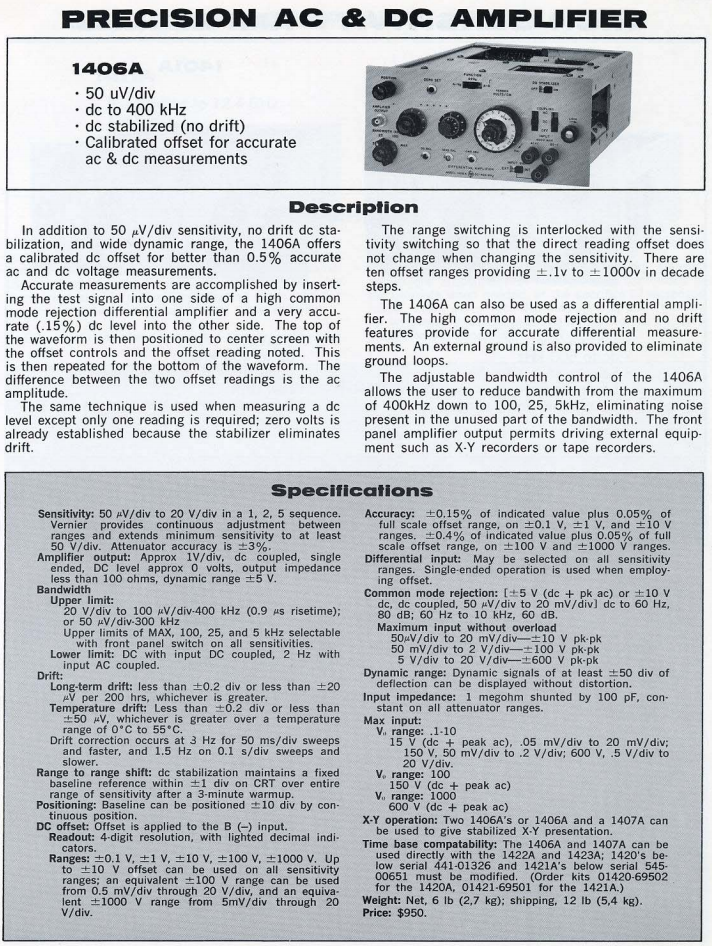
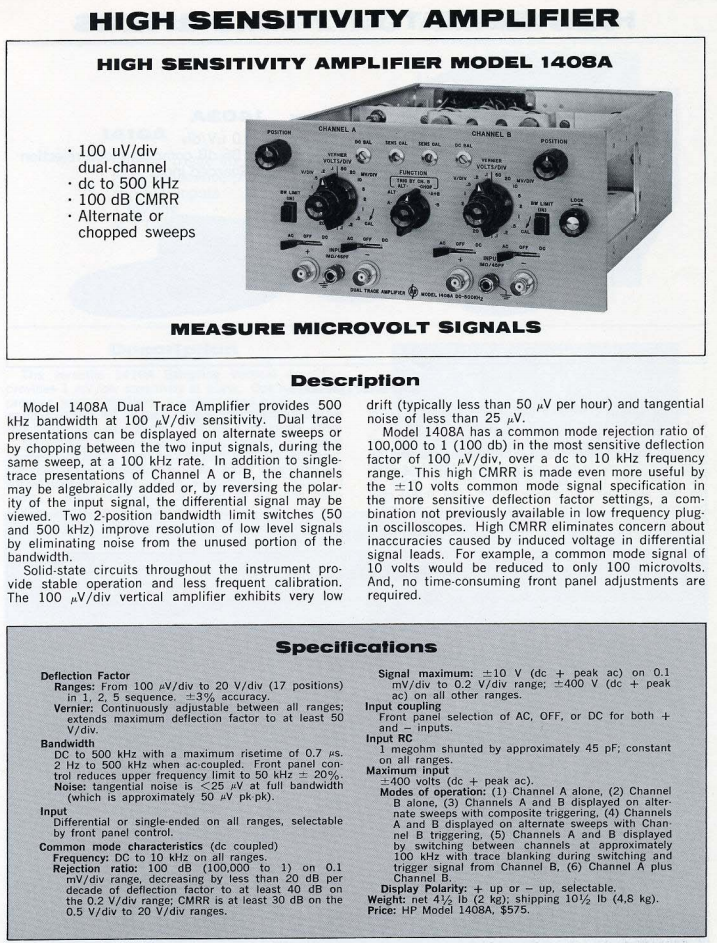
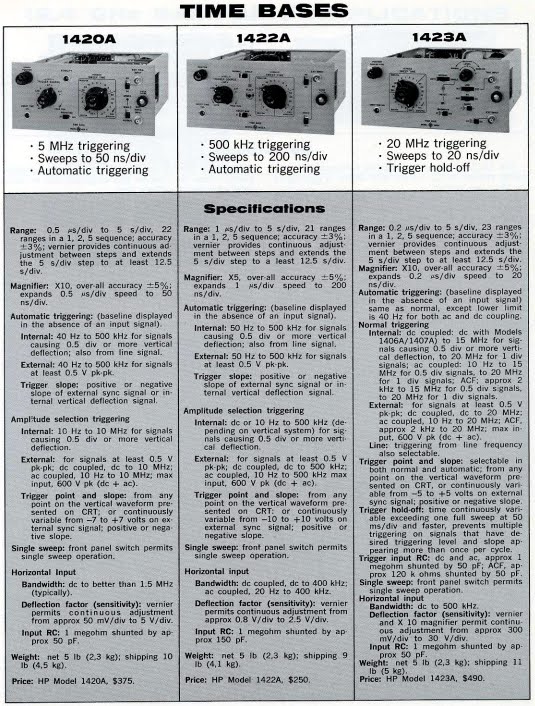
These are some of the other amplifiers and their specifications:
If you have any vintage HP 1400-series plug-ins for sale, or know where to find some, let me know!
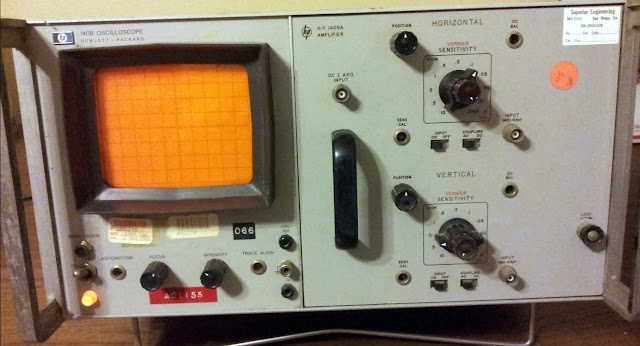
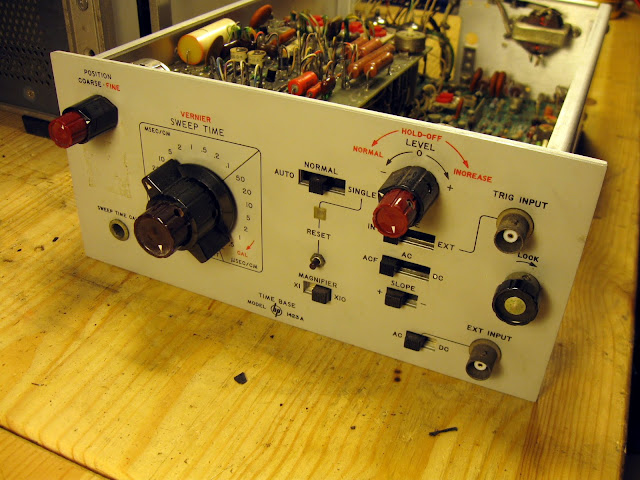
At the risk of becoming a test equipment collector, I am picking up a few pieces of vintage test equipment that need some work, but will be very useful pieces of shop gear as well as interesting pieces of history lately. I’m needing a high speed analog X-Y monitor for some more complex alignments, and this old HP 143A oscilloscope came up on the local Craigslist for only a little more than the cost of the gas to drive and pick it up.
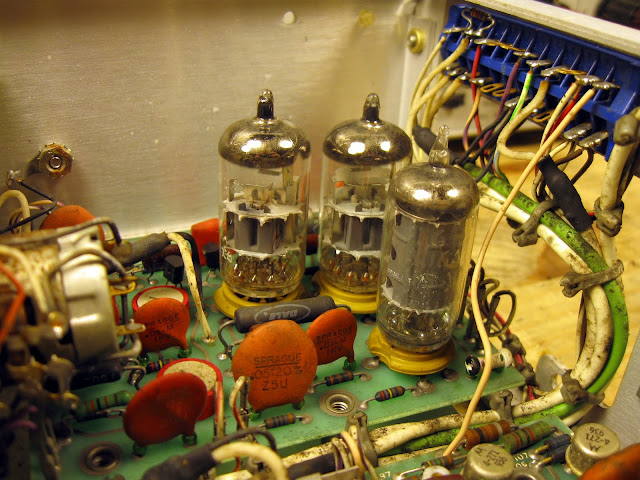
This is a really old school, transitional piece of gear. The CRT and mainframe assembly boasts all-transistor design, but the plug-in modules themselves are a mixture of tube, transitional nuvistor, transistors depending on the circuit position and the module’s capability.
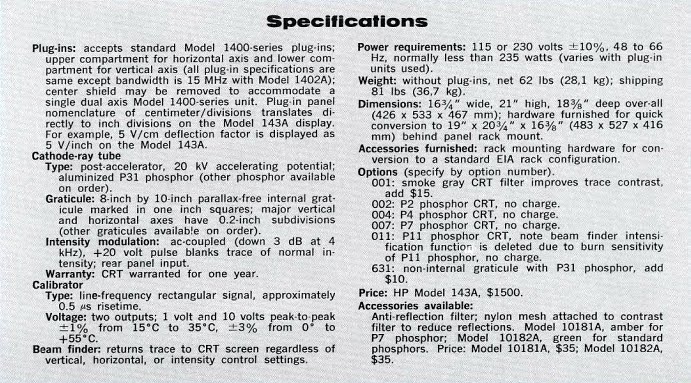
These wide-screen mainframes were a big ticket item back in the day, found in the HP scope catalog:
Adjusted for inflation, that’s very nearly a $10,000 CRT display – and don’t forget the options!
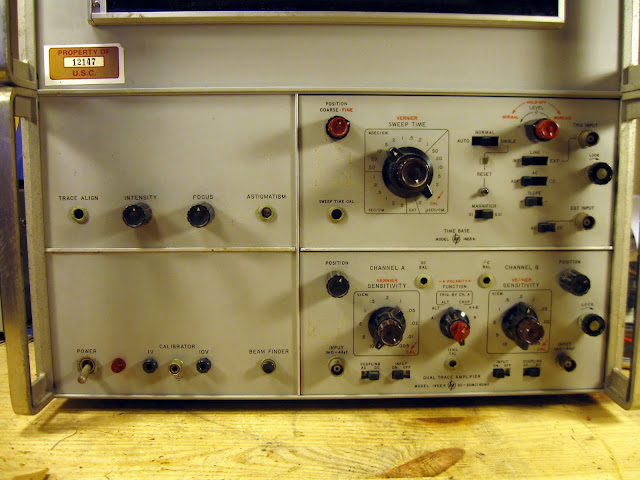
With what I’d consider the “base package”, add another $3,700 for the vertical amplifier and $3,100 for the timebase, you’re up to $17,000 for the instrument as shown below:
And the price only goes up from there! The mainframe supports some very high sensitivity (50 uV/div), differential, and high speed (GHz+) plugins – not to mention a frequency response generator, TDR, and spectrum analyzer that only go up get more expensive.
I’m lucky – all the knobs and switches are present. Those frequently get lost.
The HP Archive has good information about the scope including the operation manual and schematics. The plugins slide out easily:
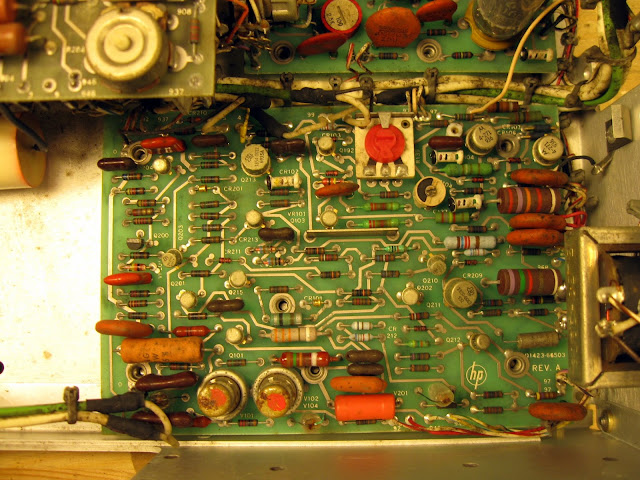
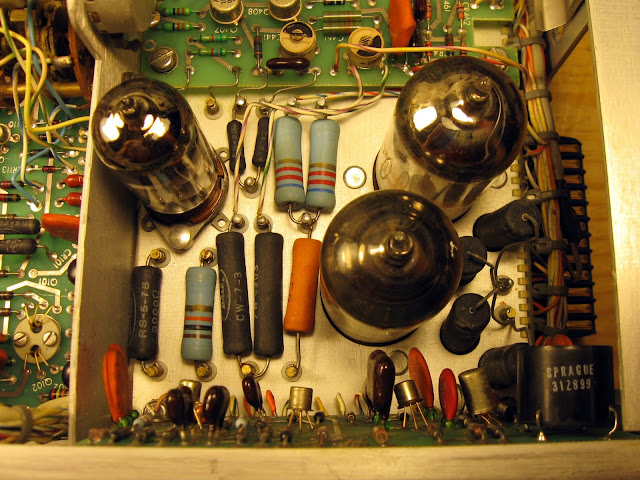
Inside the timebase plugin, lots going on. Transistors and nuvistors together on this double-sided etched and silkscreened board:
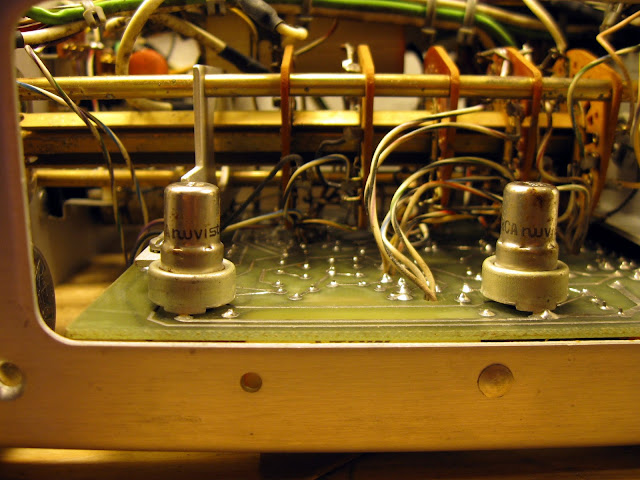
Tubes on the other side of the enclosure, right next to some TO-92 package transistors.
This mainframe powers on successfully but doesn’t show a meaningful trace; it’s got some minor damage inside but should come back together nicely.
The vertical amplifier is pretty interesting inside, too:
This one has a mix of transistors, noval miniature tubes, and compactrons.
I’m looking forward to getting this one going again, but doubt I’ll be able to work on it before the end of the year.
Because this mainframe has identical vertical and horizontal amplifiers, the way to make it into an X-Y display is to use “vertical” amplifiers in both bays. If you have an HP 1402A plug-in for sale (or really, any other 1400-series HP plug-in), I’d love to hear about it.
There’s always something interesting for sale on Craigslist, especially in Seattle. Do click the titles to see the original postings with more photos and additional information if you’re interested – otherwise, enjoy the virtual window shopping!
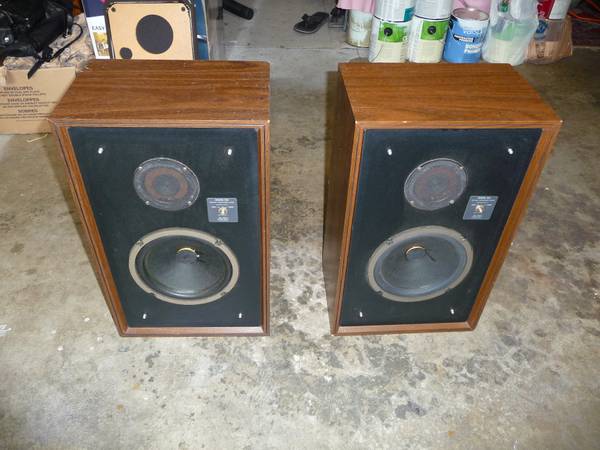
Made to compete with the Advents out in the same era, these 1974 speakers feature a 10″ woofer in an acoustic suspension cabinet and a CTS phenolic ring tweeter for the high-end. That’s a pretty common driver configuration on early/mid ’70s high-end speakers. The woofers on these feature a butyl rubber surround, rather than foam, so it will never rot. They’re likely due for a crossover refresh after 40 years, though.
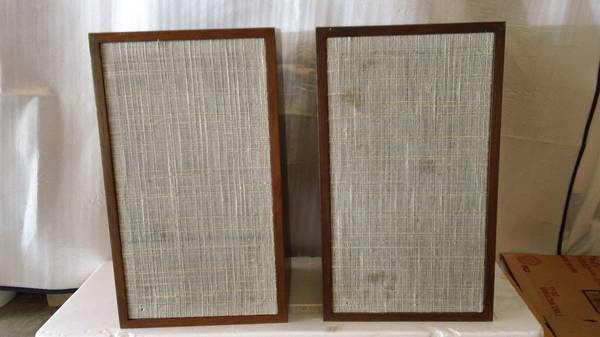
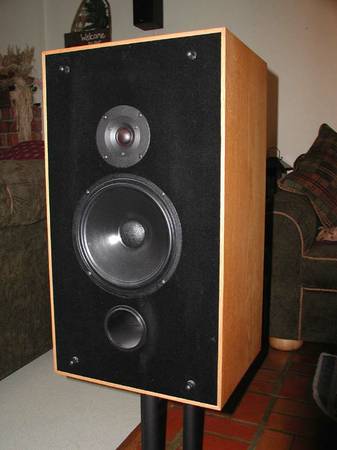
These Dynaco speakers are from the very early ’70s and have a very understated styling. They feature a 10″ woofer and 1.5″ tweeter in an aperiodic enclosure. These are towards the entry level of Dynaco’s model line, but are very well regarded. Here’s a great page with some information about that speaker family.
I have a set of Bose 601 Series I speakers, and the design is virtually unchanged between the Series I and the Series III. The port is moved and the cabinet styling is slightly different with the sloped top, but the basic configuration is identical – two 8″ woofers and four 2″ tweeters in a direct/reflecting array mounted on top. These speakers are sensitive to room position, but are very life-like and musical – almost as good as the 901s.
I can’t find much info about these on the Internet. They’re 4 Ohm speakers that will accept up to 20W of input power, and looks like there might be a 6″ or 8″ round driver and a 6×9″ driver under there. Telefunken equipment is interesting and fairly well regarded; these 1967 Telefunken speakers might be worth something. It wouldn’t surprise me if there’s only a few pairs of these around this country.
The Fisher name had a good pedigree at the beginning of the hi-fi era but were trending downwards by the ’80s. These were a high end model, though, with 15″ cloth/rubber woofers for good bass response. The pricing is realistic and they can get pretty loud – great garage or man-cave speakers. I do like the styling of the high-end pedastal cabinet Fishers like these.
These bookshelf/satellite Dahlquists are a bit smaller than the massive DQ-10s but can deliver great sound nonetheless, and these come with their original packaging and a set of 16″ speaker stands to sweeten the deal. These would make a good desktop speaker system, or compliment your home theater.
From the late ’60s or early ’70s, these speakers were produced by Heathkit for the hi-fi enthusiast who also enjoyed DIY projects. Visually, they look similar to most other early ’70s speakers – but this model is special as the drivers are all Electro-Voice drivers. These are occasionally compared with the EV-7 speakers. Definitely unusual, and they probably sound great, especially when paired with a tube anp!
Another speaker from the mod ’70s, back when Radio Shack/Realistic did make good hi-fi products, these Nova-6 lattice grill speakers take up to 45W. They’d go great with a period amp like a Harman/Kardon 430 and would make a killer vintage system.
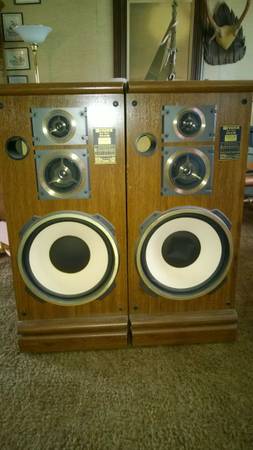
Technics is usually made a lot of low-end gear – but they produced some very interesting and innovative top-of-the-line models like these 7000A speakers. They’re a 3-way design with a 14″ woofer and time-aligned mid-range and tweeters and level controls on the top end. They look pretty impressive, too. I’m not impressed with their frequency response curve, but I’m very curious what these sound like.
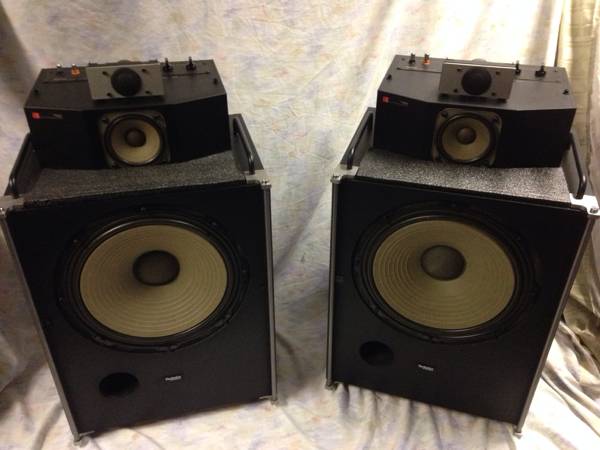
From the late ’60s, these Seeburg speakers – from the company more well-known for jukeboxes – were used in live sound environments. They’re basically Altec Lansing VOTTs in a different cabinet, with two 15″ Altec woofers and the exponential multi-cell horn and driver. Extremely accurate and efficient, I bet these sound absolutely fantastic – and that’s a killer price. I’d buy them if I didn’t already have enough speakers!
If you’re in the market for some new speakers, please click through to the sale ads and contact the sellers! Good luck!
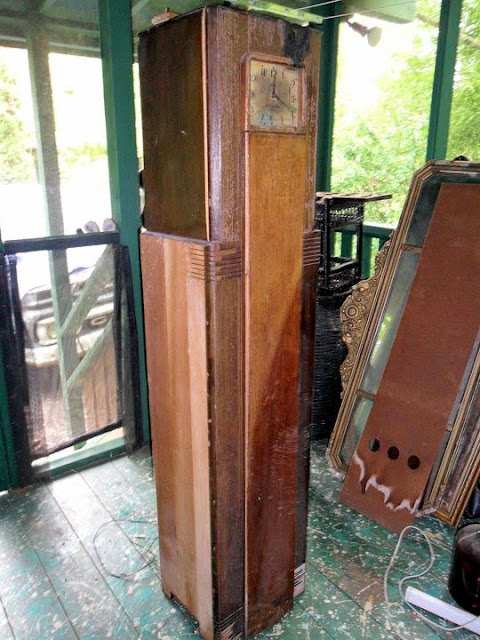
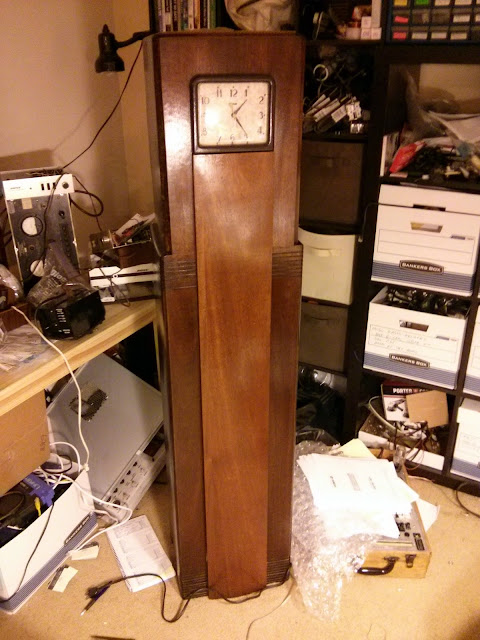
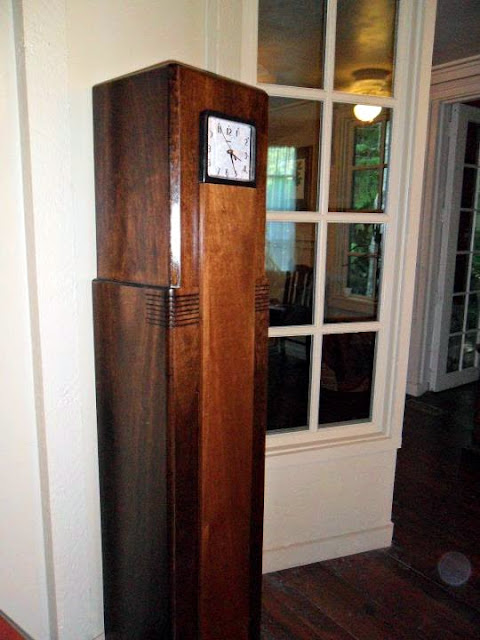
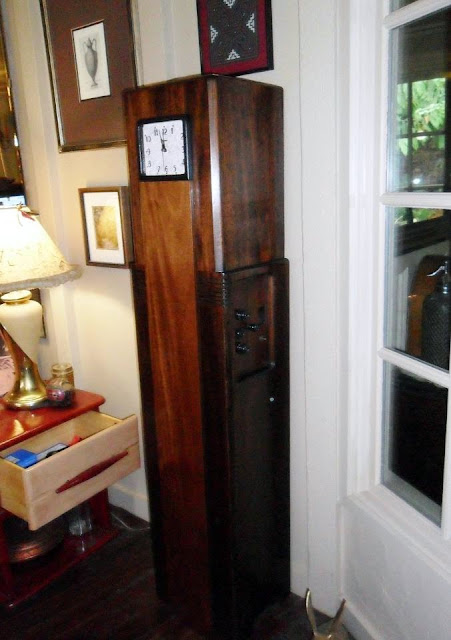
I recently got to work on another beautifully reconditioned Westinghouse WR-8 Columaire radio all the way from Bellingham. It was originally in for service with the SPARK Museum, but the repair technician reportedly suffered some health complications and was unable to complete the job so it came down to Seattle for me to finish. I’d previously worked on one of these back in 2013, but this one was in a bit better shape – although it took a long road to get there!
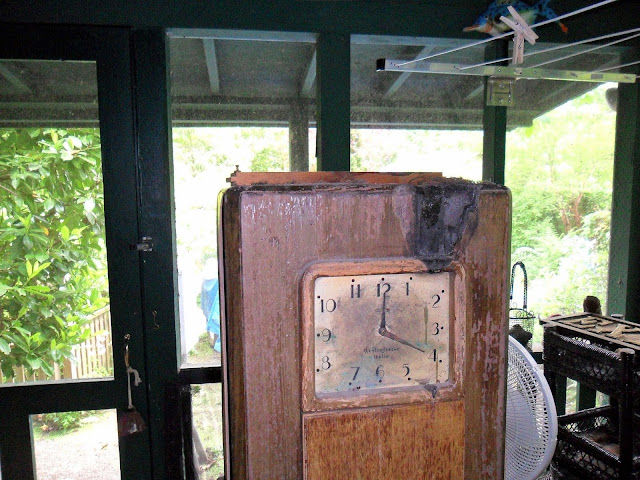
At some point in the past, the radio was badly damaged by an errant candle placed on top which must have fallen over and badly burned the top half of the radio. Afterwards, it was placed in a basement for many years and forgotten about, collecting moisture damage and dust along the way until being brought back out.
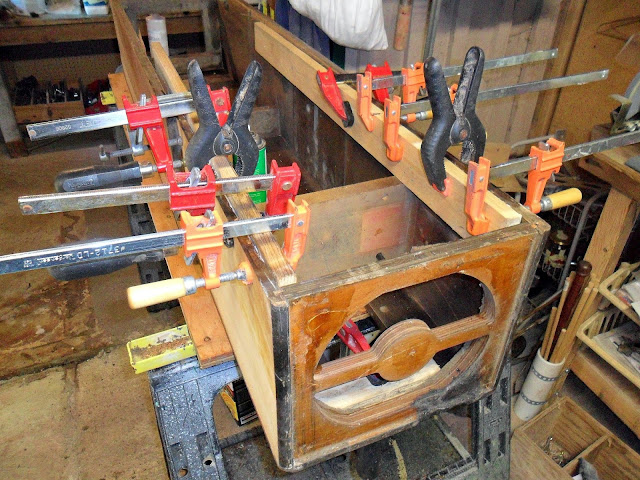
The owners spent a lot of time on the cabinet:
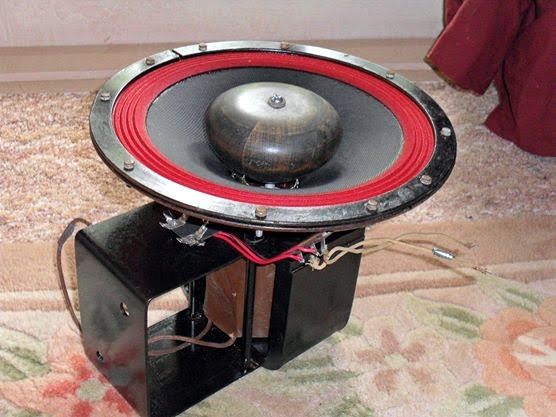
and reconing the speaker:
Then it was into the shop for the detailed electrical repairs!
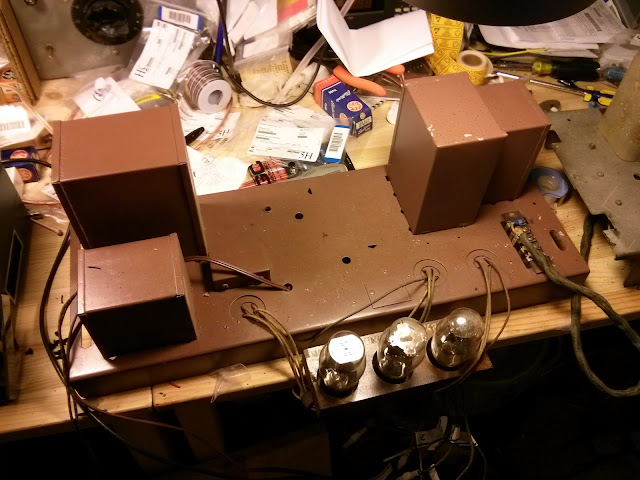
All of the tubes in this radio tested brand new, and all the transformers and coils checked out, so it should be a pretty straightforward repair. Overwhelmingly, the resistors tested in spec also, only a few were slated for replacement. It’s been worked on before at one point, too:
An interstage transformer, normally potted in a top can, was replaced with an open-frame transformer from the late ’30s or ’40s, mounted under the chassis.
This model could be used with a phonograph or a remote control, although neither option was fitted on this model.
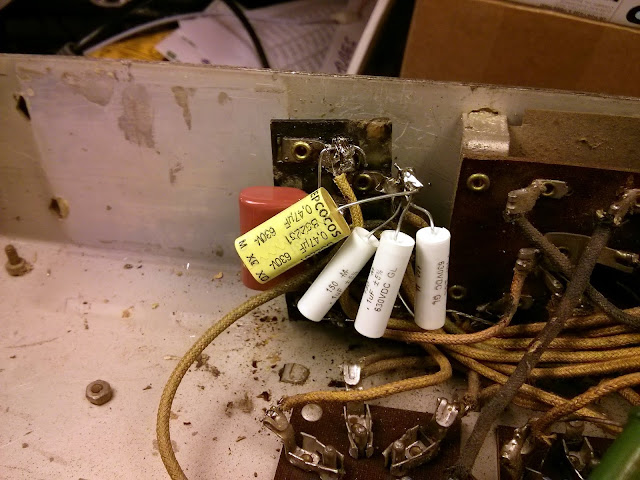
I began by mounting new terminal strips under the chassis, soldering them to the lugs on the old capacitor pack.
I took a slightly different approach for the other capacitor pack, using the existing phenolic board as the terminal strip after cutting off the pack capacitor.
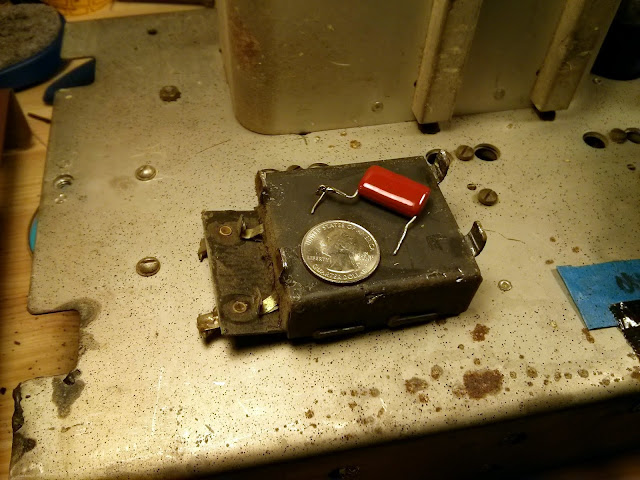
For a size comparison, here’s a third capacitor pack containing only a single capacitor – and on top, its replacement, and a quarter for scale.
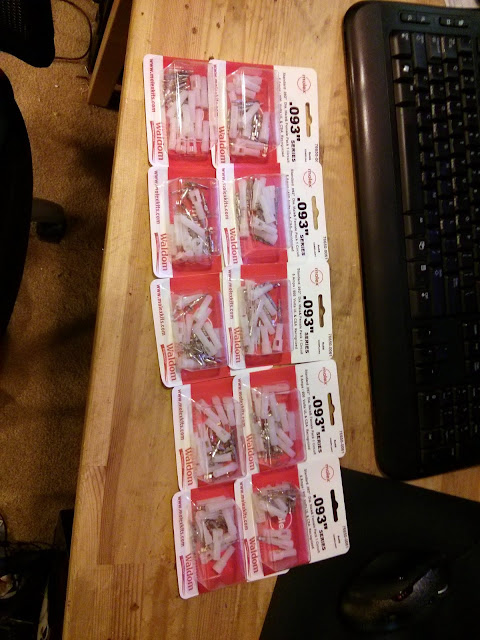
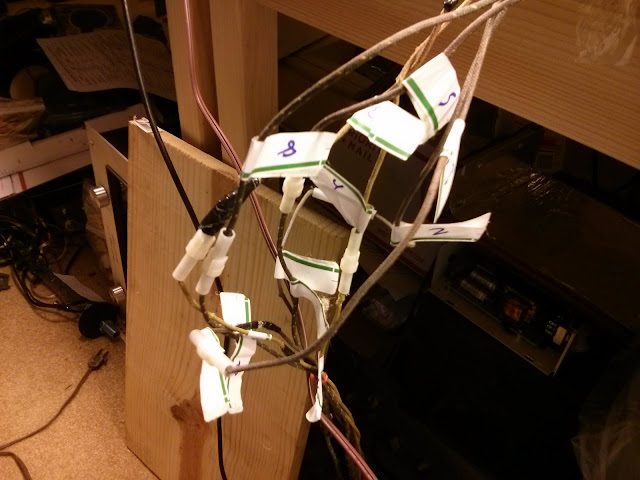
The owner requested something to make it easier to reset the clock when the time came: Molex connectors! I use 600V connectors with individual connections.
Not the prettiest, but it’ll work. The wire insulation was nicked in a few places, so I reinforced those areas with electrical tape.
Time to fire it up and test—loud and clear! I peaked up the alignment carefully and let it burn in for a while. The lead routing ultimately needed to be tweaked a little bit as there was some interference, but it was easily corrected.
After refitting both chassis and the speaker back into the cabinet, this Westinghouse was ready to go home and make warm, rich, beautiful music for many years to come.
What a beautiful piece! You’d never know how far it had to come to get to this shape. Bringing it back to life so nicely was a joint effort – without the owner’s dedication to the cosmetics of the cabinet, it would never have made it to the electrical stage.
There’s always something interesting for sale on Craigslist, especially in Seattle. Do click the titles to see the original postings with more photos and additional information if you’re interested – otherwise, enjoy the virtual window shopping!
Today’s selection has several interesting Infinity speakers, Speakerlab 7s, and several others worth checking out!
These look like they’re in pretty good shape for their age. Basically half of a Bose 601 speaker, these have a front-firing woofer and pair of angled rear-firing tweeters to produce that wide, direct/reflecting sound vintage Bose systems were known for. They’re known to be sensitive to room placement, but when set up properly are a great small floor speaker system.
Wide and hefty, these vintage Dahlquist speakers have a very interesting time aligned driver array and crossover network designed to maximize sonic accuracy. They’re nearly 4″ wide and weigh 62 lbs. each, delivering a flat frequency respnose 37 Hz – 27 KHz. Freshly re-foamed, too, so they should be good for a while!
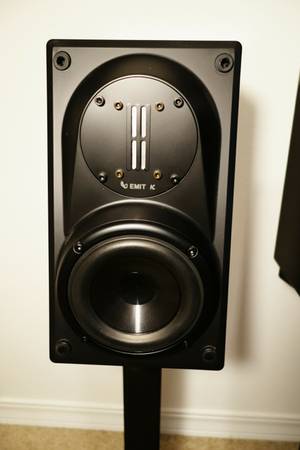
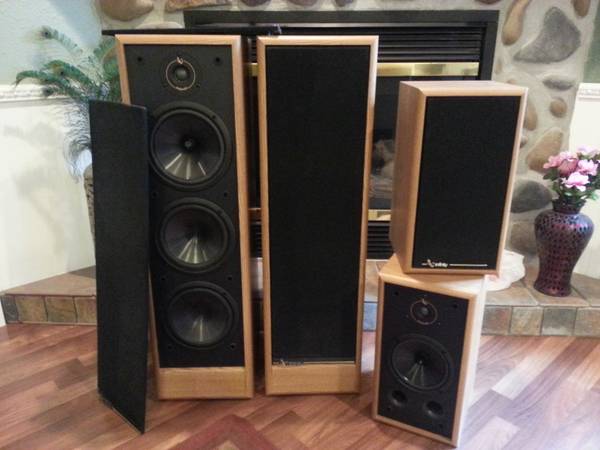
These Infinity speakers are in a beautiful piano black finish and feature a 5.5″ woofer and EMIT-K tweeter in a non-resonant cabinet. The EMIT-K goes all the way to 45 khz, almost double the range of human hearing, so if your favorite music benefits from the presence of ultrasonic harmonics, these might be the speakers to get. They’d likely work well as near-field monitors, too, with the fantastically accurate planar tweeter.
These feature Polycell dome tweeters instead of EMIT planar tweeters, but would still make a fantastic surround sound system for your home theater. Quintessential 90’s look to them would match many decors, too – and a decent price!
From the late ’80s, these Infinity RS 5000 speakers feature a 10″ woofer and 2.5″ mi-range, both made of semi-transparent polypropylene for exceptional cone stiffness, and an EMIT-K tweeter up top. With response from 42 Hz – 45 KHz, I’d love to have a pair of these as bookshelf speakers in my office.
Legacy Audio Signature III Speakers – $1800 in Bothell
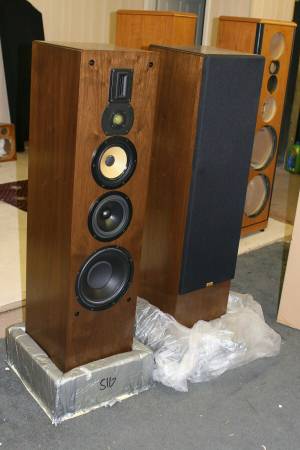
Fantastically high-end audiophile speakers, these each feature 3 x 10″ woofers, dual 7″ mid-bass drivers, a 1.25″ dome midrange, and a 4″ electrostatic ribbon driver, flat from 20 Hz – 30 kHz. With that response, and weighing in at 130 lbs. each, you wouldn’t need a subwoofer with these! Beautiful natural wood grain finish, too. I’d love to hear how these sound.
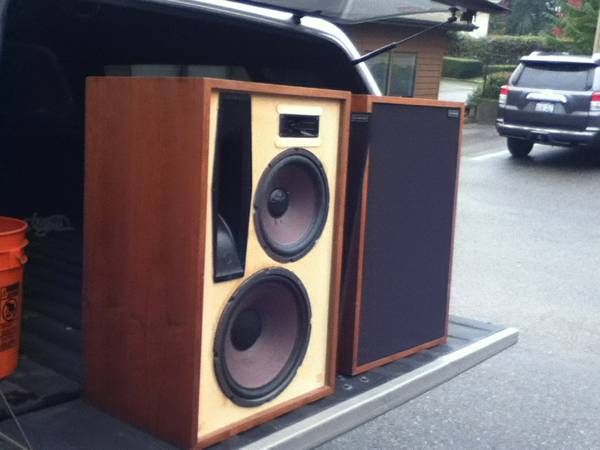
From back when Radio Shack produced something worthwhile, these Realistic Mach One speakers are collectible and well regarded today. With a 15″ woofer, multicell exponential horn midrange and horn tweeter these speakers have a fantastic presence in the room and will reproduce 25 Hz – 20 KHz. The grilles cover the lower cabinet but leave the top multicell horn exposed, making a very interesting presence in the room. These were freshly re-foamed and re-coned, so should sound great and last for a long time.
“Set of Two Stereo Speakers” – $39 in Bellevue
These look like they could use some TLC, but are intriguing. The multicell horn reminds me of the Pioneer CS series from the ’60s and ’70s, and I don’t recognize anything else. They could be Pioneers which have seen better days. Might be an interesting project?
The Speakerlab 7s were made right here in Seattle, and feature a large and highly efficient 12″ woofer, 10″ passive radiator, and use Electro-Voice drivers for the mid-range and treble horns. The vertical midrange horn will produce a fairly narrow sound field, but otherwise, these are known as thumping hard and delivering exceptional clarity. Truly a fantastic rock speaker from the classic hi-fi era.
If you’re in the market for some new speakers, please click through to the sale ads and contact the sellers! Good luck!
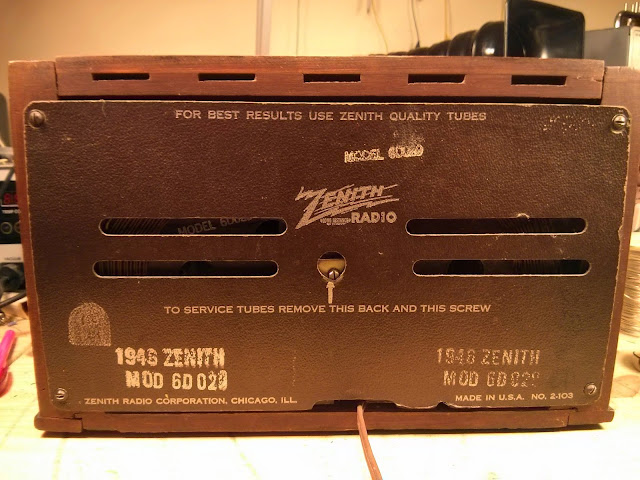
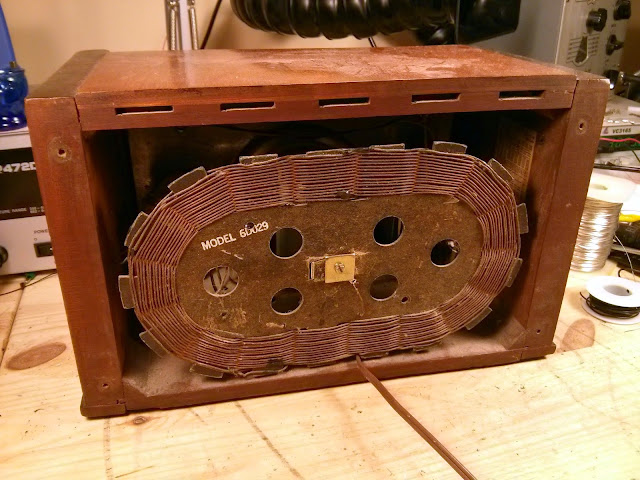
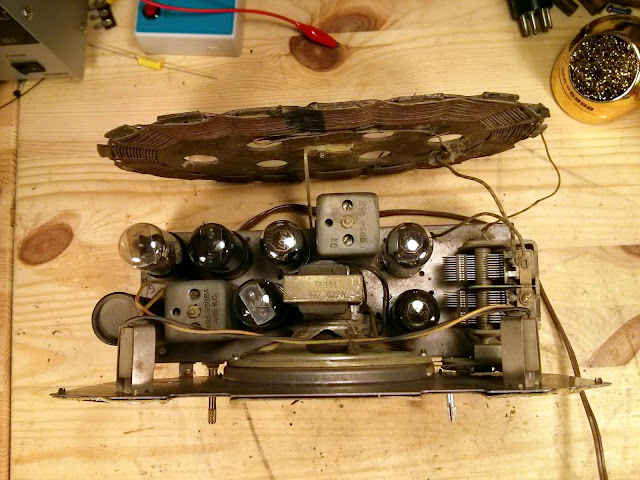
This was a very interesting Zenith tabletop radio from just after WW2, the 1946 Zenith 6-D-029 Consoltone mantle radio. This is one of the iconic “boomerang” dials Zenith produced for a couple of years after the war. A variety of sets were made with similar styling; in this case the 6-D-029 is a 6-tube AC/DC radio with a combination of octals and loctal tubes.
This radio was repaired in the ’90s by a radio shop in Portland, OR but came to me in non-working condition. That’s not unreasonable for a radio to need another round of service after 20 years, and it looks like they did good work last time.
Checking out the tubes, other than one which was conveniently labeled (and testing confirmed) “weak”, they all had good filaments and good emissions. Something else was clearly the problem. Given the set’s owners don’t own a tube tester, the tube labeled “weak” must have been from the last time the radio was serviced; this one was the RF amplifier front-end tube.
It’s been pretty well cared for – the cabinet is in solid shape and there’s only a tiny amount of dust inside. Underneath, however…
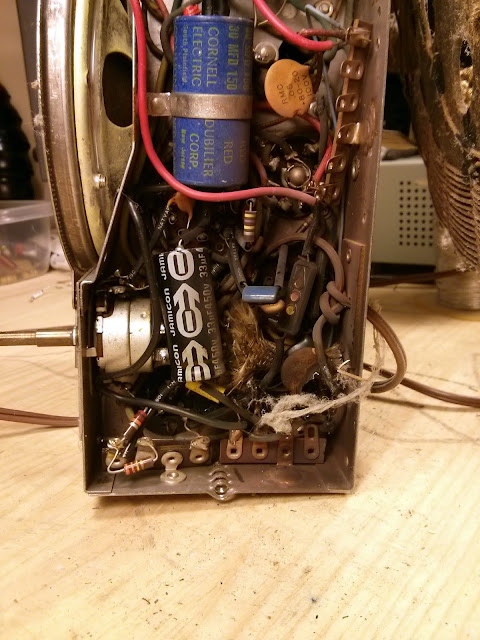
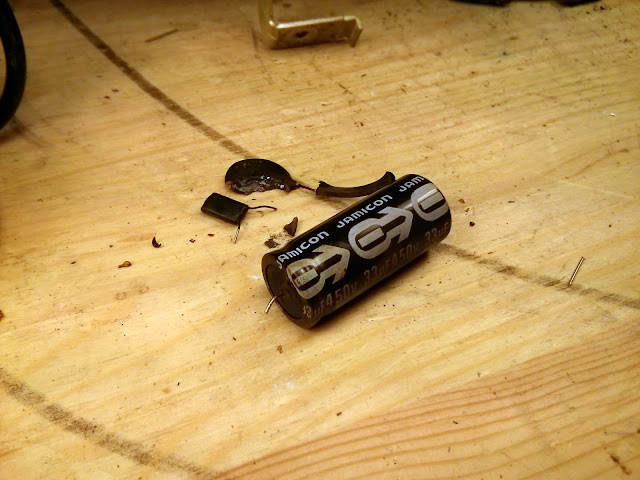
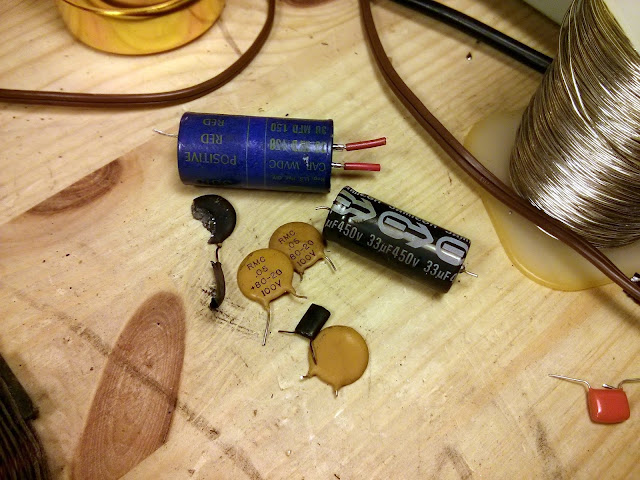
There are several things going on here. Number one is somewhat obvious: something has released some smoke inside. In addition to that, the electrolytics used in this repair were different ages. There’s the blue CDE dual-section capacitor, and a Jamicon 33uF 450V capacitor hooked up as the second filter. Time to start pulling parts.
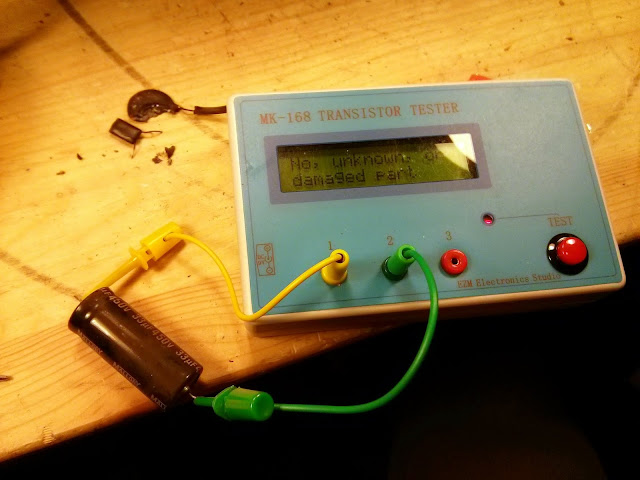
That Jamicon capacitor is visibly bulging from one side, and testing confirms it’s definitely dead. Of the CDE dual cap, one section was badly out of spec, and the other section tested open as well.
One of the ceramic disc capacitors blew itself apart – rather violently damaging a mylar capacitor near-by and generally making a mess of things. I replaced all of the same model of capacitor with new 630V film capacitors just to be safe.
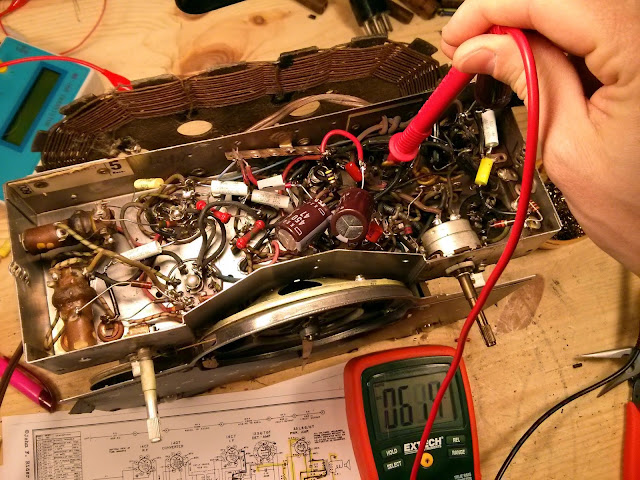
After replacing the components it was time for the first power-up. No smoke! But, no sound either. Checking around on the voltages, something wasn’t quite right. B+ on the output tube was about 50% high, and there was no voltage on the screens of any tube.
Careful inspection and wire tracing got to the root of the problem: the wire between two tie points, supplying high voltage to the screens of the output tubes and the plate and screens of the RF and IF tubes, had broken at some point – likely from 68 years of metal fatigue. This was likely the root cause of the original failure: the ceramic disc capacitors were rated at 100V. With 4/6 tubes not conducting, the power supply was delivering over 160V when the nominal operating B+ was about 100V under load. This is well over the rating of those ceramic capacitors and could have caused the violent failure which took the radio out of service.
That’s more like it! A jumper confirms the issues has been located. The new capacitors are rated 630V, so should have no trouble with voltage spikes.
I soldered a 2″ segment of wire to make the connection permanently.
With that repair made, the radio fired up loud and clear!
Time to adjust the alignment a bit:
Then finally, back into the cabinet and ready to go home.
With all new film and electrolytic capacitors, and a replacement tube, this Zenith table radio is going to last a very long time before it needs to be serviced again and sound great the whole time.
There’s always something interesting for sale on Craigslist, especially in Seattle. Do click the titles to see the original postings with more photos and additional information if you’re interested – otherwise, enjoy the virtual window shopping!
Today we’re featuring some speakers which are rare and nothing short of exotic – very interesting stuff!
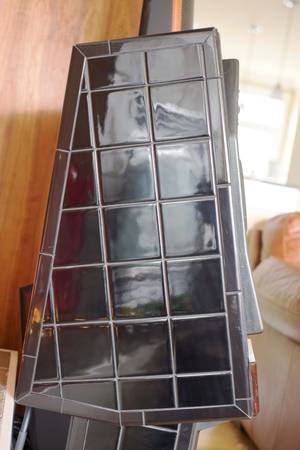
Weighing in at an astonishing 115 lbs. each and with an interesting tiled case, these Greybeard Audio speakers feature a 7″ woofer and 1″ dome tweeter and handle up to 300W at 6 ohms. At that weight, these must really have next to no resonance. I’d love to hear how these sound! I know these actually sold just a little while ago, but they’re so unique they deserved including anyway.
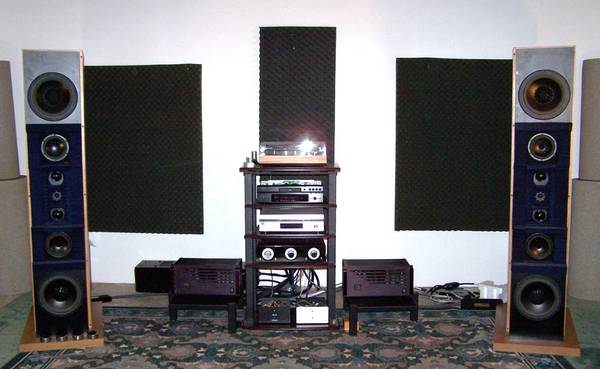
These astonishingly massive speakers are reportedly regarded as some of the most accurate loudspeakers in the world, with 7 drivers in a time-aligned arrangement stacked vertically and weighing in at 325 lbs. each. With such a commanding presence, these make a serious statement.
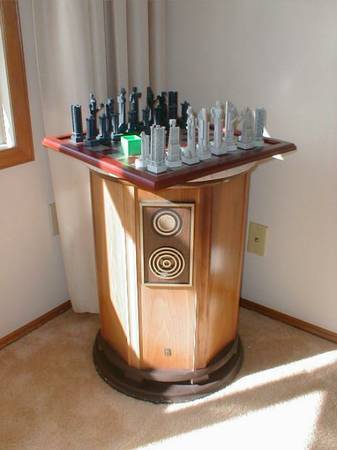
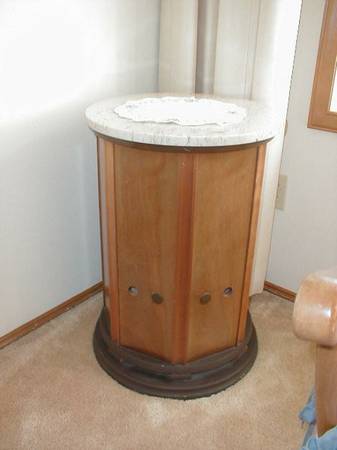
These are a rare collector’s item from the 1960s and feature large cylindrical cabinets with marble tabletops. In addition to the visible drivers, there’s a 15″ downward-firing woofer in the bottom. The only trouble is, if these speakers sit without being used for many years, the woofer cone can sag out of alignment with the magnetic field and and cause poor performance. Reportedly, it can be fixed by reversing the polarity on the woofer, turning it upside down, and playing it for a while to shake the cone back into alignment although there are mixed reports of success with this approach. As long as the speakers are continually used they won’t suffer this issue but sitting for many years can cause the sag. The seller reports they don’t have a way to test them; as a part of an estate sale, I’d expect the woofer is probably suffering from sag and will need to be adjusted or replaced.
MCS was the JC Penny house brand, but in the ’70s even house brand speakers could be pretty decent. These 3-way MCS speakers feature time-corrected driver alignment.
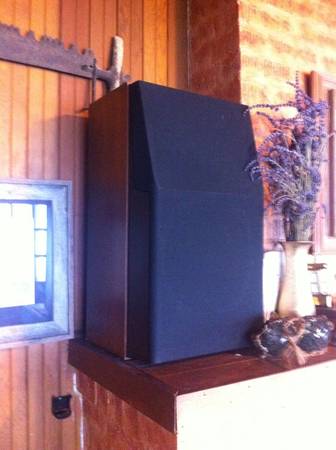
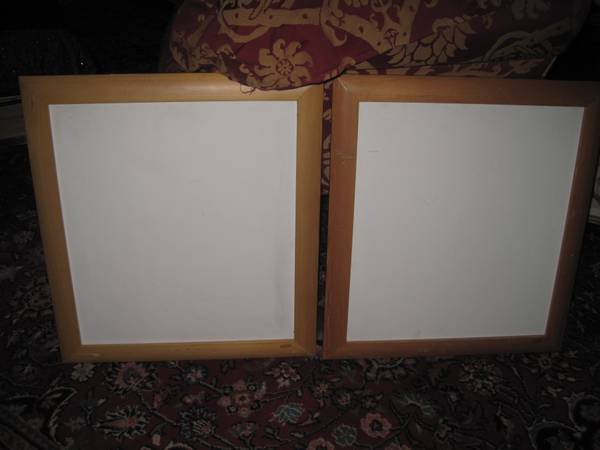
These are a bit of a mystery. The seller doesn’t have much info other than they take 70W at 8 Ohms, and are 22″ x 20″ flat speakers. Are these electrostatic panels? Or a proprietary short depth speaker? Difficult to tell the date, too.
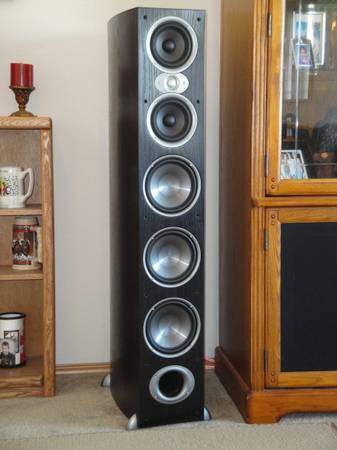
These beastly tower speakers by Polk Audio have an interesting driver compliment – three 7″ woofers, two 5.25″ midrange drivers in their own tuned internal enclosure and a 1″ dome tweeter, these speakers are flat from 30-26,000 Hz and accept up to 500W of input power. These would be great front channels for a powerful home theatre system!
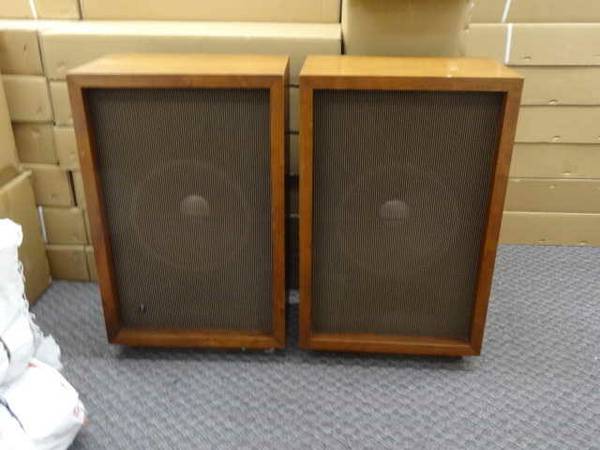
These JBLs look to be from the late ’60s, possibly early ’70s, and seem to have a large single full-range driver installed in the cabinet. JBL’s vintage speakers are all known to be pretty fantastic and I assume these are no different.
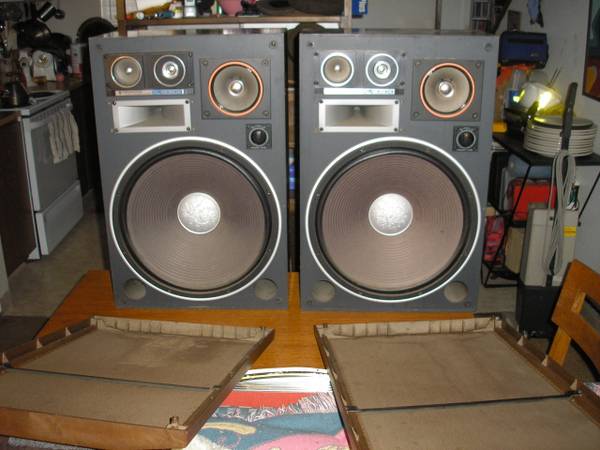
These mammoth late ’70s, possibly early ’80s Kenwood speakers, feature a 5-way design in a ported enclosure with a 15″ woofer, 6″ mid, tweeter, super-tweeter, and horn with level adjustments. I’m very curious how these sound – Kenwood’s vintage products tended to be pretty well designed but I’m not familiar with these ones specifically. I do think the price is a bit high, but these have been up on Craigslist for months, the seller might be a little flexible now.


















 RETROVOLTAGE
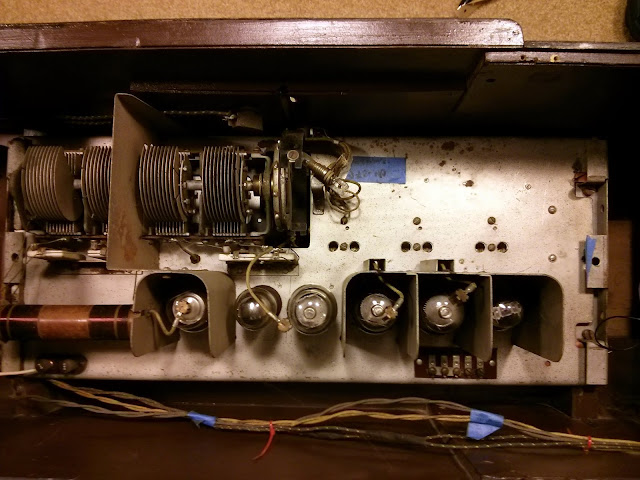
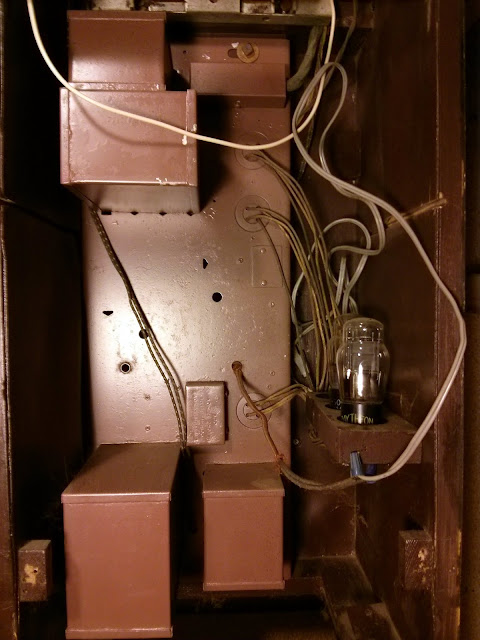
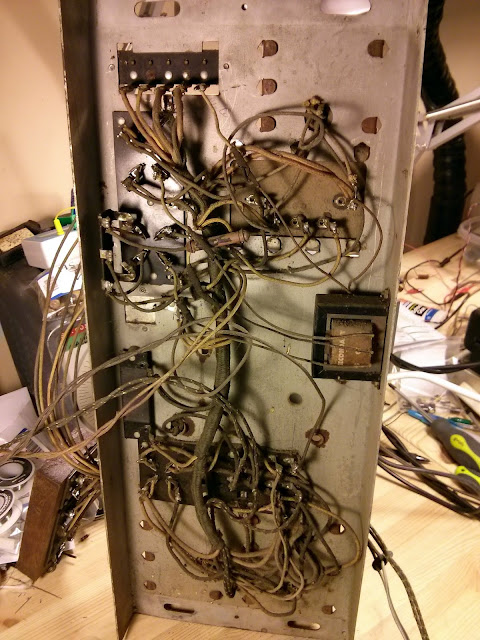
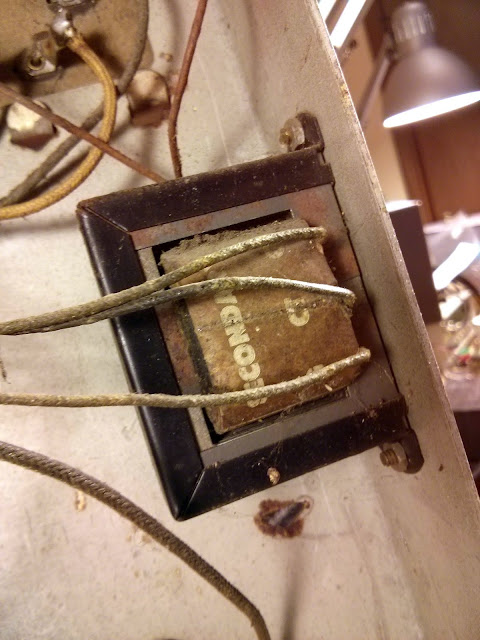
Parts of a Vintage Radio – Middle Tube Era
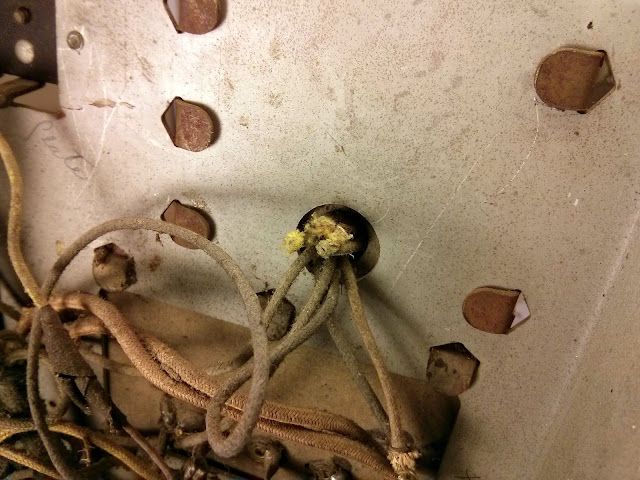
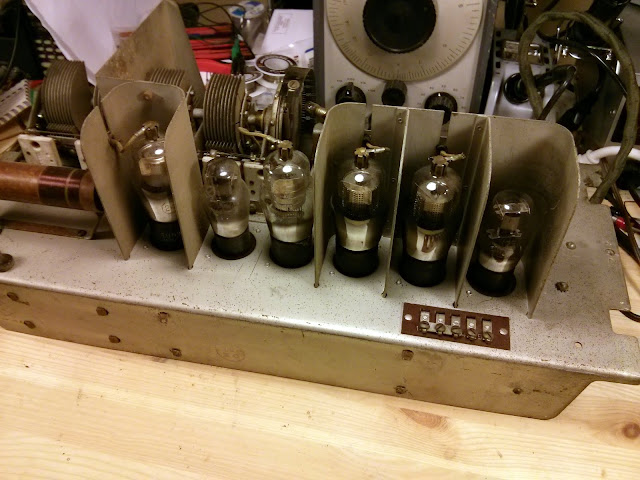
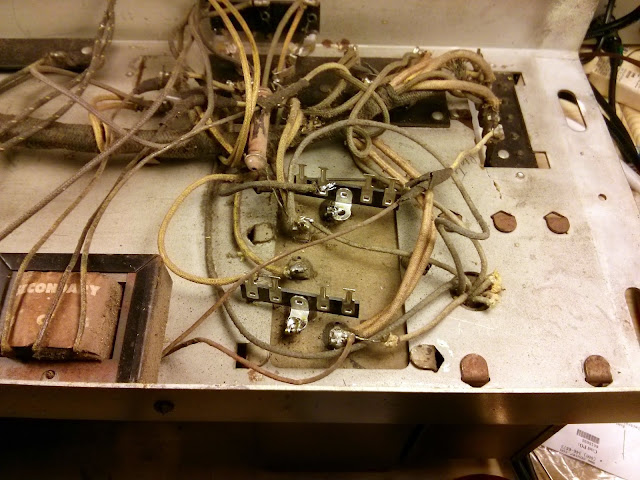
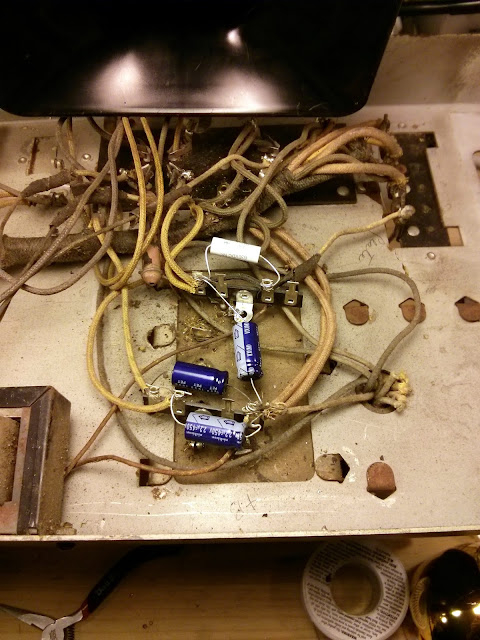
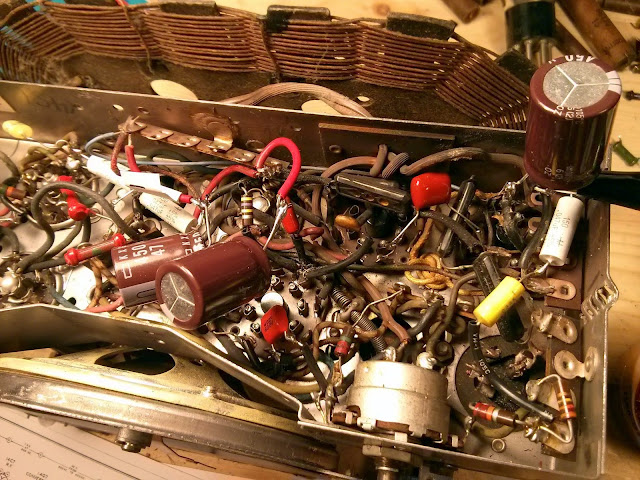
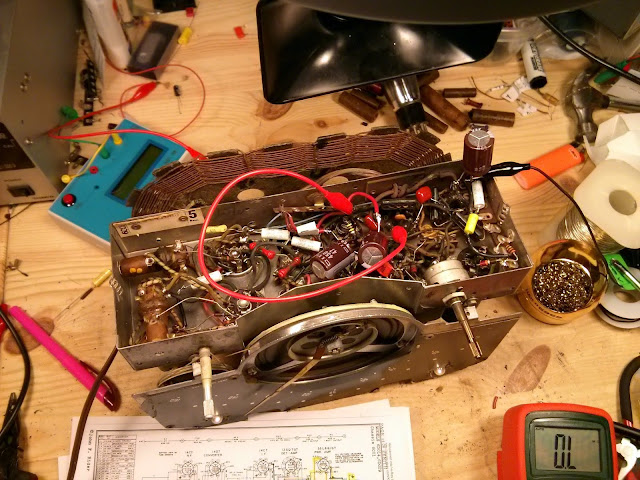
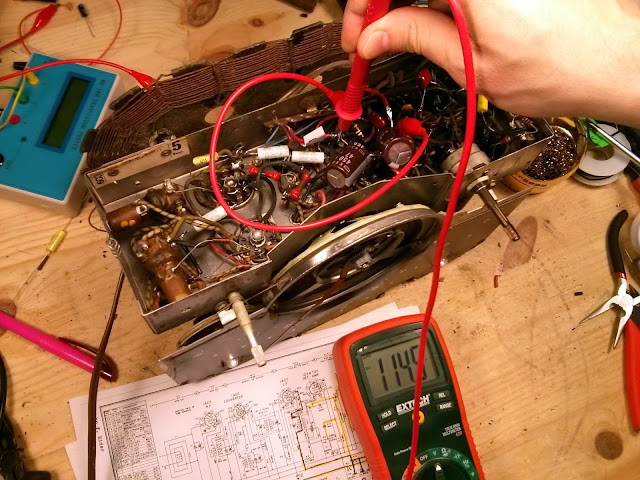
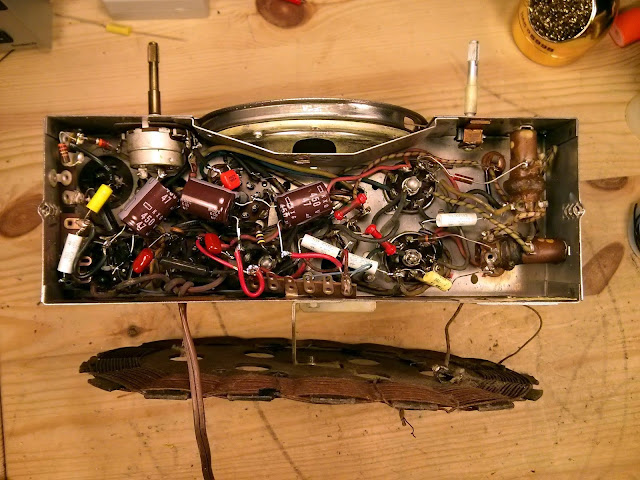
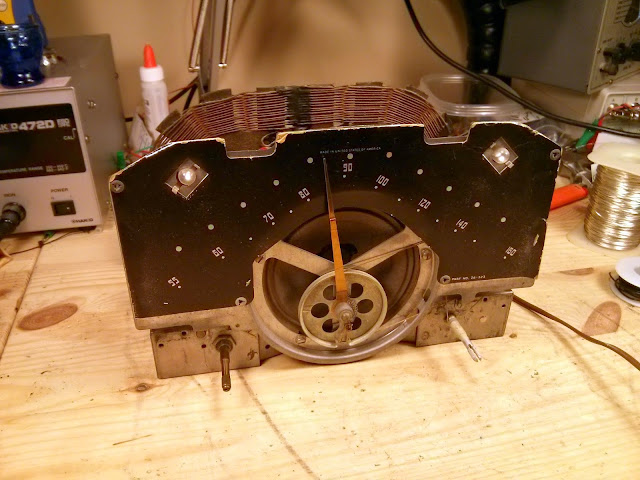
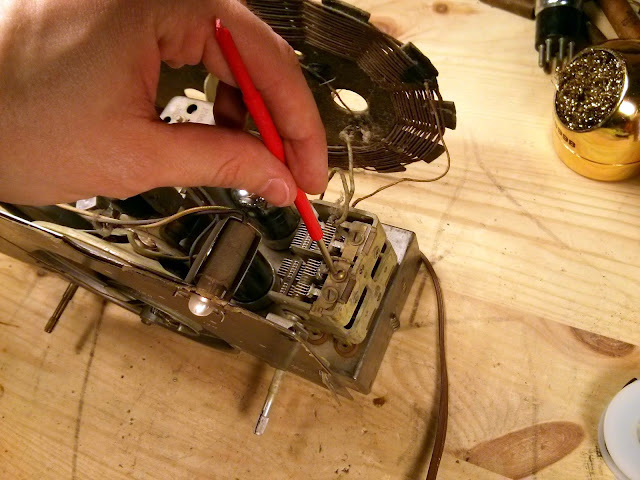
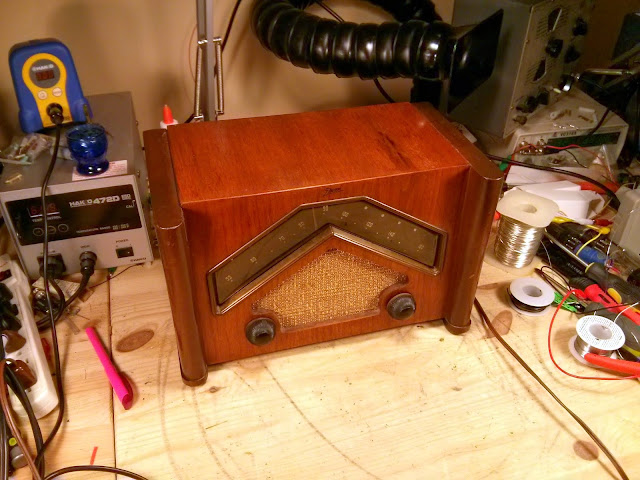
Photos with parts diagrams of a vintage tube radio – the Crosley 10-139, from about the middle of the tube era. Click each photo for full size.
Share this: