
Radio Retailing, Apr. 1929
Radio Retailing, Apr. 1929

Radio Retailing, Apr. 1929

CeCo Plant No. 2, now partially in operation and to be finally completed in April – located at Providence, R.I.
Radio Retailing, Apr. 1929

What makes these tubes healthy compared with the others, anyway?
Radio Retailing, April 1929

Throughout the music world AUDAK Reproducers have long been the standard by which others are judged and valued. Their ability to respond to every shade and colortone…so essential to REAL music…has been faithfully transmitted to the AUDAK Chromatic Pick-up, creating a new standard of performance in this field, too. Every-one knew, when AUDAK delayed the announcement of this instrument, that it was because we are hard to please…that we could not bring ourselves to launch a pick-up one whit less effective in its own province than AUDAK Reproducers have always been in theirs. We were determined to make a pick-up so highly scientific, so woundrously sensitive that it would reproduce NATURALLY…and we did!
Radio Retailing, April 1929

This Consolette Ensemble combining Stewart-Warner Table Cabinet Receiver with the New Stewart-Warner Dyphonic Reproducer, an arresting value at $113 (less tubes).
Radio Retailing, April 1929
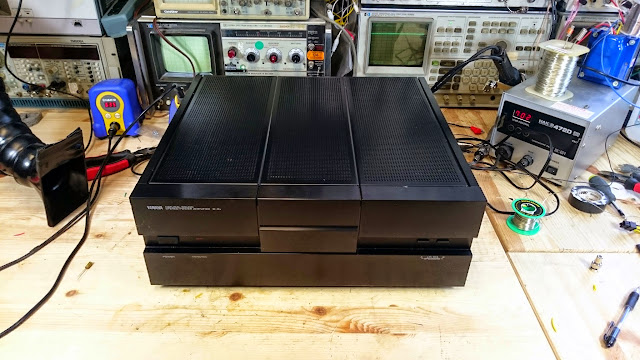
I recently had this Yamaha B-2X through the shop. It’s a massive beast of a power amplifier from the late ’80s, delivering up to 170W per channel with 0.002% THD. Being somewhat more recent, this one just needed a quick tune-up as one channel’s DC offset had started to drift up to about 50 mV and needed to be tweaked back down.
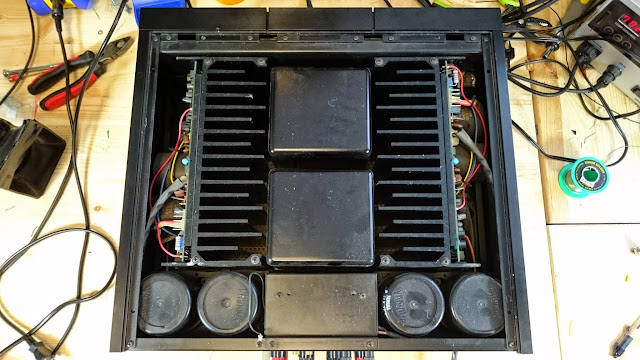
Bias in both channels, and DC offset in the other channel, were all in spec. As components age and drift, small variations like these are normal and expected – that’s what the trimmers are for – and if it comes back into adjustment and stays there after some usage there’s no underlying issue. (If the DC offset returns, though, that could indicate trouble!)
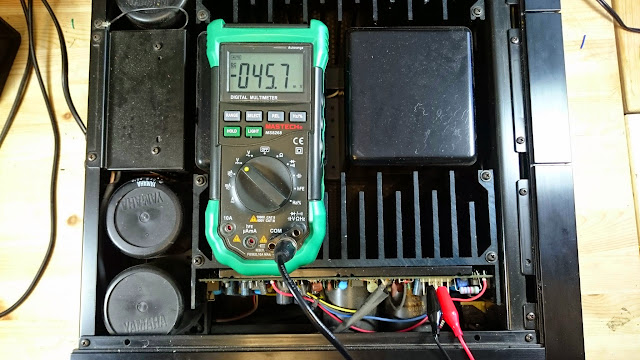
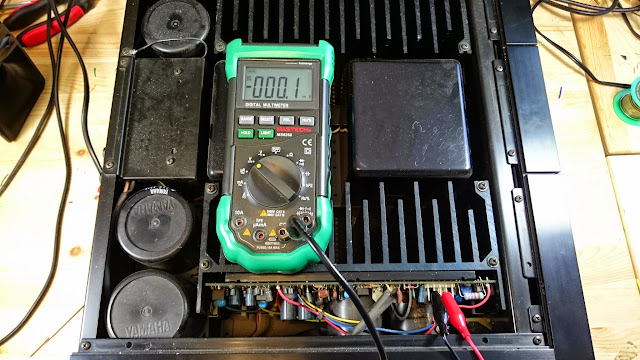
Yamaha put the trimmers for both channels in a great, easily-accessible location so this was a quick job, and the amp is back in service in no time.
I’ve posted a few times about my HP 3585A spectrum analyzers over the past several months, and after chipping away at the problem I’ve finally solved the screenshots issue! It boiled down to a bad GPIB cable for my National Instruments PCMCIA-GPIB card. After replacing it with a new National Instruments USB-GPIB-B adapter, everything worked instantly the first time.
If you want to get yours set up to pull screenshots, follow along:
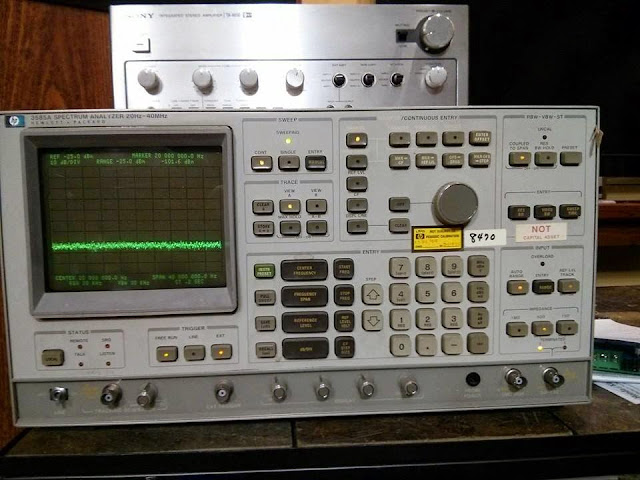
The HP 3585A is a bit older of a unit, in the first generation of HP digital spectrum anayzers (following up to the HP 141T analog spectrum analysis system) produced beginning in 1978 up through the early ’80s. Even today, despite it’s limited frequency range (20 Hz – 40.1 MHz), it’s a good performer with versatile connection options, a very flat tracking generator built in, and HPIB/GPIB connections for performing system measurements.
The service and operation manuals really show the age this was created – there was a companion control computer which could be used to extract screenshots and perform automated phase noise, harmonic distortion, and other measurements. Just load in the right cassette tape and key in a few instructions in Rocky Mountain BASIC and off you go!
To extract screenshots, you’ll need these things:
1. HP 3585A Spectrum Analyzer
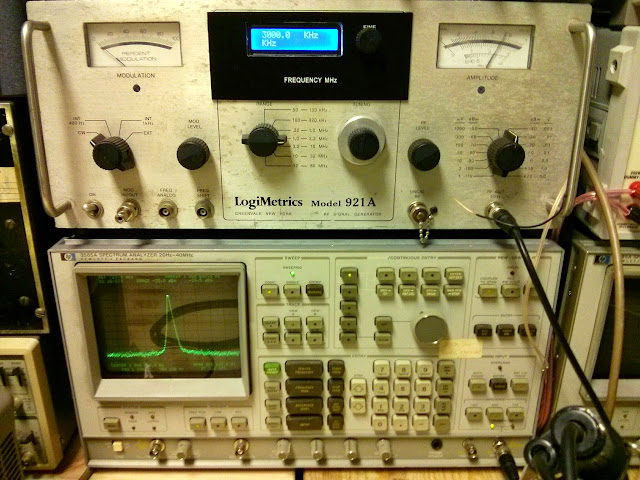
I got mine in trade for some radio repair labor, but they’re out there. Neither one of mine had been calibrated for over 15 years but when I attached an antenna and looked at the AM broadcast band, the counter was spot on for the stations, and it matches spot on with the calibrated output of my LogiMetrics signal generator. I might have gotten lucky since one of mine has the high-stability reference clock option but the other has the standard clock and is still spot-on. I get the impression these are quite reliable.
I’ve seen them on the local Craigslist for $500-1000, and they go for a bit more than that on eBay. They also turn up at Hamfests and so forth as they’re old enough and cheap enough they can make it onto most dedicated hobbyist’s benches, not just shops like mine.
2. HPIB/GPIB Adapter and Cable
Somewhat annoyingly, HP and most other test equipment manufacturers used the GPIB connector, an IEEE-488 interconnect. It’s basically a serial port, but supports daisy-chaining and multiple instruments on the same bus segment. It makes sense given how many of these were connected in systems and controlled centrally for automated measurements, but it’s not a connector that most people will have lying around, and since the only place it turns up is on lab equipment even used adapters command a pretty high price.

HPIB/GPIB adapters are widely available. If you have too much money lying around, you can pick up a brand new one from National Instruments for around $600…or, you can pick up a used one from eBay. They come in all shapes and sizes: old-school ISA cards, PCMCIA adapters, and newer USB ones. Unfortunately this is one area I’d recommend you set your search to “US Only” as I got burned on an adapter I purchased from China, but your mileage may vary of course. You’ll be looking at $200-300 for a good used adapter in most cases.
GPIB Adapters on eBay
3. Screenshot Software
You have a few choices of screenshot software for your HP 3585A spectrum analyzer, and most support several other types of analyzers as well.
First, there’s Keysight Screen Capture 2.0, a free download from Keysight (formerly Agilent, formerly HP). It’s a little more complex of a setup, but supports quite a few other HP products, and can also save and restore settings from the PC to the Analyzer which is useful if you’ve dialed in a custom measurement set-up for something specific It’s also a free download, although you might have to register a free account and give them your e-mail address to get access.
There’s also KE5FX’s 7470A software, part of the KE5FX GPIB Toolkit. It’s a full-featured set of open-source software to pull plots from a variety of instruments, the HP 3585A included. There are a few other applications in the package for use with a few different types of analyzers for making automated phase noise measurements, etc. but it’s main use is going to be the plotter emulator for pulling the screenshots.
Of the two, the KE5XP application wins. Both produce nice plots and work as described once set up. Unfortunately, though, I wasn’t able to get the Keysight application to actually save a PNG of the data it pulled. On two machines it just wouldn’t generate an actual file, but no errors were generated. So for that reason alone, I’m using exclusively KE5XP’s app.
With the connections plugged in and the software installed, it was a major upgrade. Plots went from looking like this:
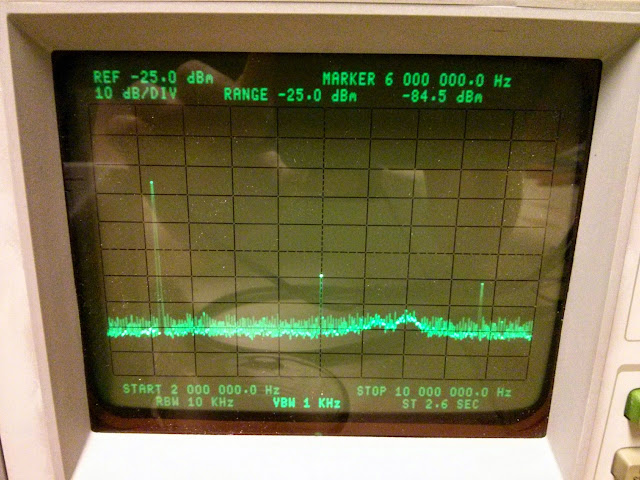
to this:
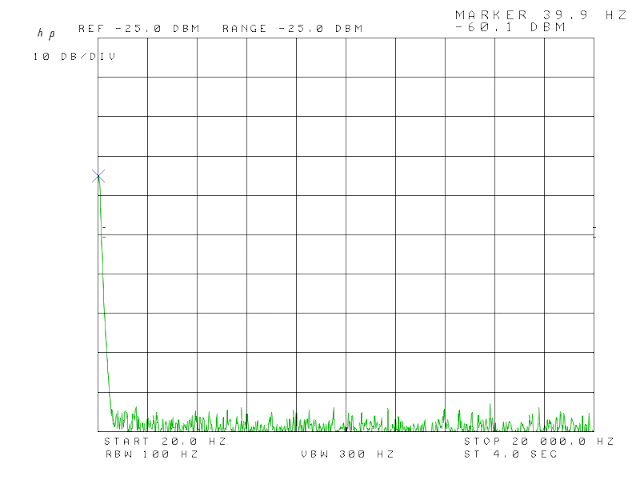
Much better!
Links:
When Kenwood’s engineers left to form Kensonic, they really brought their A-game, and this Accuphase C-200 pre-amp is no exception. It’s a mammoth device, built with exceptional attention to detail and top of the line components throughout. The owner reported it was sounding muddy and lacking detail, so it was in to the shop for an overhaul!
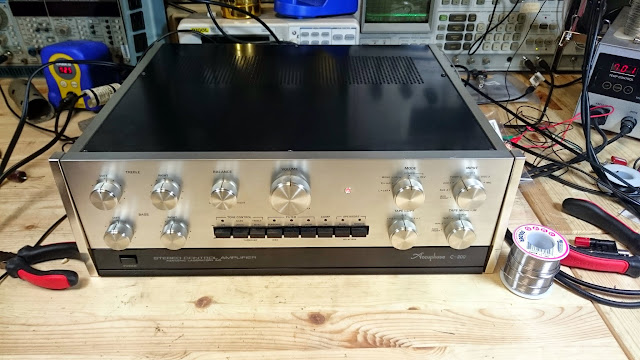
Like most equipment from the era, the capacitors go bad and cause poor sound, poor performance and left untreated can cause extensive damage in the event of a catastrophic failure. Fortunately, Accuphase built this one for service!
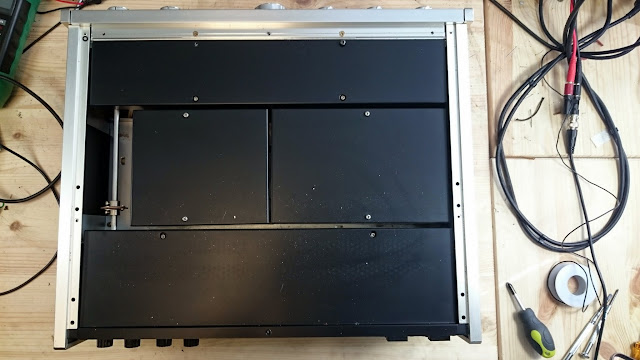
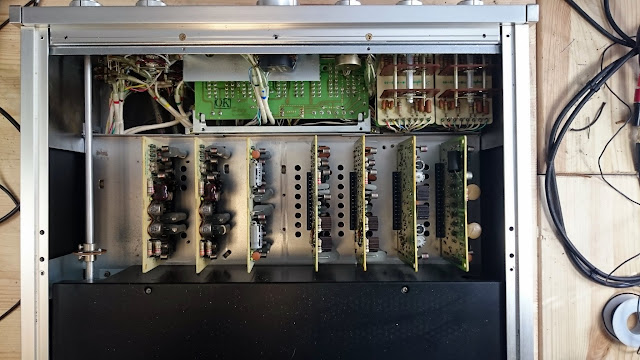
Underneath heavy double shielding, nearly all the critical circuits are on plug-in cards which are easily removed to re-work.
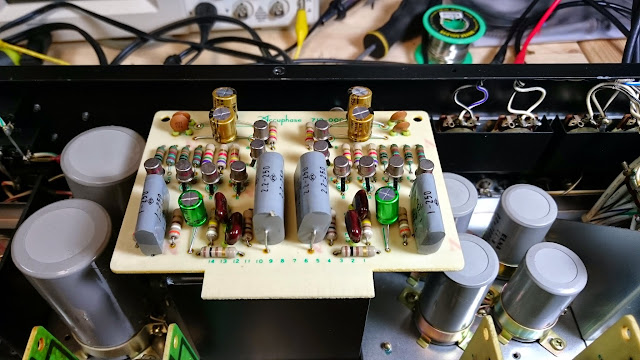
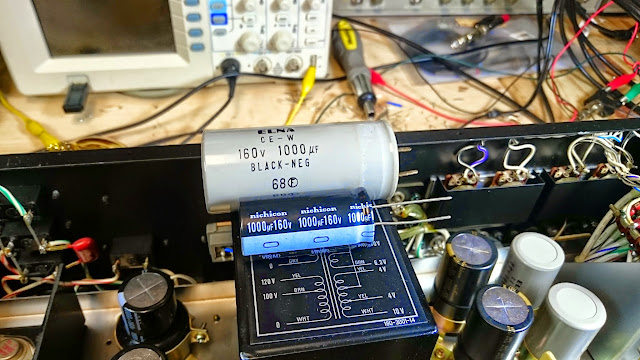
Modern caps are quite a bit smaller!
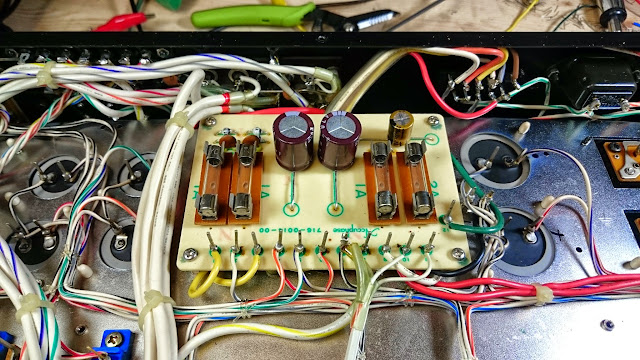
There’s just a few hiding on the back-side, but nothing too serious:
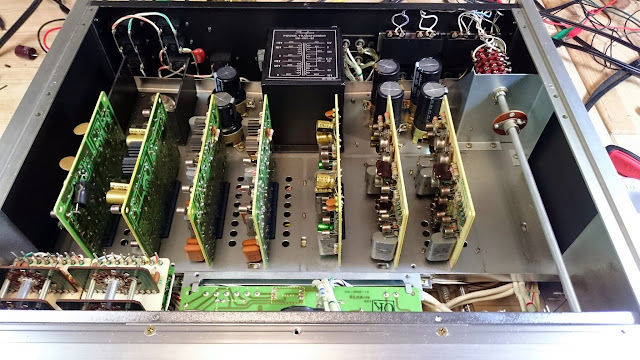
Overhaul complete!
I measured distortion at <0.02% THD. And how about that frequency response?
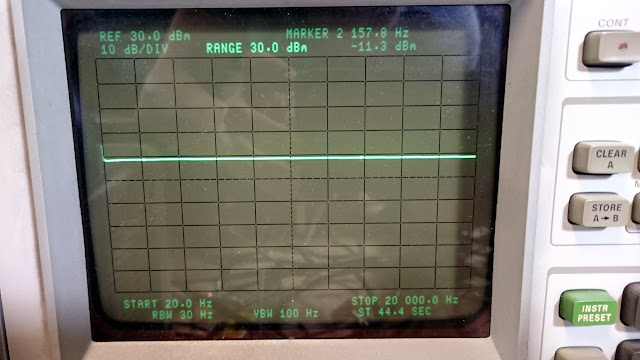
Perfectly flat +/- 1 dB across the whole range! Quite a few parts were replaced during this overhaul:
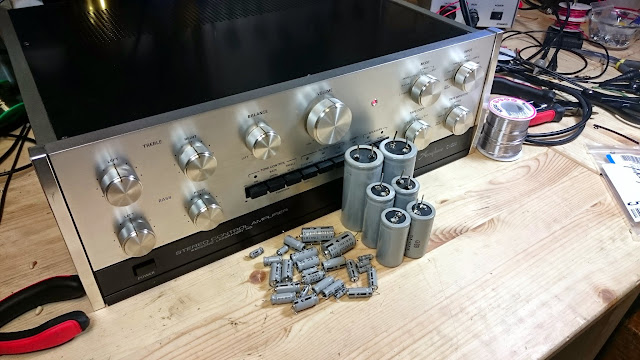
With up-rated Nichicon Fine Gold and Nichicon MUSE Bi-Polar capacitors in the signal path, and an overhauled power supply, this Accuphase C-200 pre-amp should sound fantastic for a long time to come.


Need 45V batteries for your old radio?
Rayovac has been making batteries for over 100 years, and their batteries were commonly found in use with many types of battery-operated tube radios. Most commonly, radios would operate on 45V batteries with a tap half-way (for 0-22.5-45V). Two in series would give you 67.5V and 90V for bigger radios. This style has been out of production for many years, but Rayovac has a good modern replacement for the older Type 783 batteries, the 45V-HD.
It has connections for a modern connector as well as the old-style connections:
If you have a ’20s or ’30s battery radio, and want something more original than using a stack of 9V cells, this looks like a good bet!
Yours for $19.95 with free shipping from Amazon.
Share this: