I’m mostly interested in audio equipment and related repairs as a hobby, but there’s plenty of crossover skills to other things that need to be fixed. I’ve fixed a electronics module from an old Mazda, the control board from my dryer, and resoldered more than a few broken charging ports on Bluetooth speakers. Most recently, though, it was time to work on my old Crock-Pot Slow Cooker which had become unreliable and would power itself off randomly. That’s not great when you’re counting on it to cook something up to temp, safely, and keep running for a long time.
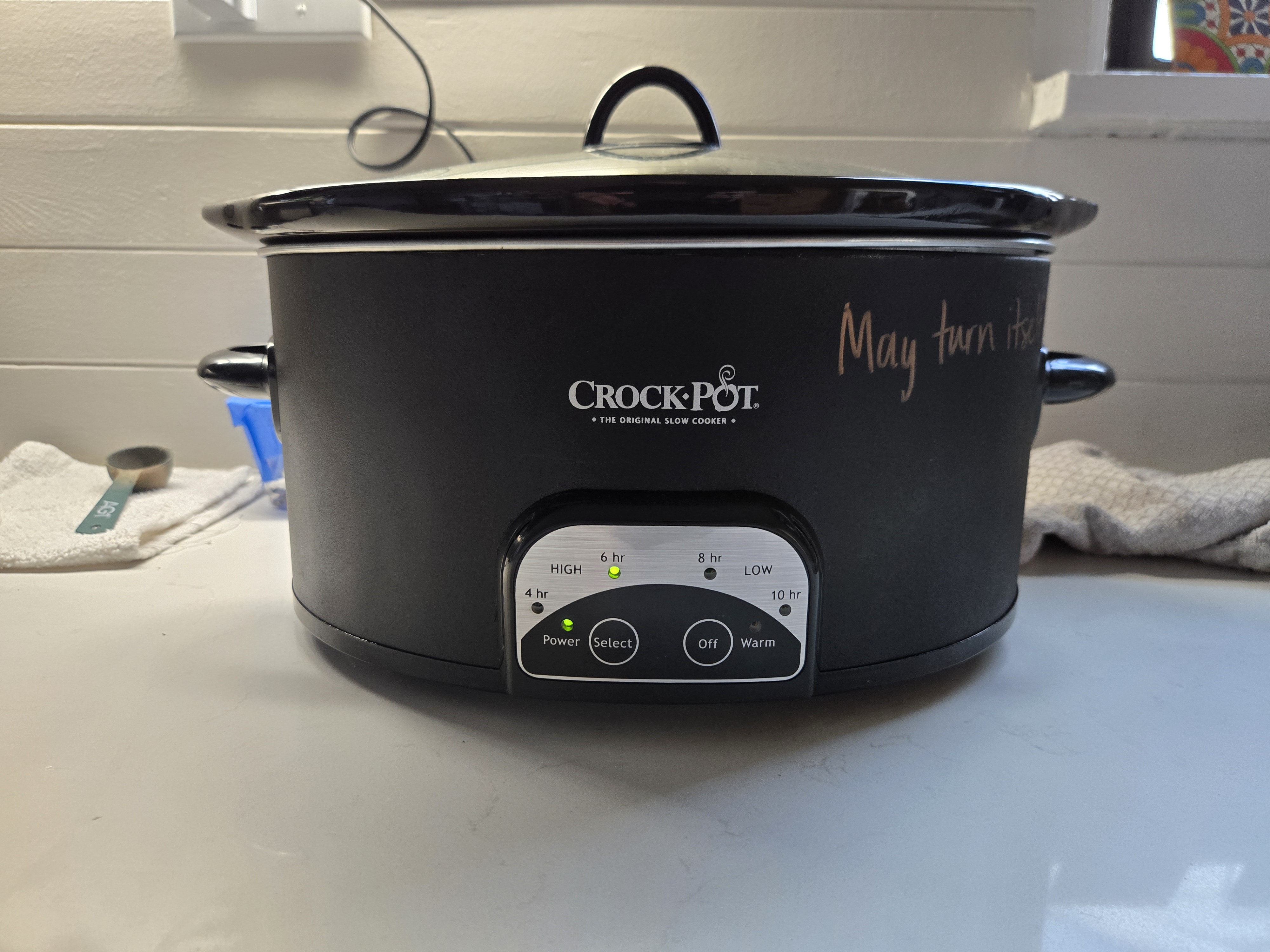
Time to take it to the shop and see what’s going on. These are certainly not built with repair in mind, and I’ve had this one for at least 12 years, probably longer, so if it’s not repairable I wasn’t going to be too sad about it. I figured it was worth an hour or two to investigate over the weekend regardless.
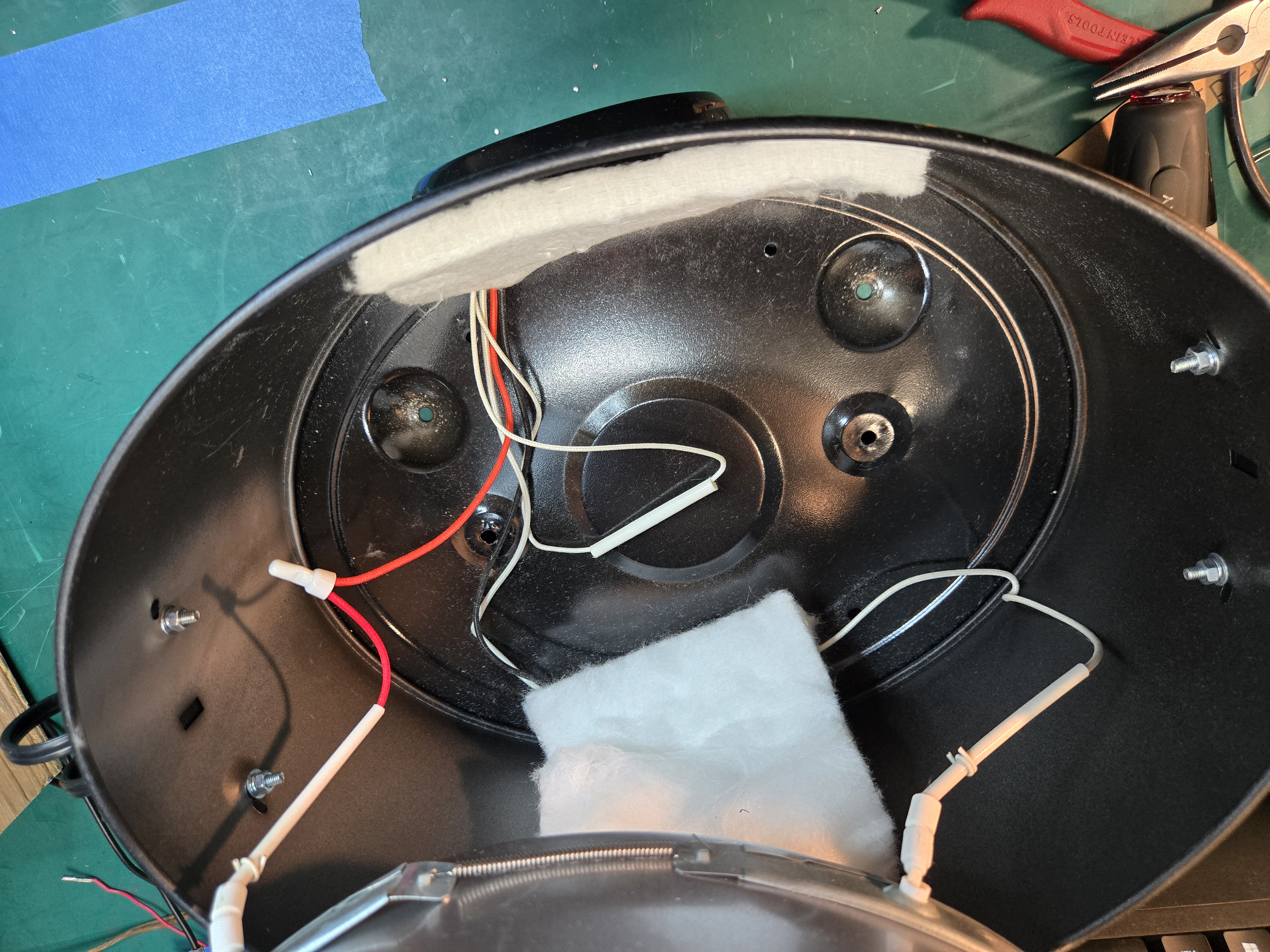
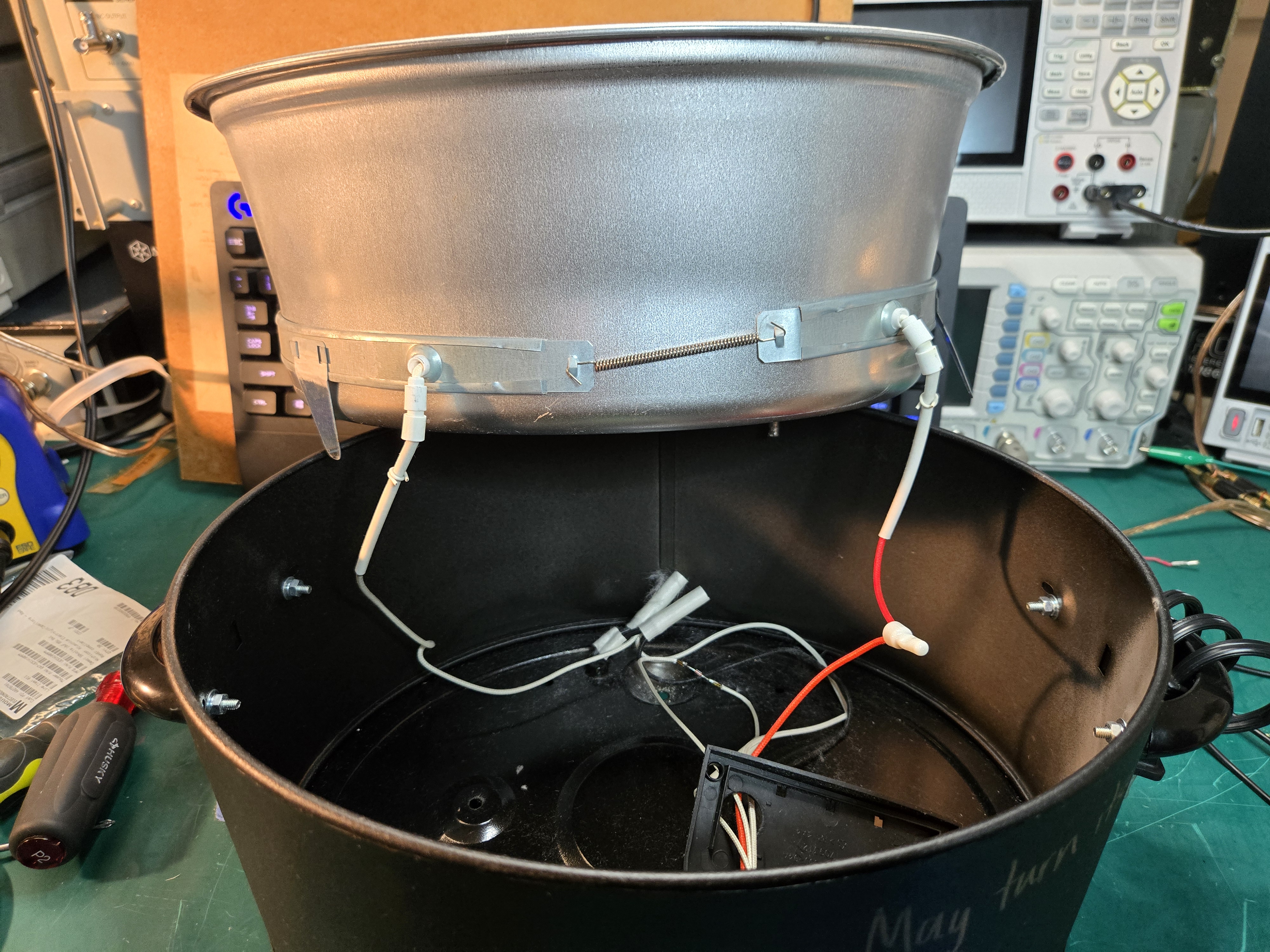
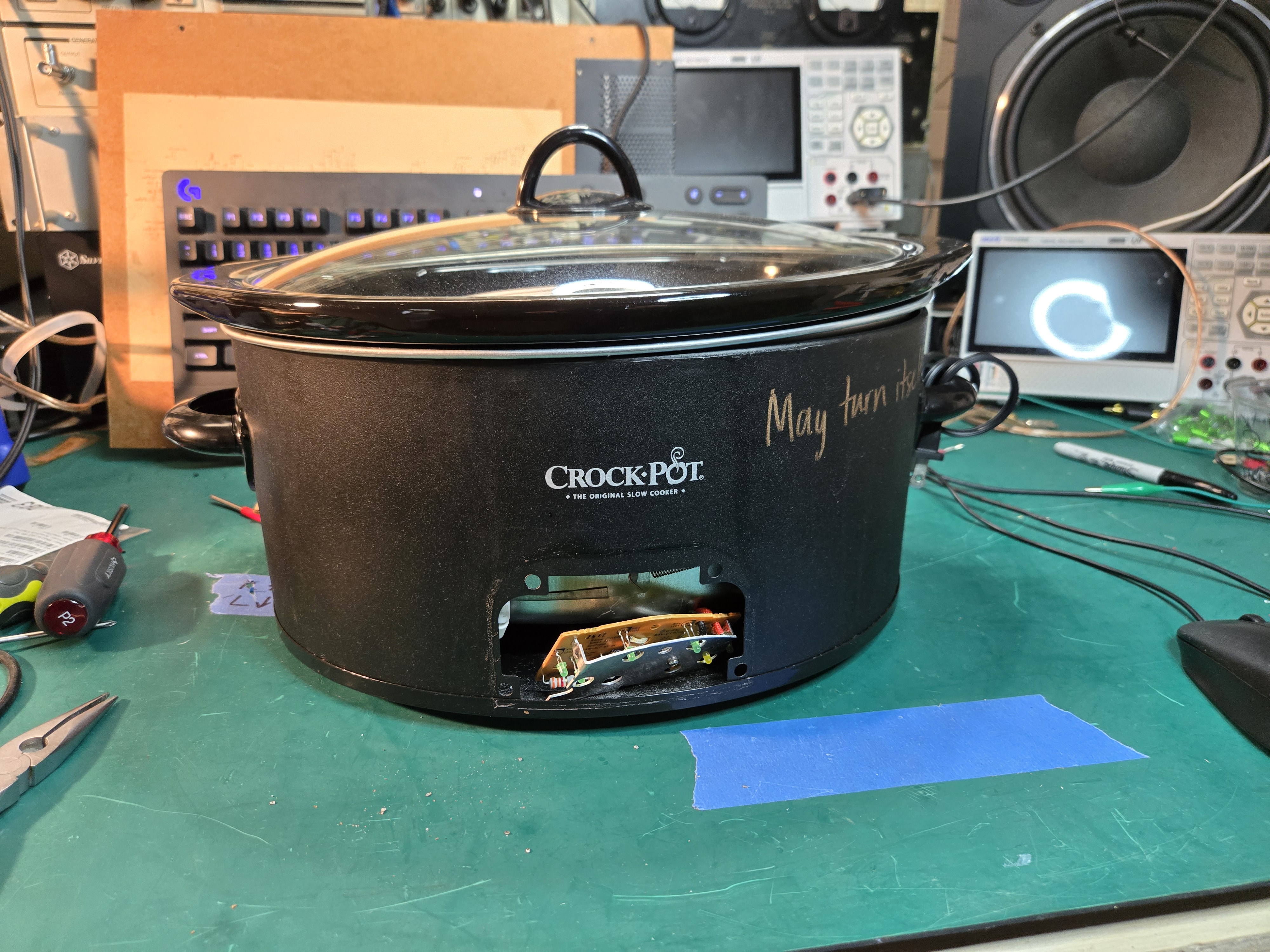
There’s not a ton going on inside. After removing a pair of rivets going through the bottom, the silver heating liner lifted right up. There’s a long wirewound resistor wrapping around most of the base; one side is connected directly to the AC line and the other to the controller. A heat insulating pad protects the back of the control unit and the wiring from the heat of the pot.
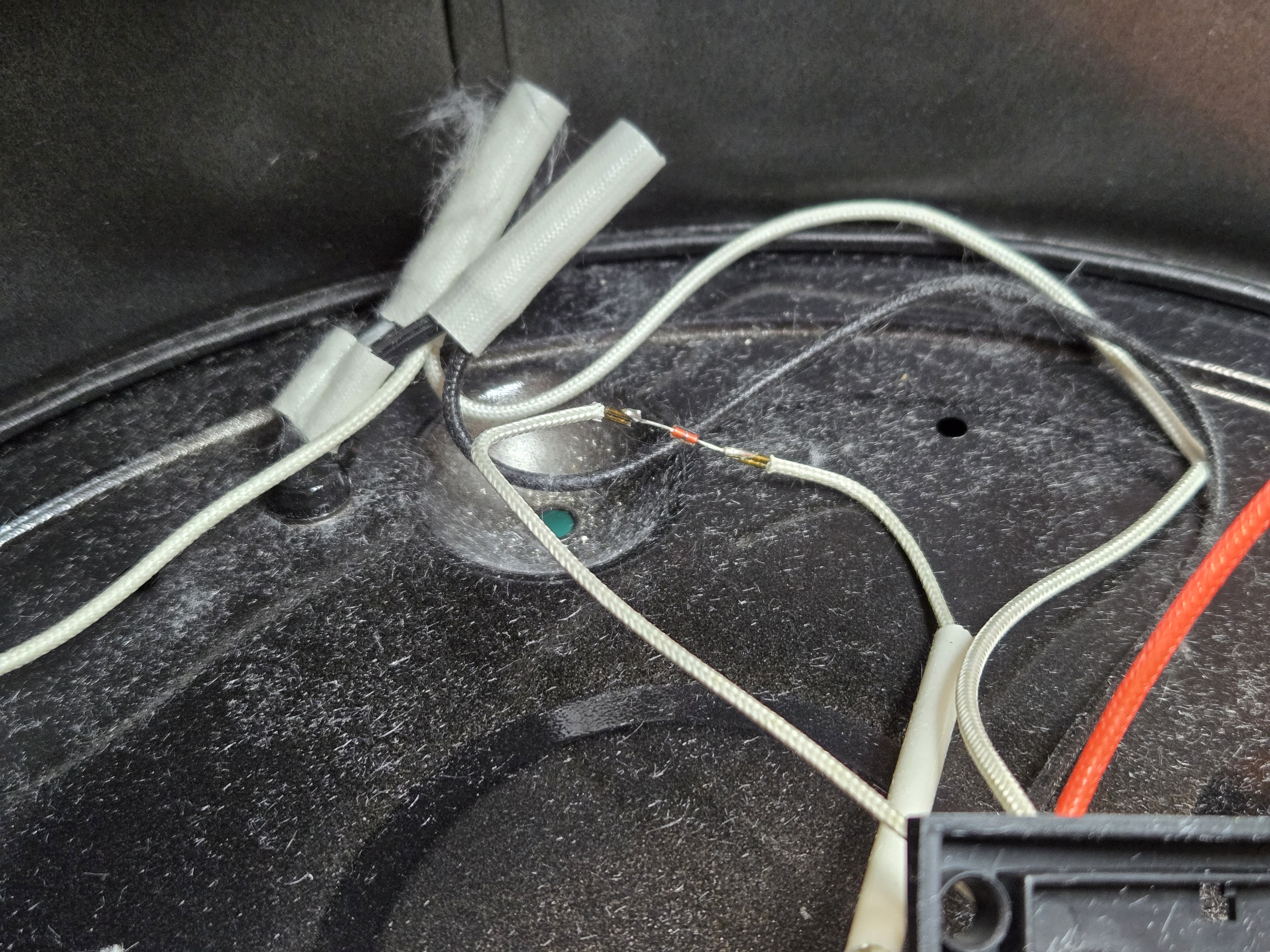
A thermistor in a diode package provides temp sensing to the control module. Inside, four screws on the back of the controls separate the plastic control clamshell and let you pull the board.
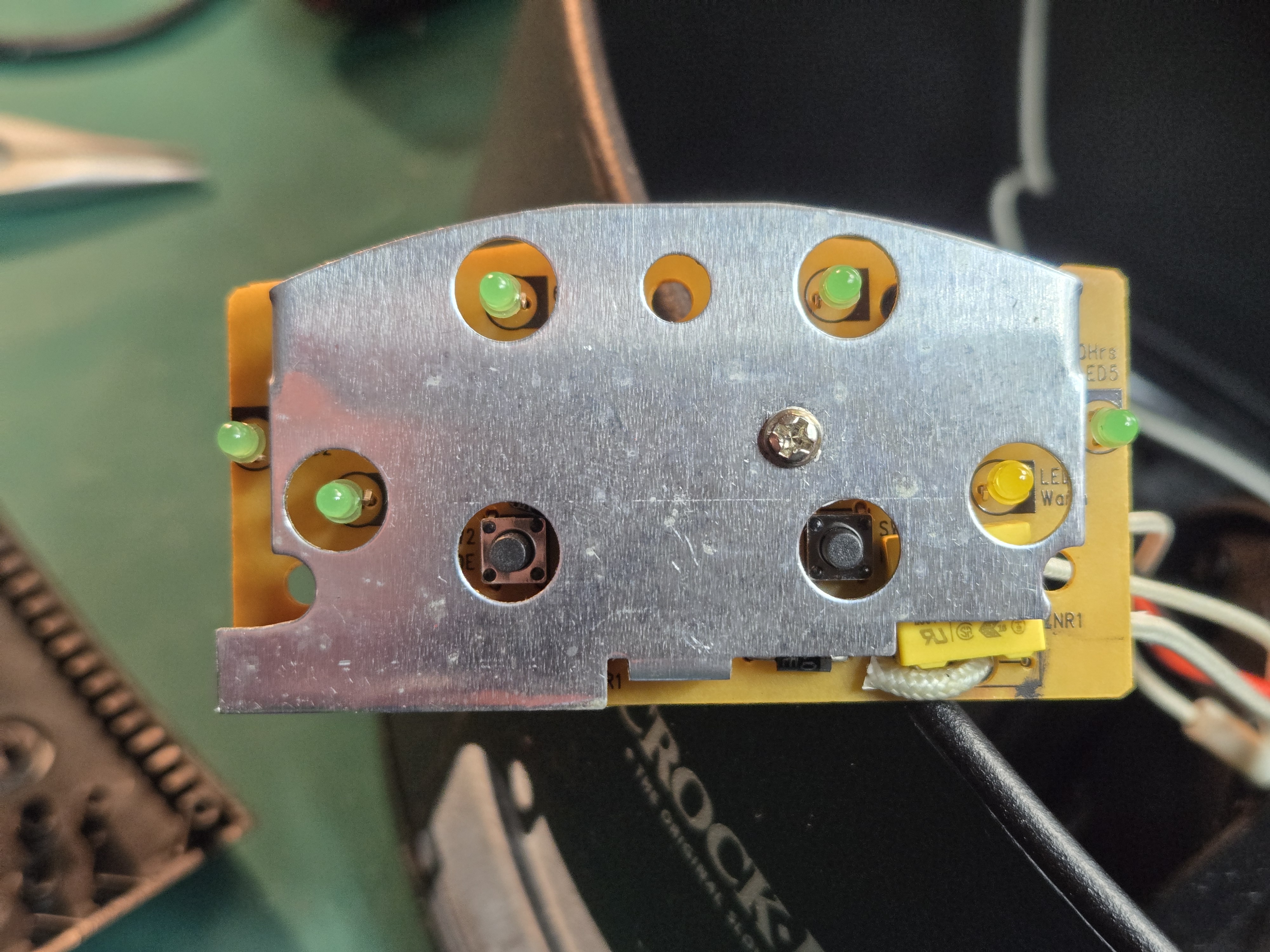
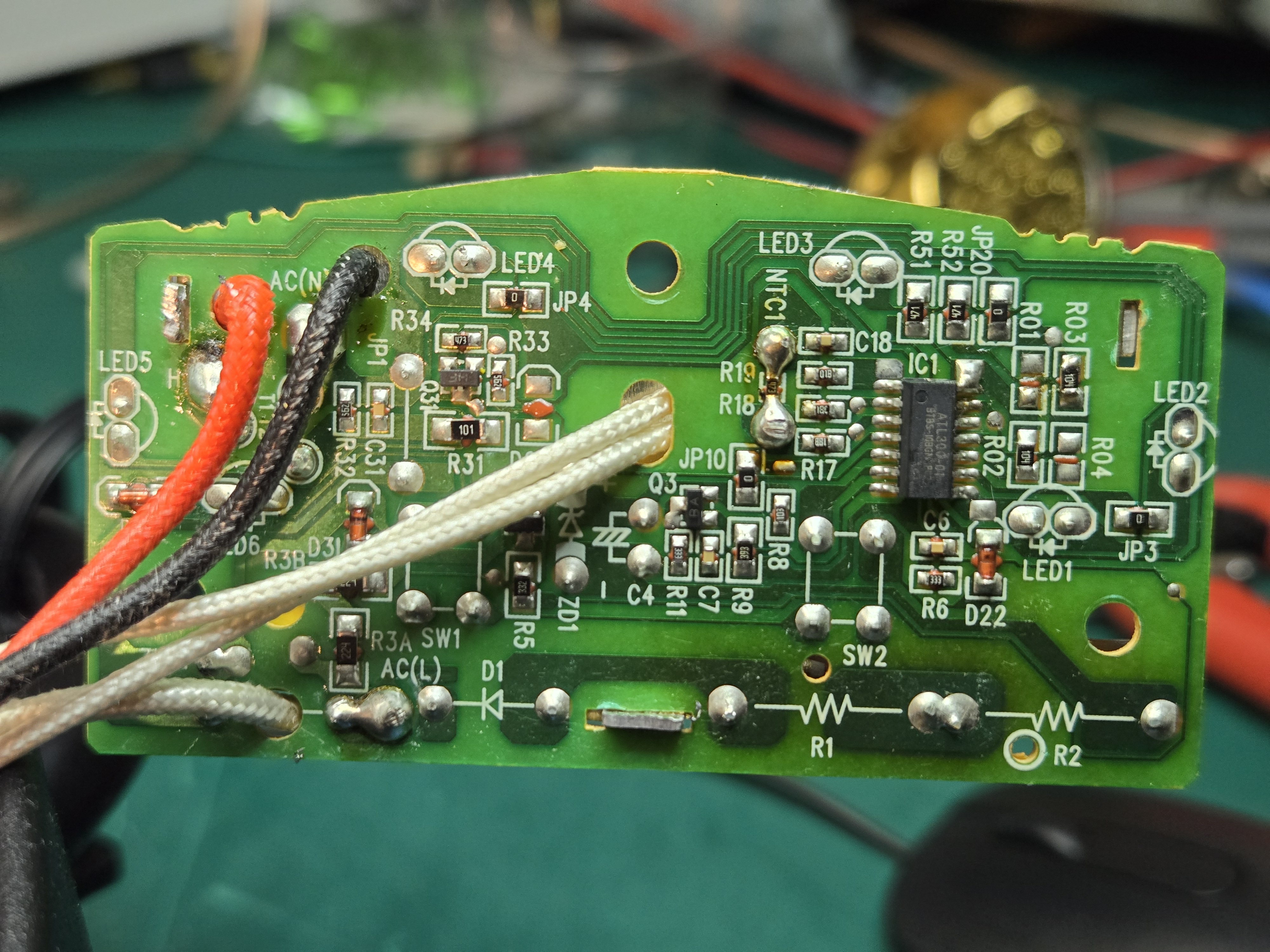
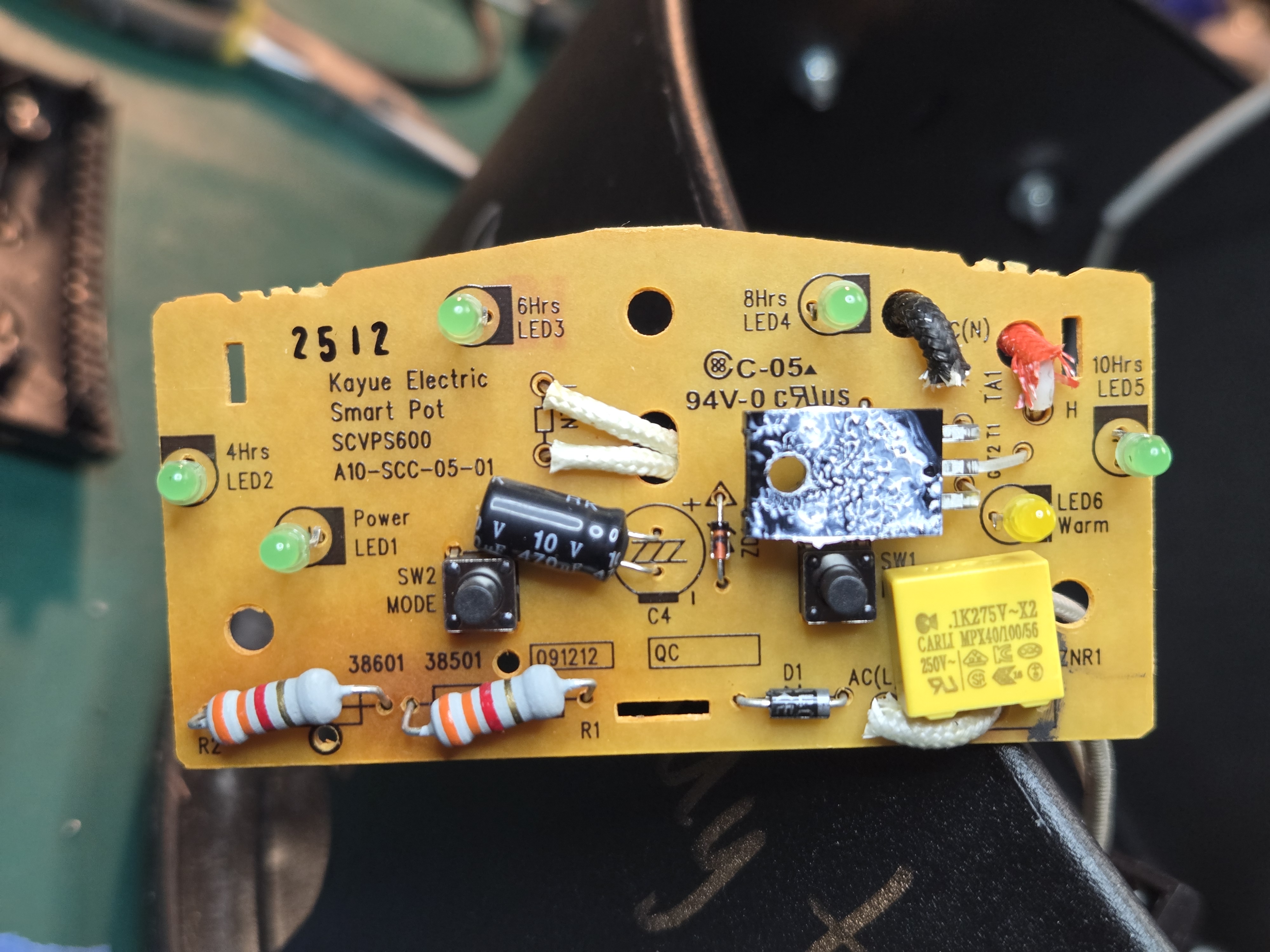
Removing the shield, which is also the heat sink for the triac, shows the front of the board. Kayue Electric is a Hong King-based company that OEMs kitchen appliances and similar. There’s a small microcontroller on the back which handles the timing and temperature feedback, running a small algorithm (maybe a PID) and triggering the gate on the triac to control the heating element. I didn’t trace it out, but it looks like the AC line comes in and gets dropped by the pair of resistors, rectified through a diode, and then a single electrolytic capacitor provides power and filtering for the digital side.
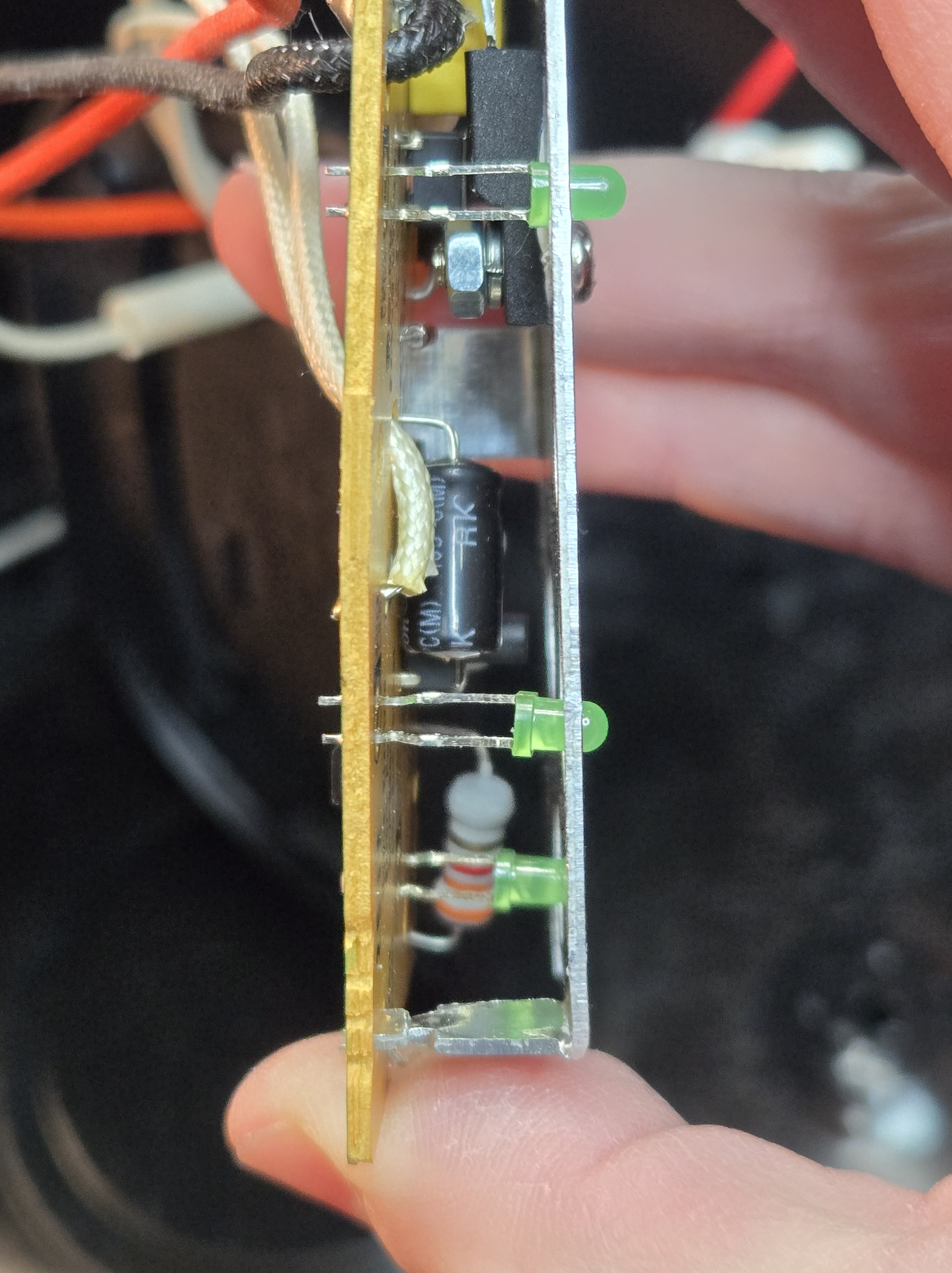
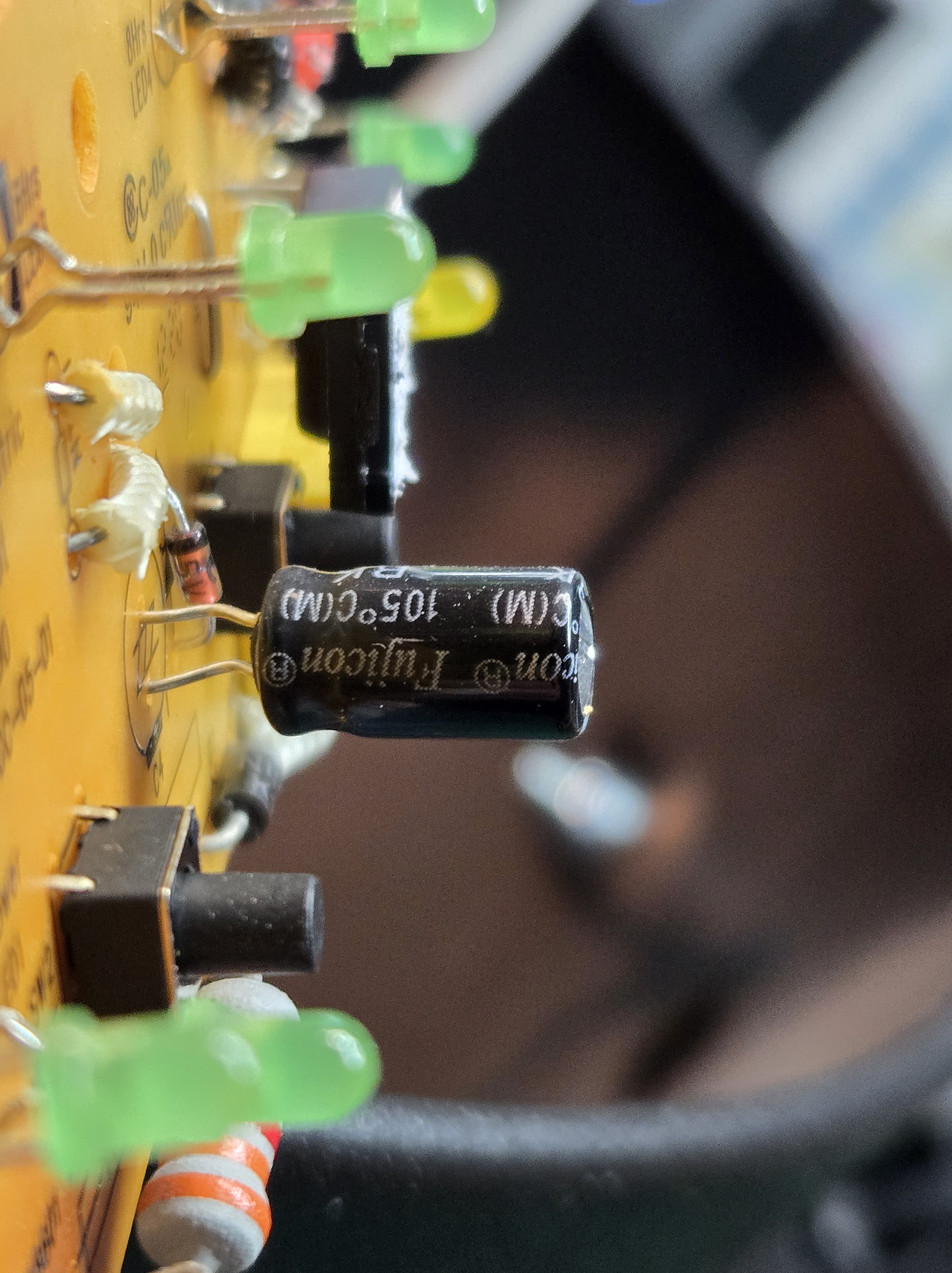
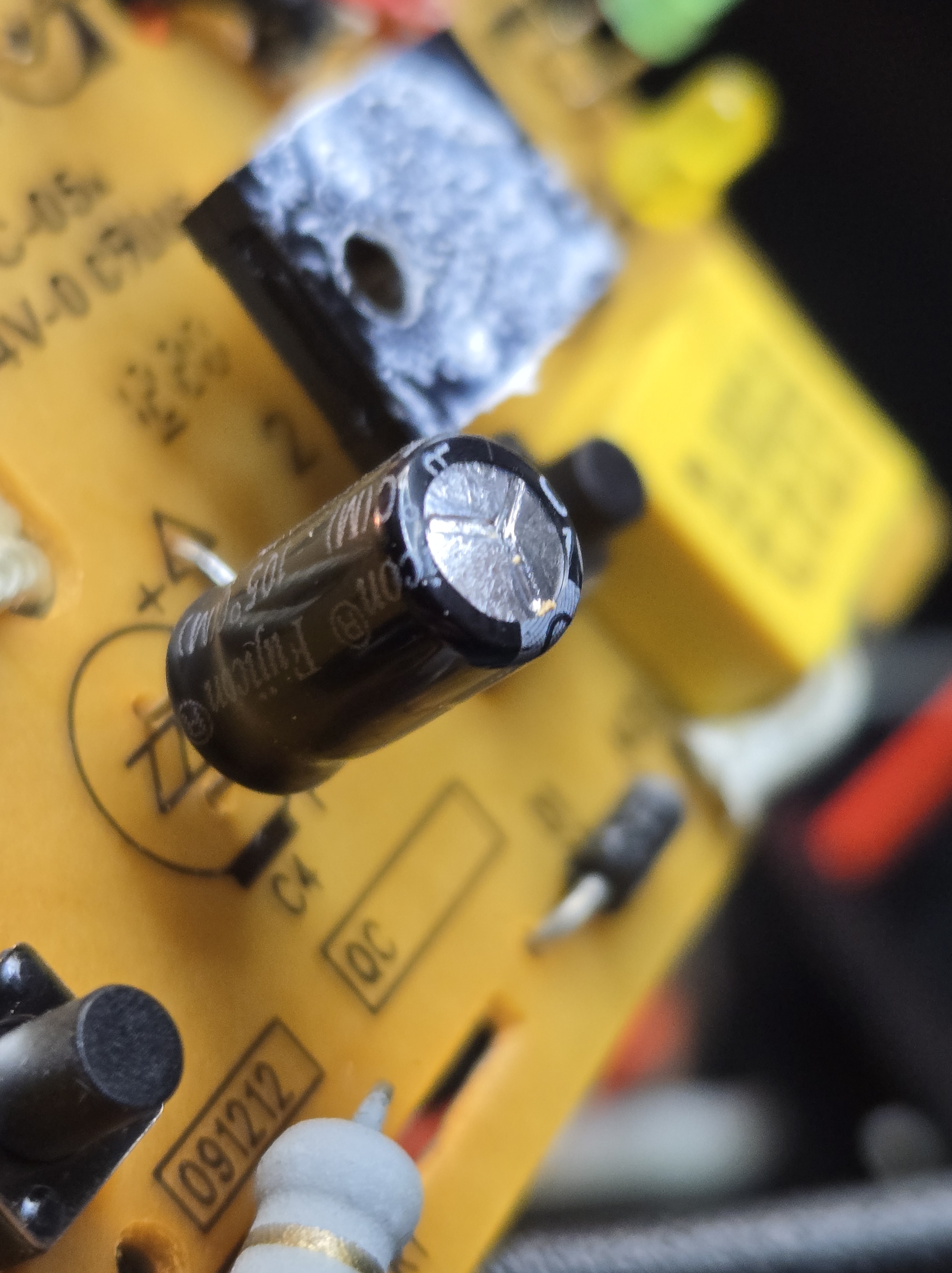
It’s a little hard to tell in the photos, but it was easy enough to spot (with a trained eye) in person: the 470 uF, 10V, 105C capacitor had a slightly bulging top and a tiny spot of leaked electrolyte. Sounds about right. If it’s anything more than this, it’s going to be destined for the trash, but this is a likely place to start.
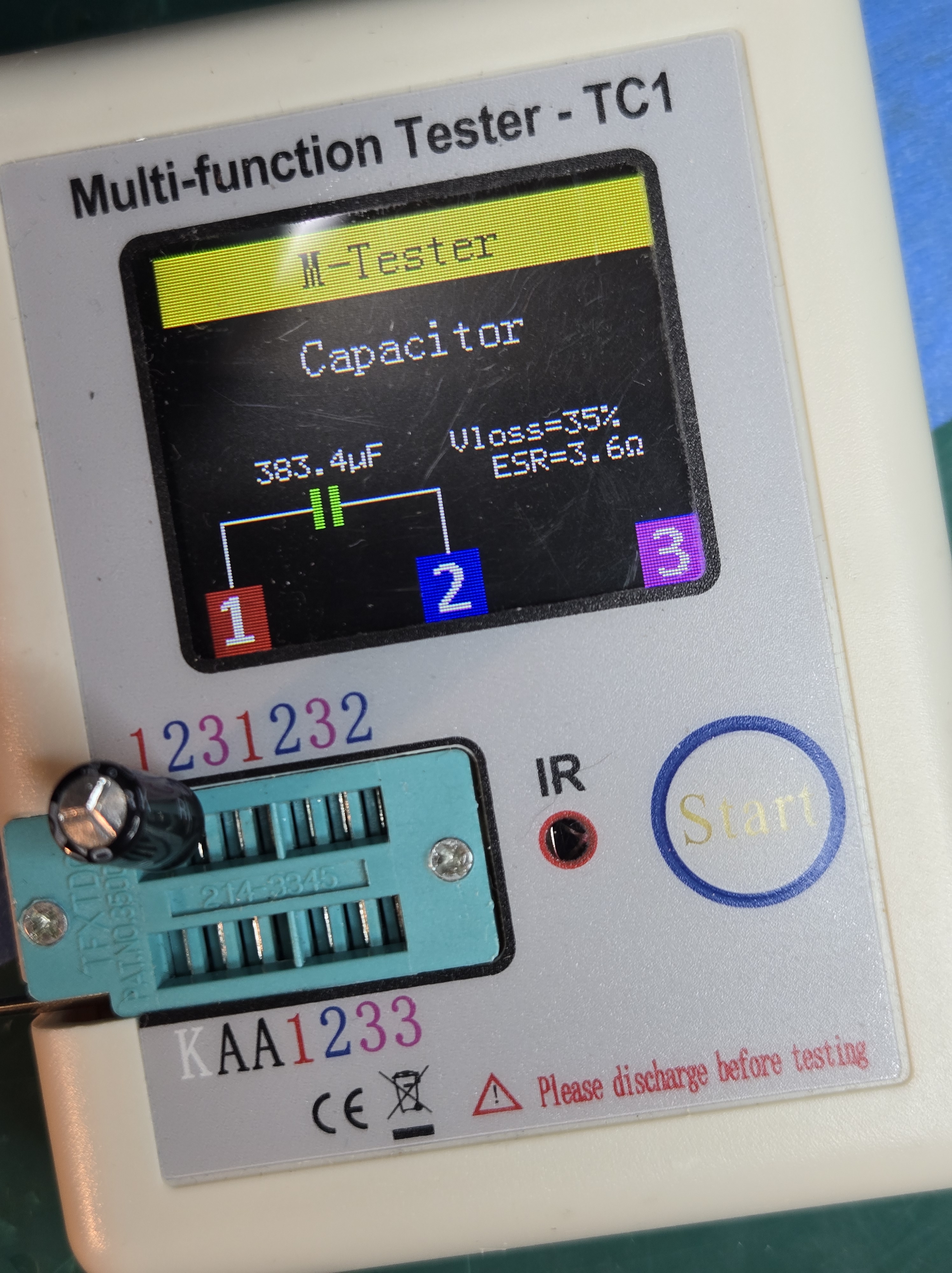
Confirming what I already knew, this one is definitely bad.
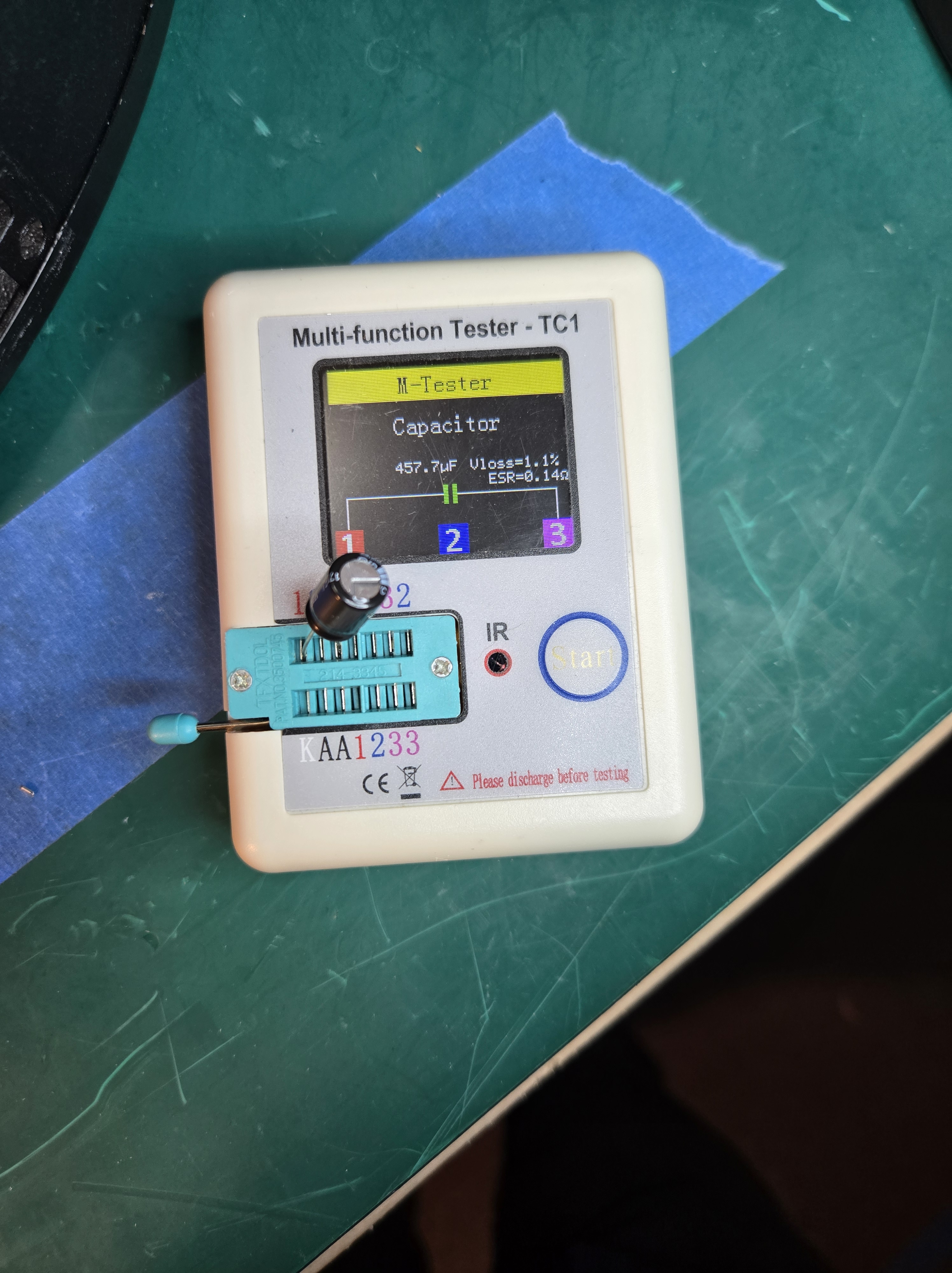
Compare the readings on the bad vs. good capacitor: 35% vs. 1.1% V_loss; 3.6 Ohm vs. 0.14 Ohm ESR, and the capacitance on the original had drifted down by about 25%. The replacement is a Nichicon 470 uF, 16V, 105C rated capacitor. It’s very slightly larger than the old one, but still fits.
Unfortunately, I just moved quickly through the reassembly and didn’t get a photo of the new component installed. I also cleaned and reapplied thermal paste where the triac sinks heat to the metal shield. (It’s a very small amount of heat.) Then, time to button everything back up.
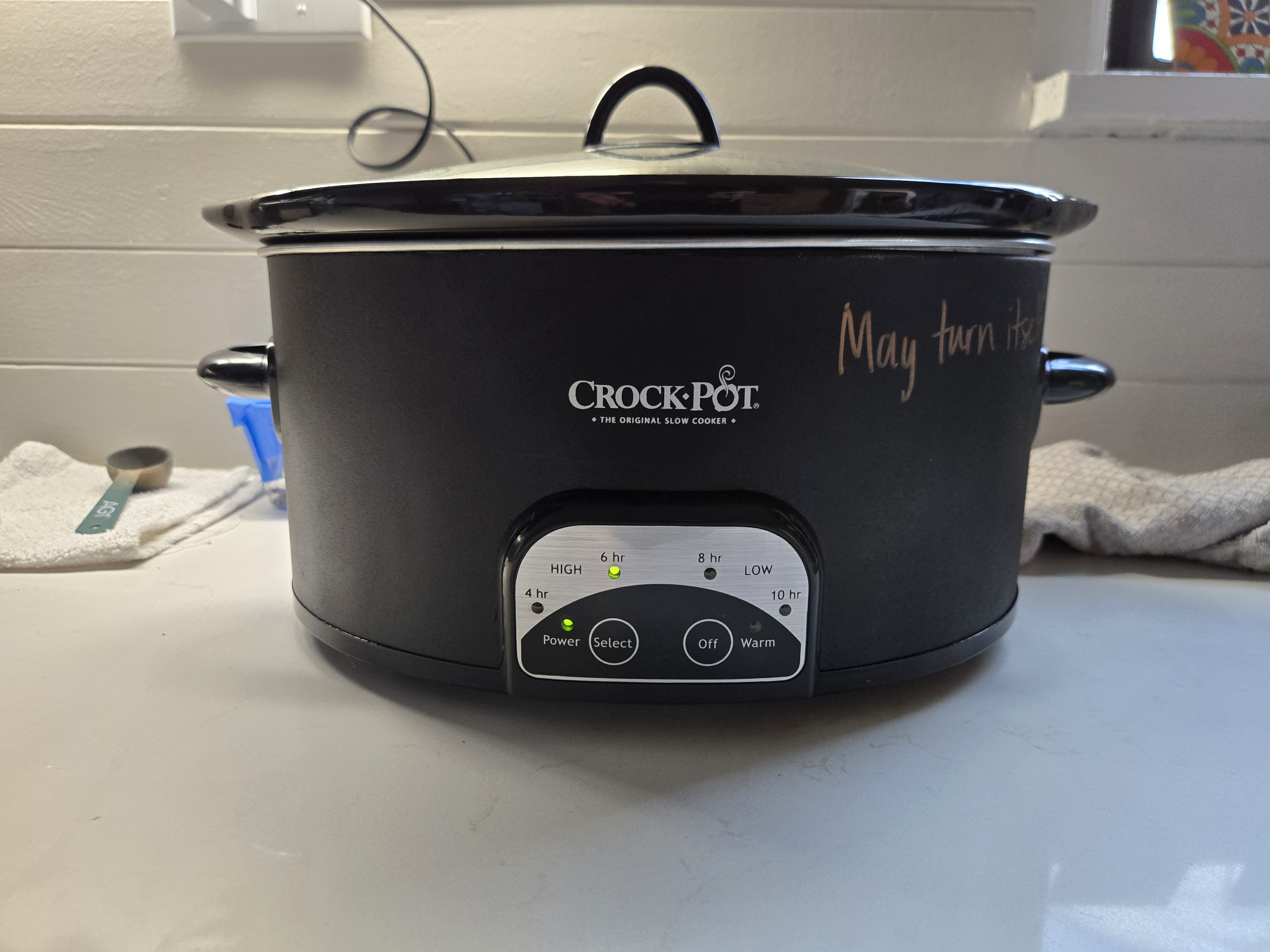
I’ll need to make a run to home depot and find some flat head machine screws and use those in place of the rivets I removed, so right now the (hot, energized) liner and heating element are just sitting in place held by gravity. But functionally, it seems to be holding up to a test run on high at 6 hours. It’s fun to be able to do this sort of thing around the house, and save a kitchen appliance from heading to the landfill.

