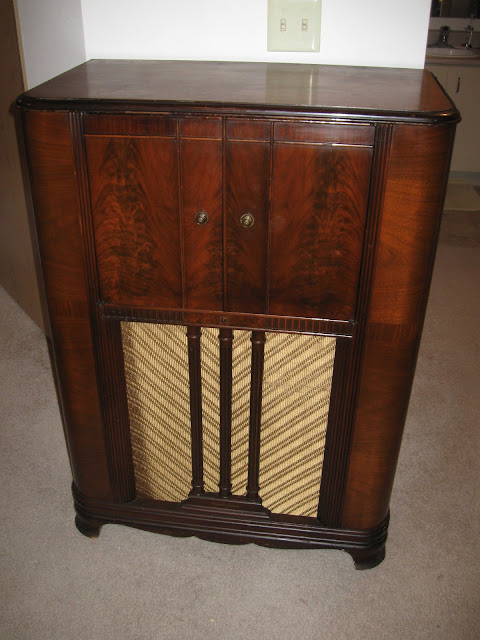
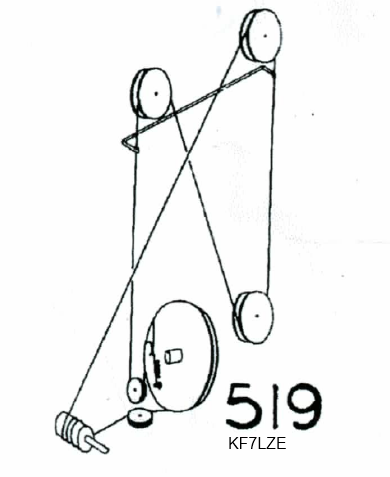
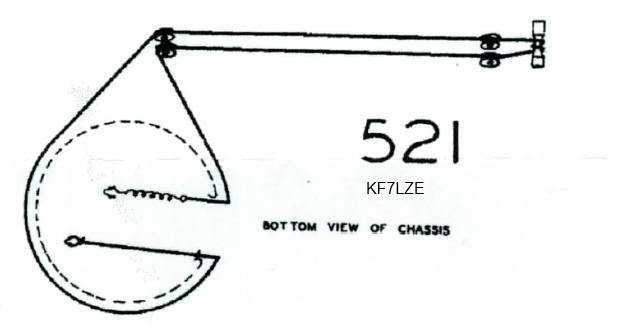
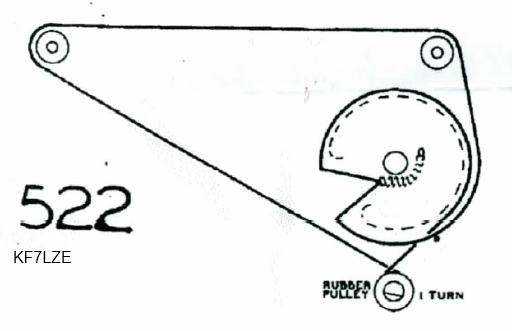
I’m recently the proud owner of a copy of the original dial-stringing guides for several Stromberg-Carlson radios from 1939-1941. This information is extremely hard to come by – it wasn’t included with the original engineering/service data, nor is it anywhere else on the web. Back in February when I was starting to restore a SC 520-PG for gift, I was looking for this dial-stringing information. With the help of a fellow radio collector Jody, I was able to come up with a photocopy of the original service data sheet. In six months of intensive searching and consulting every collector’s resource I know of, he was the only one able to help. Most other collectors and hobbyists, including several who were around when they were making these new, didn’t believe the data was ever published in the first place so I’m quite excited to be able to share it here.
I’m making these available free of charge to any collector or hobbyist who can use them, in the hope they’ll save someone the amount of frustration I had to go through to get my 520 dial restrung without a guide. So, without further delay, here they are:
These diagrams obviously cover the Stromberg-Carlson models 519, 520, 512, 522 and 523. If you have any other dial stringing guides to add to this page, I’d love to have them!
In Season 2, Episode 7 of television program “Babylon 5” (1994-1998), you can see a few antique radios in the space station’s Earth History Exhibit.
With the help of some other radio hobbyists, I’ve identified the interesting ones. On the top shelf left to right, the wooden Tombstone radio is an unknown Wilcox-Gay model from around 1934; next is a Zenith 5G500 portable radio with Wave Magnet antenna, the Red square is an Emerson model 560, and finally the blue peaking out of the frame on the right of the top shelf is a 1960s GE radio in the C430A family. None of those are particularly special radios now, although they are nice and interesting, and in the ’90s they were probably easier to find for cheaper.
I’m looking for a new summer project, and think I’m going to branch off from repairing radios to building some of my own gear. I’m interested in making a tube hi-fi stereo amplifier to go with my old speakers – and it’s something I can build. Audiophiles, guitar enthusiasts, and other people into tube audio have driven the price of most of the good audio tubes higher than I’m interested in paying, though.
The 6V6 audio tube is known and loved by enthusiasts everywhere, and came in a variety of other versions with different ratings, different glass, different power supply requirements but pretty much all produce the same output. I’m interested in making a miniature-tube amplifier, so I’ll be starting with the 6AQ5A tube – but these are pretty expensive. An alternately powered version, the 5AQ5 goes for only about $2/each so that looks like a winner.
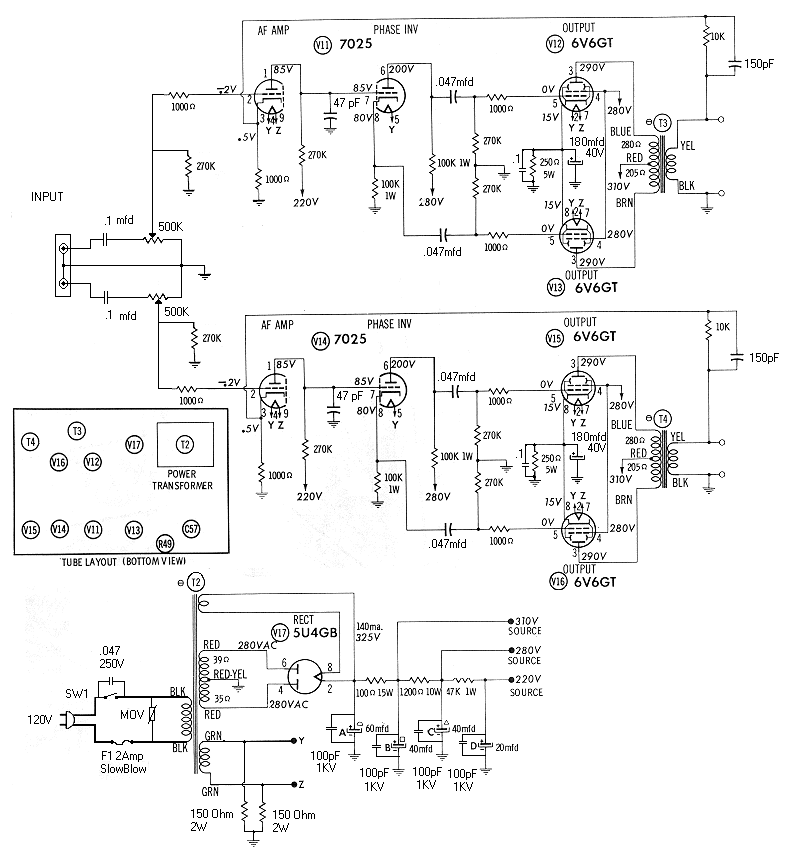
I’ll be basing my amplifier on the Silvertone 69A, a dual-channel push-pull stereo amplifier manufcatured in 1960. This amplifier used a 5U4 rectifier tube to supply the high voltage. By replacing the tube rectifier (right, above) with a pair of 1N4007 silicon diodes (left, above) I’ll free up the 5V power supply. A set of four 5AQ5s draws 2.4A of current; a 5U4 draws 3A of current so there’s more power to spare and a guarantee of being able to find cheap hi-fi tubes for years to come without a lot of competition.
The schematic – with some bias and output mods – not showing the power supply or output tube modifications – that I’m basing the design is here (click for larger version!):
This should be a good sounding little amp if I get around to actually completing construction. I have most of the iron [transformers] in stock already, it’s just a question of buying some hardware and spending the time required to wire it. We’ll see.
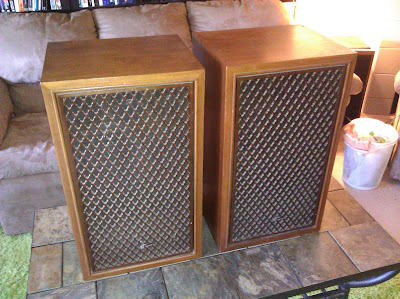
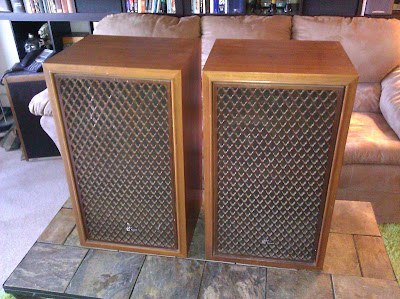
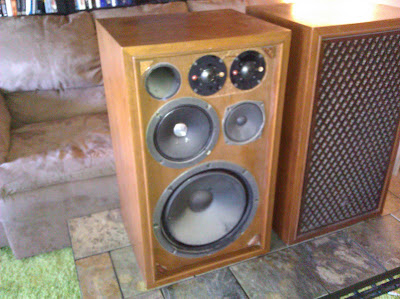
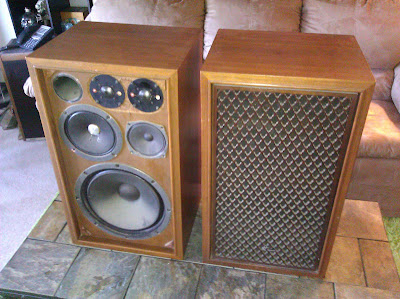
It’s been a little while since I’ve gone on my rounds through the salvage and recycling centers nearby. There wasn’t much out there today, but I did find a very good condition pair of Sansui SP1500 speakers. I already own a pair of Sansui SP2500s and a pair of Sansui SP7500Xs, maybe I’ll find the whole set one day. These were made between 1960 and 1974. More for looks than show, but they’re solid for home use.
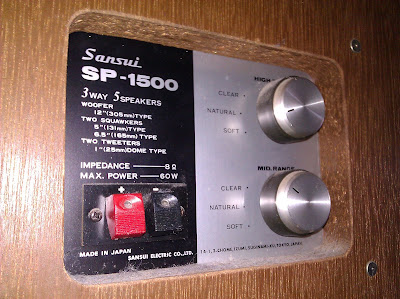
I found a thumbnail, but no full size, of the original spec sheet.
This particular set is a 3-way design with 5 drivers (the midrange stage uses two different sizes), 8 Ohm impedance accepting 50W of power with an efficiency of 97 dB (1W*1m) and frequency response from 40Hz-20KHz. They’re quite heavy weighing in at 47 lbs. each, give a good “thud” when rapped with their walnut and pressed board construction.
They’re in great shape, for having been found at a recycler. I noticed them in the back of the loading dock in an area that’s normally off-limits, and convinced the worker to bring them out front for me. Normally they won’t sell out of the back room, but it didn’t take much convincing. With rated power handling of 60W into 5 drivers, these should be solid performers in my system.
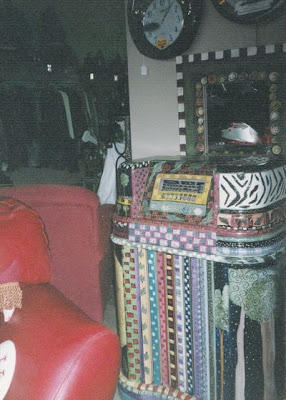
I thought I’d start the weekend off with some more photos of butchered antique radios for your viewing misery pleasure. This is the second-round photo roundup. Check out the first set of ruined antiques here!
An aspiring artist thought this 1940s Philco radio would look better painted in a motif reminiscent of Starry Night. I don’t really agree.
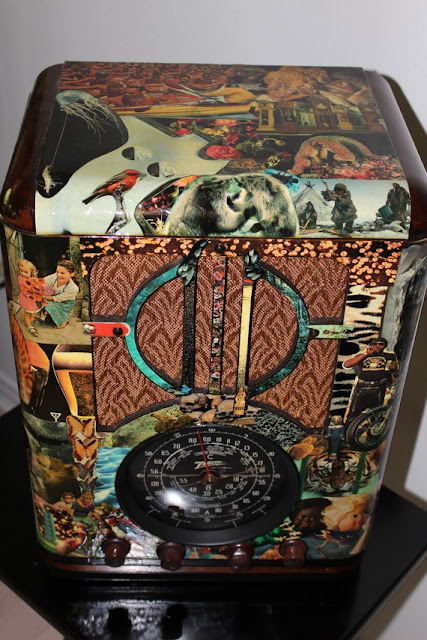
Somewhat similar, a dealer is selling a Zenith tombstone radio that’s been decoupaged with magazine clippings. This was almost an interesting work of art, but because the magazine clippings aren’t from the correct period, it’s just tacky.
This late ’20s lowboy radio was stripped down into an end table. Cleanly done but it would’ve been more interesting with the internals, even non-working.
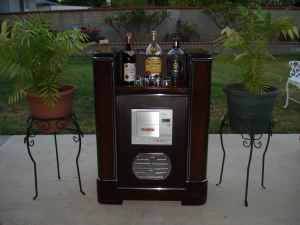
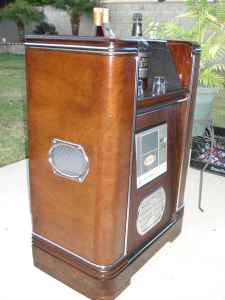
From Craigslist, someone turned what I suspect is a late ’30s RCA into a bar with a modern stereo built in. Turning radios into bars seems to be a popular thing to do with them.
Radio bar conversions have been going on for a very long time – almost as long as radios have been around – and some can be very interesting. It’s just that many are done without respect for what the radio used to be – and without regard for the shape of the cabinet. Most upright radios don’t have a flat inside space to place anything, making shelving difficult – and ensuring that it’s going to look ugly no matter where it’s stored.
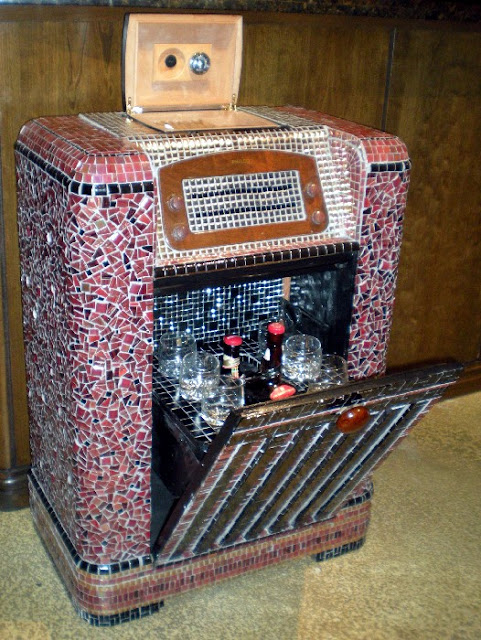
Most similar-looking Post-War consoles with a record player are reasonably suitable for conversions. This one has been adapted into a cigar bar:
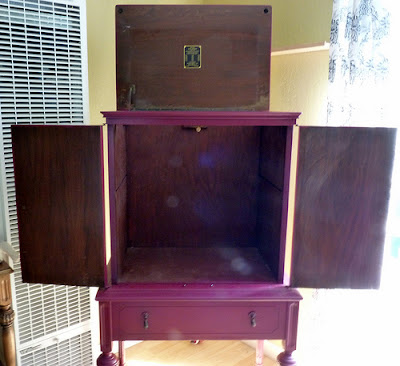
That’s not too bad, but radios with more square space inside are even better:
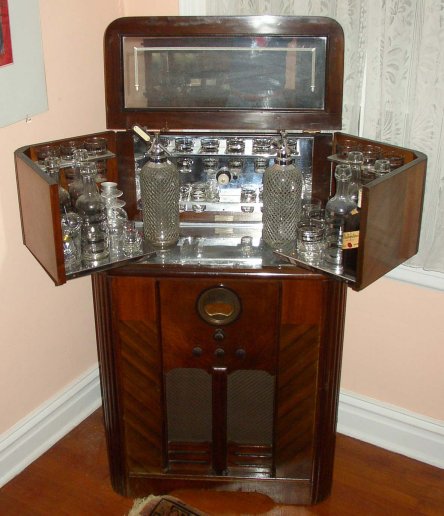
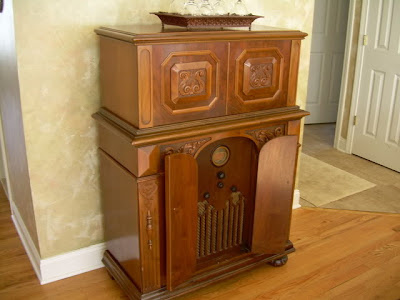
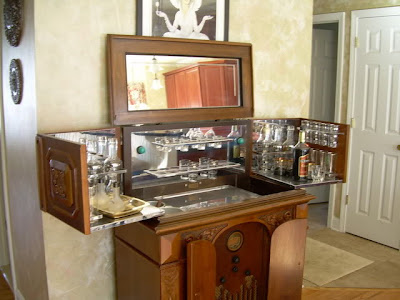
Back in the 1930s, radiobars were intricate pieces of high-end furniture in custom made cabinets for the wealthy and were produced by several major brands. This 1937 Philco radiobar has great folding out sides and mirrored backing, with period glassware:
They came in a few cabinet styles:
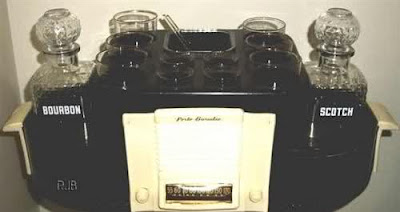
There were even models produced into the ’40s and ’50s, like this Porto-Baradio mantle-top bar:
If you’re looking for an antique radio bar, you might be better off shelling out for an authentic one rather than a conversion.
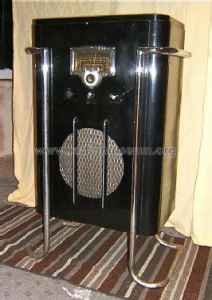
And finally, leaving you with one that looks deceptively like a ruined antique but is in fact very special:
While it might look at first glance like a 1930s RCA radio that’s been painted black and had 1970s chair rails stuck on the ends, this is in fact an original by famed industrial designer and RCA contributor John Vassos and is worth thousands. Its style is the sort of thing that could be easily overlooked, too!
And we’re done! The saga of restoring the Grunow 589 is coming to a close, as I’ve sorted the last issue, performed the final set of adjustments and verified correct operation of all its features.
Update: The series is complete. For more articles and information, visit these other posts. This dates back to 2011, when I was pretty new to this hobby – I’d probably do a few things differently now!
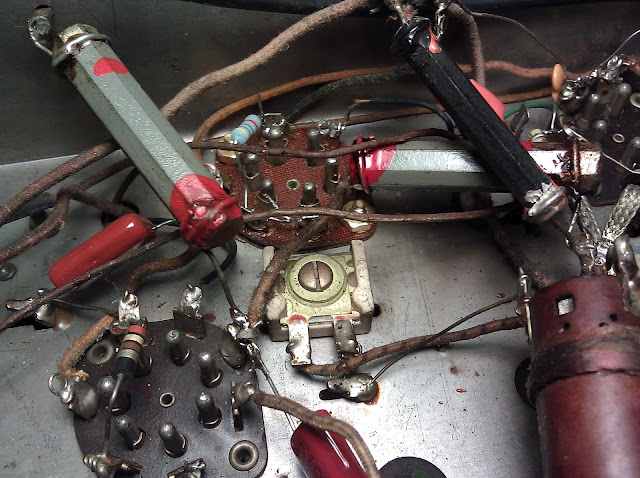
I’d completely electrically restored the radio and completed the first phase of alignment after the socket replacement, but the radio was acting up, oscillating and cutting out intermittently. It turns out that a wire had broken under the cloth insulation. I located the break (near an end of the wire), stripped off the insulation back to a good segment and reconnected to restore proper operation.
I re-peaked the alignment just for good measure, this time using my non-inductive alignment tool.
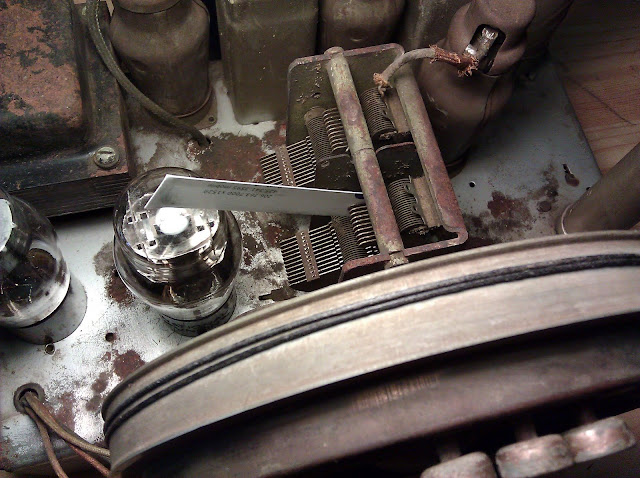
Finally, at one very narrow range down at the low end of the AM broadcast band, the oscillator was cutting out for a very narrow range – only about 580-600 KHz. Because of the nature of the failure it was easy to determine that it was caused by shorting plates in the tuning capacitor. Shining a bright light on the plates, it was easy to see where they were just barely scraping, and very carefully bending it outward solved the problem completely. I used a cut to size piece of a business card for this task.
The radio receives stations across the entire dial and the tone control nicely compensates for proper sound depending on the style of music being played. Radios this old weren’t built to “hi-fi” specifications as they are now, so the frequency response is somewhat chopped compared with a modern system – it rolls off the highest highs and distorts on big bass hits – but it sounds incredible playing period music, talk, sports, and lighter ambient choices.
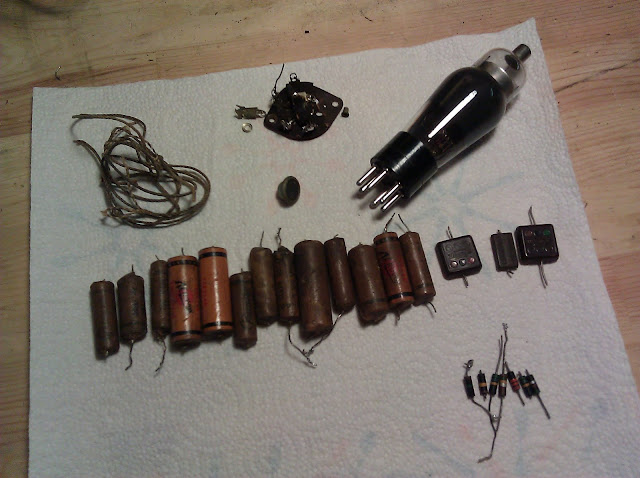
I replaced quite a few pieces during this restoration:
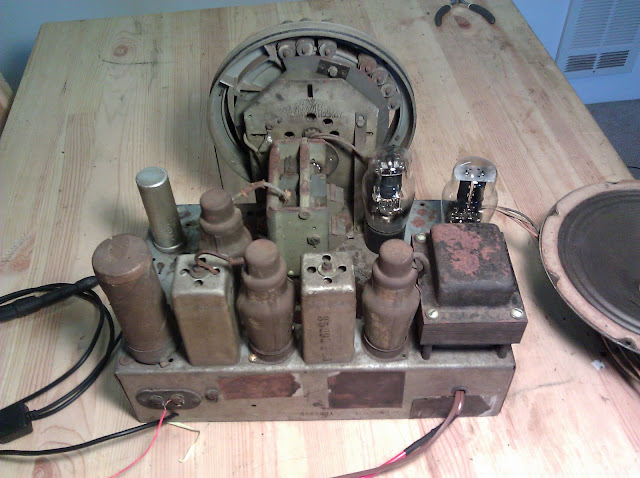
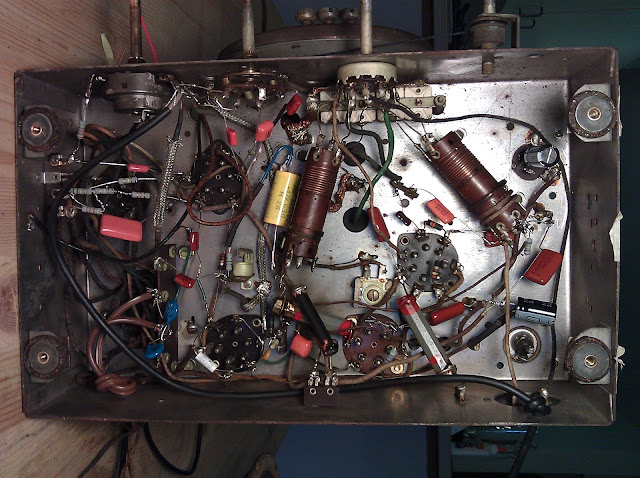
Dial string, tube socket, bias cell, one tube, 13 paper capacitors, 3 mica capacitors, 2 electrolytic capacitors (not pictured), and 7 resistors.
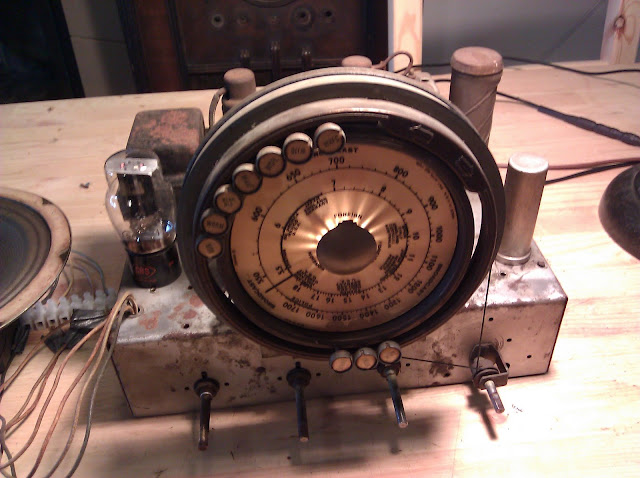
Photos of the completed chassis:
I was able to weakly receive a single shortwave station, this one at the high end of the dial, while scanning today. Shortwave reception is so variable, depending on atmospheric conditions, time of day, local electrical noise and RFI, and antenna setup but I’ve been able to receive a few other stations at different times of day with this one. As this is an entry level model lacking a tuned RF amplifier, its shortwave performance will never rise above mediocre at best but it probably performed acceptably in days of less noise and more stations.
This process dragged on longer than I usually like due to a couple of issues that cropped up in the middle, but on most old radios there are no problems that time and patience can’t solve. Another successful project, done!
Update: The series is complete. For more articles and information, visit these other posts. This dates back to 2011, when I was pretty new to this hobby – I’d probably do a few things differently now!
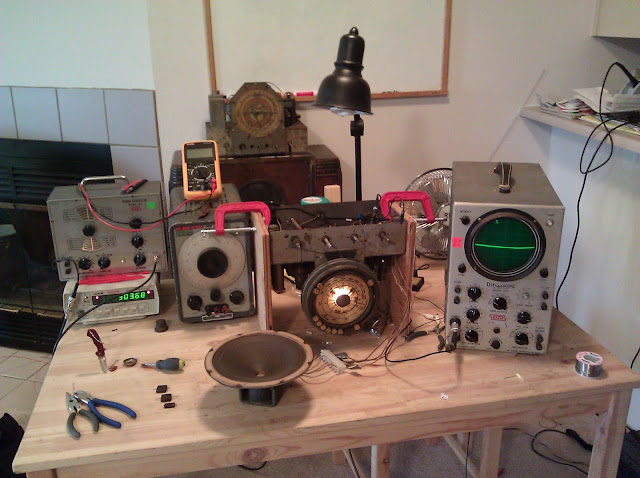
I’m attempting to diagnose an intermittent in the RF stages of this radio. I’ve not yet tracked it down, but I thought a photo of my workbench with all of the really interesting test equipment would be worth posting:
Left to right, EICO 324 signal generator, Victor frequency counter, HP 200CD test oscillator (not used in this step but will be later), generic digital multimeter, and my EICO 460 oscilloscope.
I’ve attached the oscilloscope to the volume control to watch the waveform. Since the volume control is after the detector, the scope is measuring the output of the RF stage which is helpful for seeing what’s going wrong.
Update on 6/24: It turns out the problem was caused by a brittle wire that broke under its insulation. The break wasn’t visible, but was located when touching a certain wire changed the set’s behavior. After repairing the break, the problem appears to have been resolved.
Update: The series is complete. For more articles and information, visit these other posts. This dates back to 2011, when I was pretty new to this hobby – I’d probably do a few things differently now!
We’re nearing the end of this particular project, and are just down to some touch-up work. The Grunow 5-U chassis I’m working on has had a lot of work done on it so far, please visit the previous entries if you need a recap or want to see some more photos.
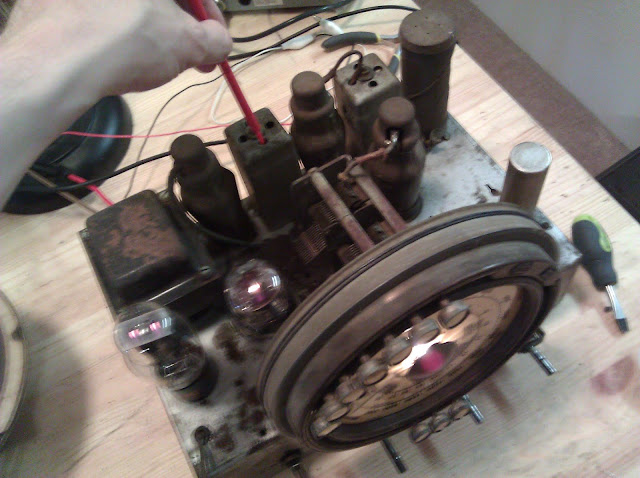
Now we know the radio is in good shape, it’s time to start working on the alignment. The radio receives stations but with a bit of distortion, so the first steps are to peak up the IF transformers. Using my signal generator set to the intermediate frequency of the radio and verified with the frequency counter, I’ve hooked the generator’s output to the grid of the converter tube. This will introduce a warbling signal to the radio.
Using an insulated screwdriver and listening for peak output, I adjust the IF transformer trimmers to bring them into alignment at 465 KHz starting with the secondary of the second IF transformer, then the second IF transformer primary, and finally the secondary and primary of the first IF transformer using an insulated screwdriver (as the primary of the IF transformers carries the high voltage, so if this were to short to the can it could damage or destroy components.)
It’s a little messy, but here you can see them all chained together as the process gets underway.
Unfortunately, though, the alignment procedure revealed a weakness that I hadn’t previously detected. It turns out that the 6D6, IF Amplifier tube, was extremely picky about its orientation during operation.
It turns out the socket cracked and was no longer making good contact with the tube, causing intermittent operation. That’s unacceptable, so the socket had to be replaced. Socket replacement isn’t terribly difficult, but it is tedious and time-consuming as all the connections must be carefully removed from the tube and preserved, the socket rivets drilled, a replacement socket mounted and connections re-established. This frequently requires a realignment, too, as components being physically moved (lead dress) can change the alignment.
Using my hand drill at a slight angle, I attack the rivets holding the socket in. The rivets split into three pieces instantly, and the socket was free.
Clearly it wasn’t held together by anything except those rivets,as it disintegrated immediately.
The new socket mounted up easily with #6-32 machine screws. I replaced the 470 Ohm cathode resistor as well, as it broke during removal.
The top view after final socket replacement. Pretty much all the work under the chassis is done at this point, although I’ll be taking another crack at the alignment for good measure to peak it up after replacing that socket. The 6D6 now properly mounts and its shield covers it. The shield is necessary or the radio won’t play. The only evidence of the replacement are the small brass screws. The radio plays much better now, and isn’t sensitive to bumping the table, walking by, looking at it wrong, or any other contact-related annoyance.
All that remains on this radio is to complete the alignment and re-string the dial.
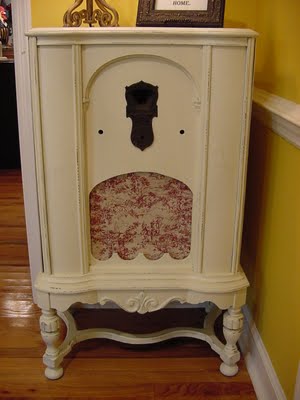
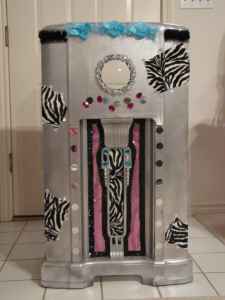
Normally, I write about how to fix an antique radio. Today, though, I’m writing about all the creative and interesting ways people have found to destroy them – and there are quite a few ways, from gutting a radio cabinet and painting it a garish white to turn it into a “shabby chic display case”, to cutting pieces off radios to make into shelves for putting in a modern radio, to turning them into a fish tank or “blinged out” display case.
Most of these modifications are done without regard for final appearance, and usually end up being dumped on Craigslist or eBay for dirt cheap once the previous owner realizes they’ve created something hideous – and they stay there because nobody else wants to buy them, either.
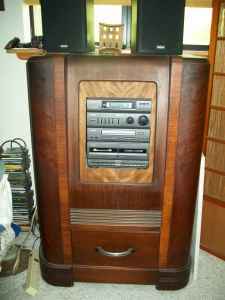
Here, someone’s taken a nice late 30s-early 40s console radio, cut out the front patch with the controls and speaker, and inserted a cheap ’90s stereo component shelf. While more tastefully done than some, the modern controls look totally out of place and while it probably receives FM and can play two cassette tapes at a time, it looks especially awkward with the bookshelf speakers sitting on top of the cabinet. and in a non-matching finish.
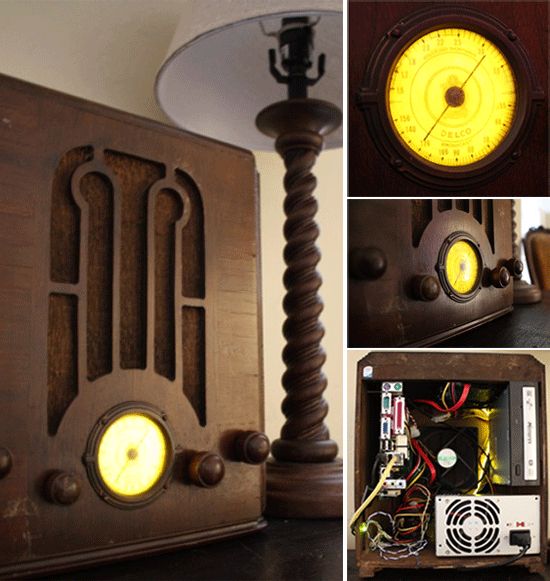
This Delco antique radio case mod was done with a little more attention to detail – the dial face and knobs were left intact as dummies – but unfortunately, the radio that used to be inside was a relatively rare and valuable model that used to run on the little-seen 32V DC mains voltage found out in some rural areas in the ’30s. This one is pretty tasteful, but even if the radio chassis was trashed it’s doubtful it would have been too far gone to restore.
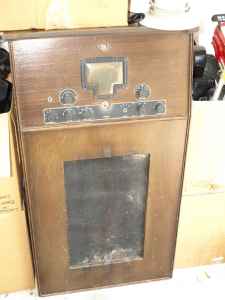
I believe this one used to be a ’30s RCA, significantly modified to fit a single large speaker and what appears to be either a PA or guitar amplifier in place of the vintage radio’s controls. Shame, too, this one used to have an eye tube.
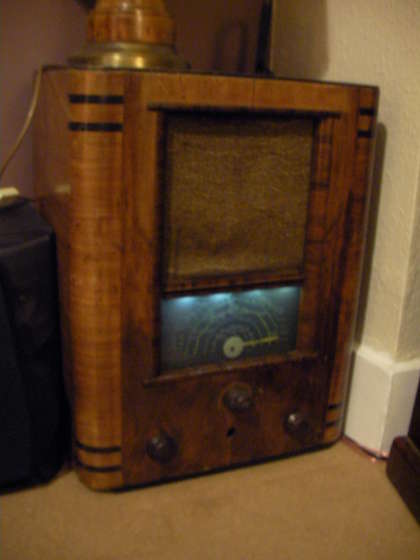
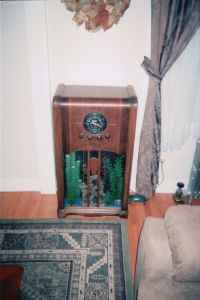
This poor tombstone-style radio from the ’30s met an unfortunate end, having the guts from an integral all-in-one stereo unit bolted to the remains of its stripped chassis. It’s nice the owner left the knobs and dial intact for display, but it’s still a low-end modern system shoved into what could’ve been a beautiful and functional antique.
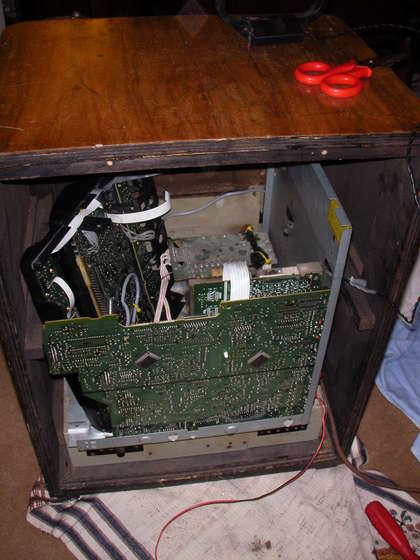
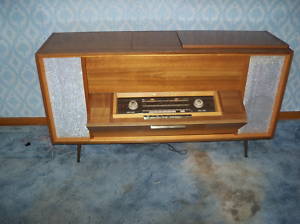
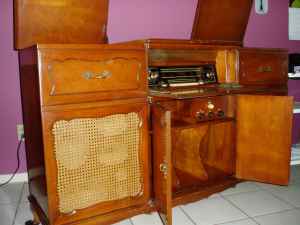
For reasons that escape me, the owner of this one took a German hi-fi radio console from the ’50s, with the clean lines, and shoved it into a French Provincial style cabinet common to stereo consoles in the 1960s and 1970s. While it’s probably an upgrade from whatever equipment came in said console in the first place, French Provincial cabinets like that are some of the ugliest furniture that exists in my opinion.
This used to be a ’30s Zenith radio, one of the most sought after brands. Now it’s an aquarium.
What used to be the rare and valuable Atwater-Kent model 84 from 1931, was turned into an AM/FM transistor radio at some time in its past life, leaving only the cabinet to show for it. With a tiny, 3-inch speaker the sort you might find in a clock-radio. (There used to be kits for this sort of thing actually, it was a fad in the ’70s.)
By far, though, the worst of the examples I’ve come across has to be this one:
This used to be a ’30s Grunow All-Wave radio, an excellent performer and fairly uncommon, until it was gutted and “blinged out” for display in a nail salon in Miami until the owner tried to unload it on Craigslist.
I was out over the weekend and stopped off to look at someone’s attic cleaning sale, and ended up with a few miscellaneous radio-related items I’m planning to resell. One of the more interesting items was a lot of a few vintage radio “B” batteries.
They’re extremely old – the bottom is stamped “For best results put in service before April 1929”, and they have several internal voltage taps so it can supply 6, 18 and 22.5V. Four of these batteries had their taps arranged in series combinations to provide the higher voltages for the tubes, up to 90V.









Antique Radios in “Babylon 5”
In Season 2, Episode 7 of television program “Babylon 5” (1994-1998), you can see a few antique radios in the space station’s Earth History Exhibit.
With the help of some other radio hobbyists, I’ve identified the interesting ones. On the top shelf left to right, the wooden Tombstone radio is an unknown Wilcox-Gay model from around 1934; next is a Zenith 5G500 portable radio with Wave Magnet antenna, the Red square is an Emerson model 560, and finally the blue peaking out of the frame on the right of the top shelf is a 1960s GE radio in the C430A family. None of those are particularly special radios now, although they are nice and interesting, and in the ’90s they were probably easier to find for cheaper.
Share this: