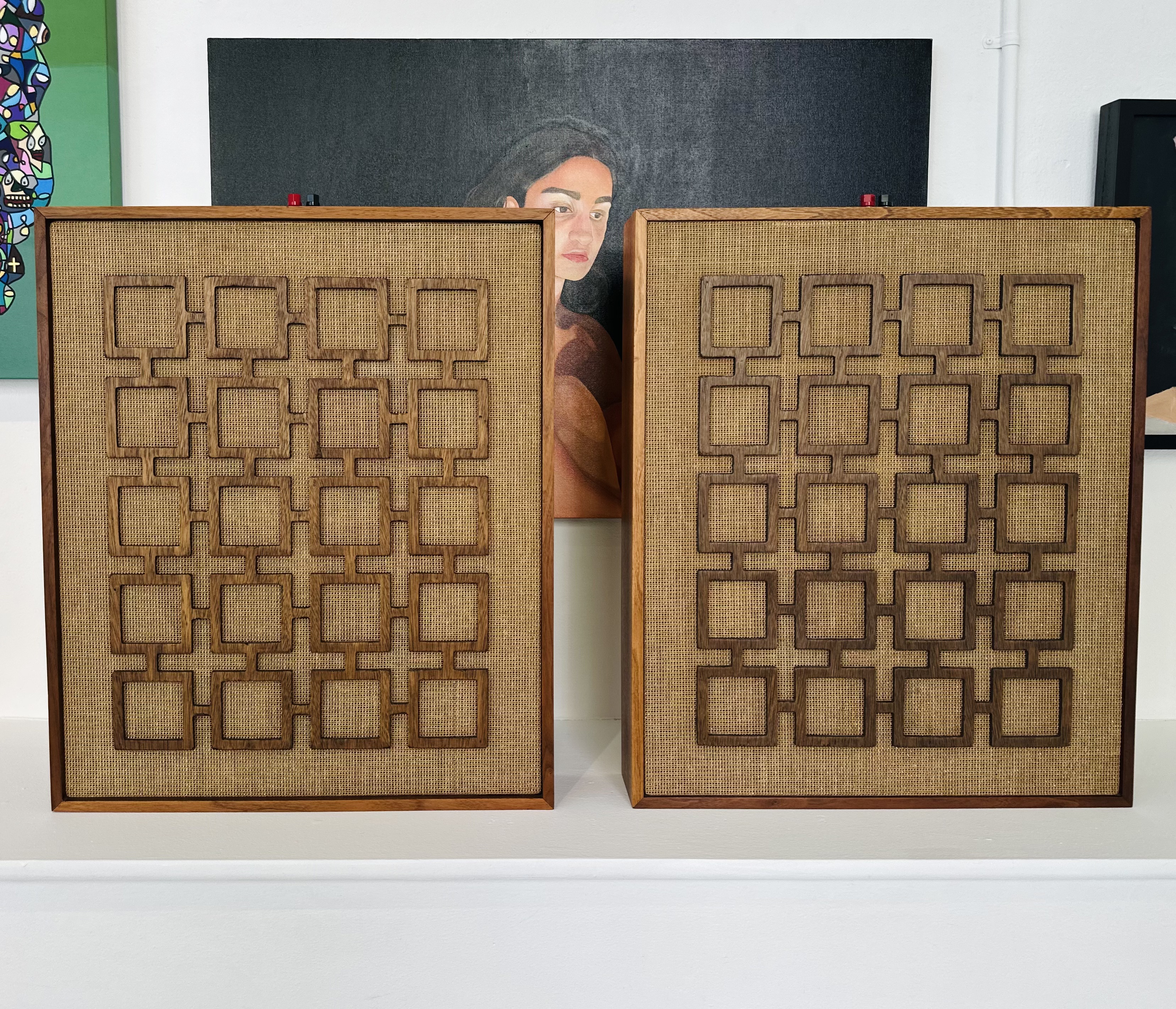
I’m not doing repairs for commercial clients at the moment, but I am working with a local furniture restorer to help her expand her offerings into mid-century (and adjacent) speaker and stereo repair. We just completed our first project together, which was a pretty simple one overall: refurbishing a set of 1961 Audax CA-70 “Sonoteer” speakers from 1961.
(Side note: some of the photos here are in whatever the “HEIC” format is. They embed and load for me, but if you can’t see them in your browser, leave a comment and I’ll re-encode them and replace.)
These are an interesting, and unusual, speaker from what was a fairly boutique manufacturer at the time. Not to be confused with the well-respected French brand Audax, the Audax USA brand was actually produced by New York-based manufacturer Rek-o-Kut, who were primarily a manufacturer of record players and vinyl cutting equipment. I wasn’t able to learn whether this was in fact a joint venture or licensing deal of some sort, or if two companies on opposite sides of the pond happened to come up with similar branding given the marketing conventions in the industry at that time.
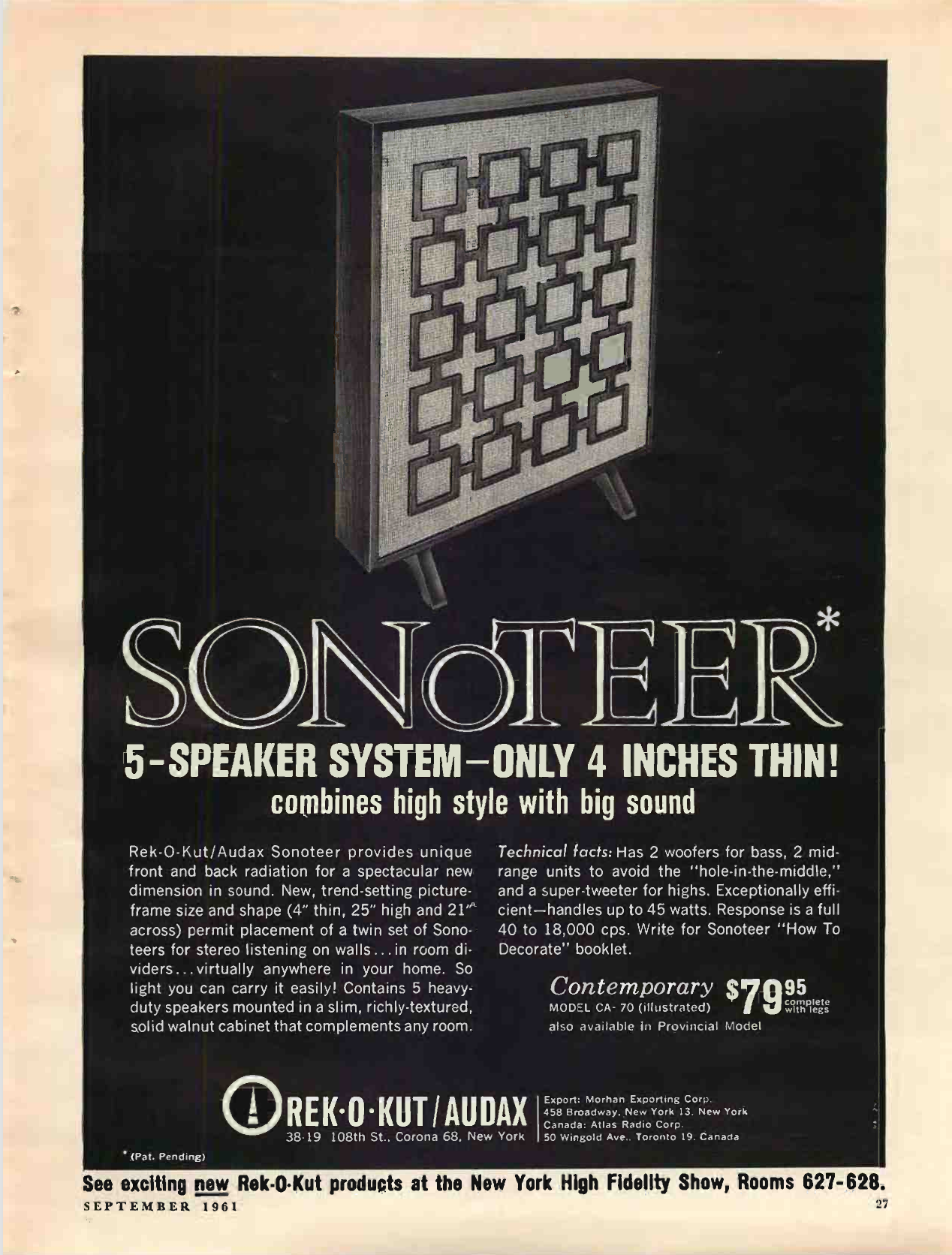
The September 1961 issue of Stereo Review has an original advertisement for these — unfortunately revealing that the included optional legs have gone missing at some point in the past. These really were quite a high-end piece in the day, retailing for $79.95 in 1961, or nearly $900 today.
The Audax CA-70 is an open-baffle design, which gives a really wide sweet spot, and offers a lot of mounting flexibility. Each speaker contains five drivers: two 6 woofers, two 4″ midrange drivers, and a tweeter. It’s rated for up to 45W power handling, and 40 Hz – 18 kHz frequency response. (In this time period, “full frequency response” was considered 50 Hz – 15 kHz, so this set of speakers offered exceptional performance indeed.)
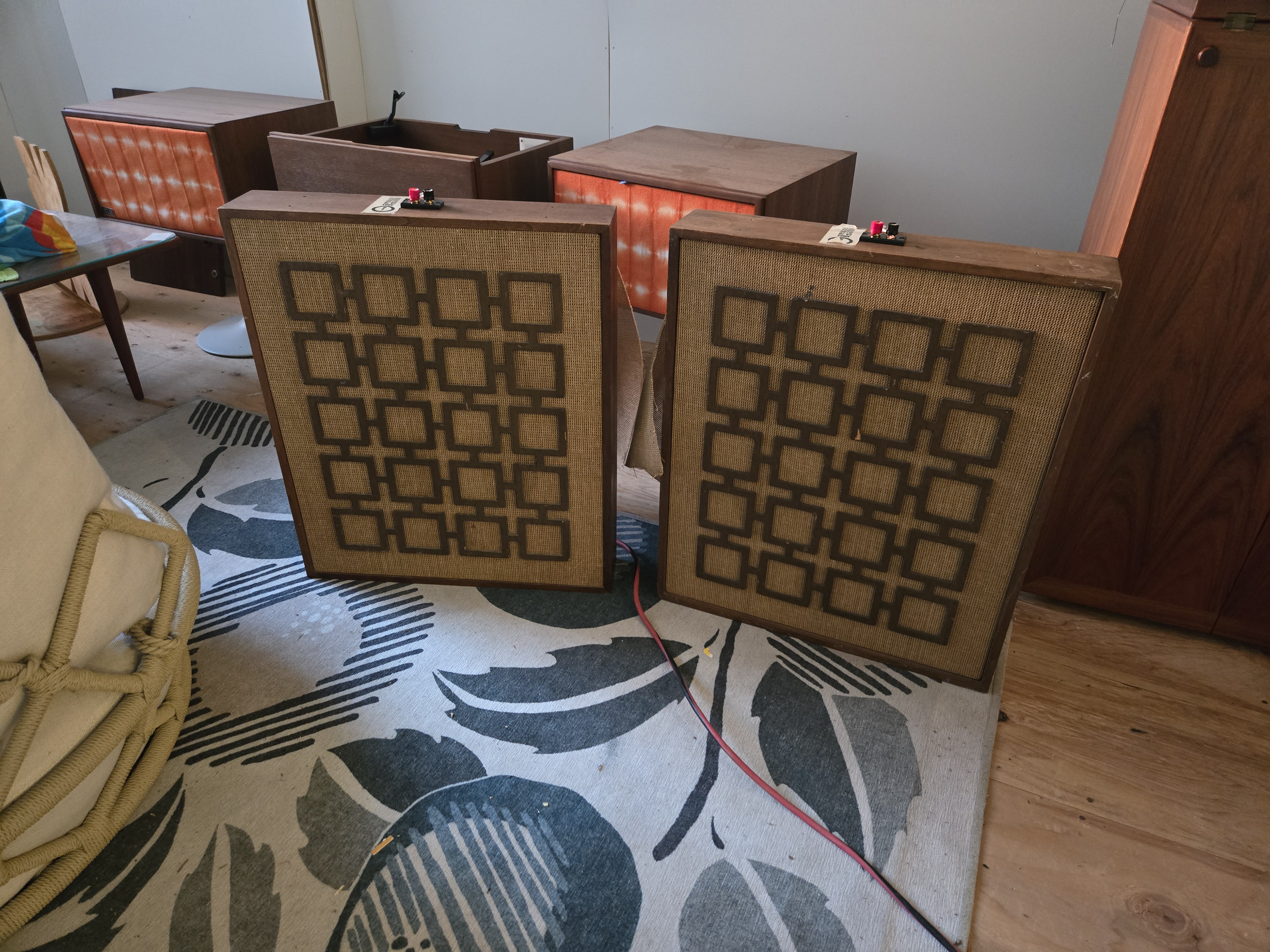
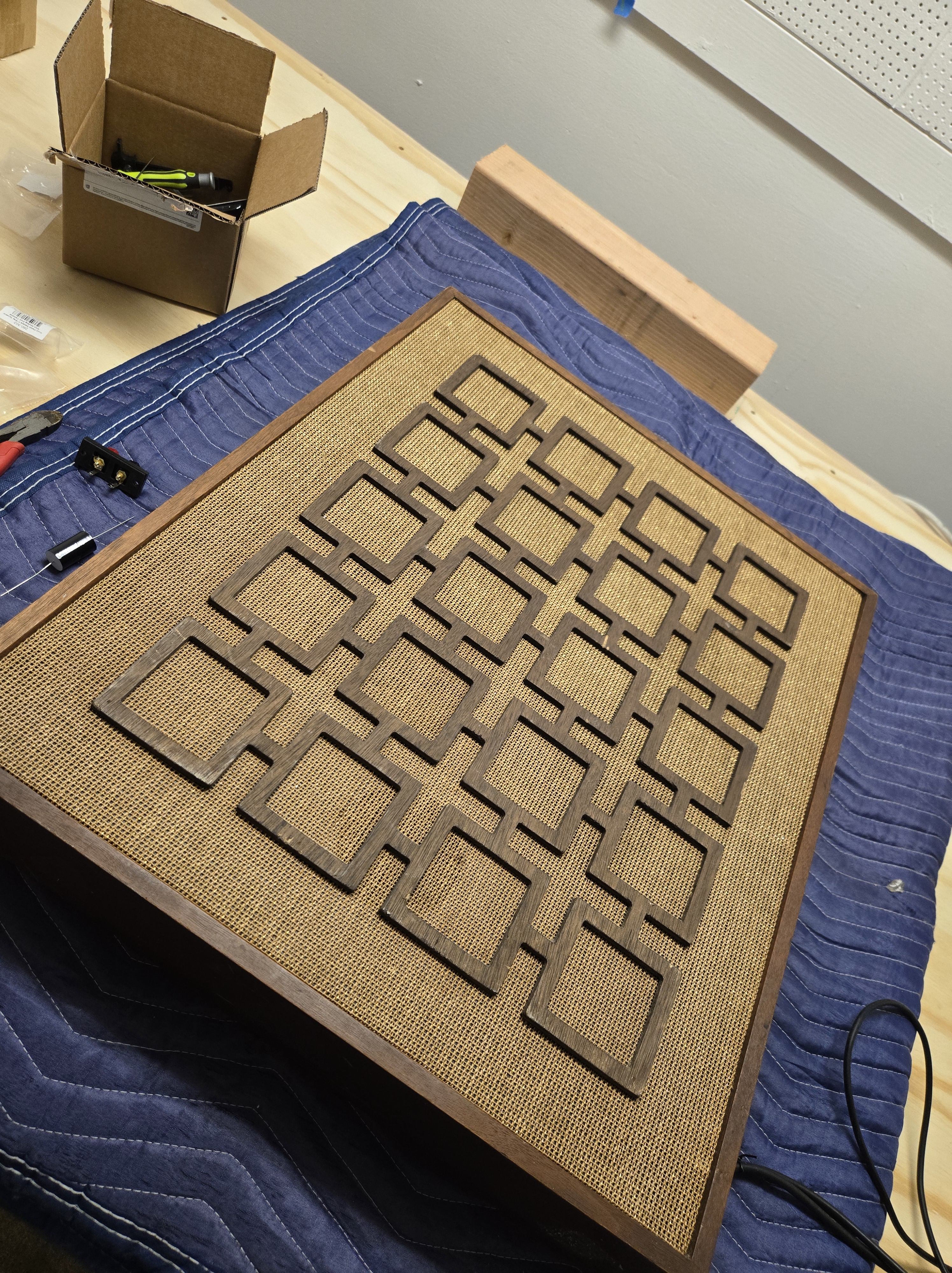
These arrived in good original condition. The legs were apparently missing, but that’s not the worst to replace or use an aftermarket floor stand. Other than that, the rattan covering and delicate latticework grilles were in excellent shape. While a bit dirty and faded with age, the wood cases were fully intact, making this an easy project for an expert furniture restorer. The fronts were attached using tiny flush-set finishing nails which were impossible to remove without causing damage, so we went in through the back (which ended up being the better approach given how the drivers were mounted) by carefully cutting around the edges, which were set into the baffle board. This allowed the rear rattan to be carefully removed in one piece with full coverage, so it could be reattached using spray adhesive. This is basically how it was attached originally, so it’s perfect.
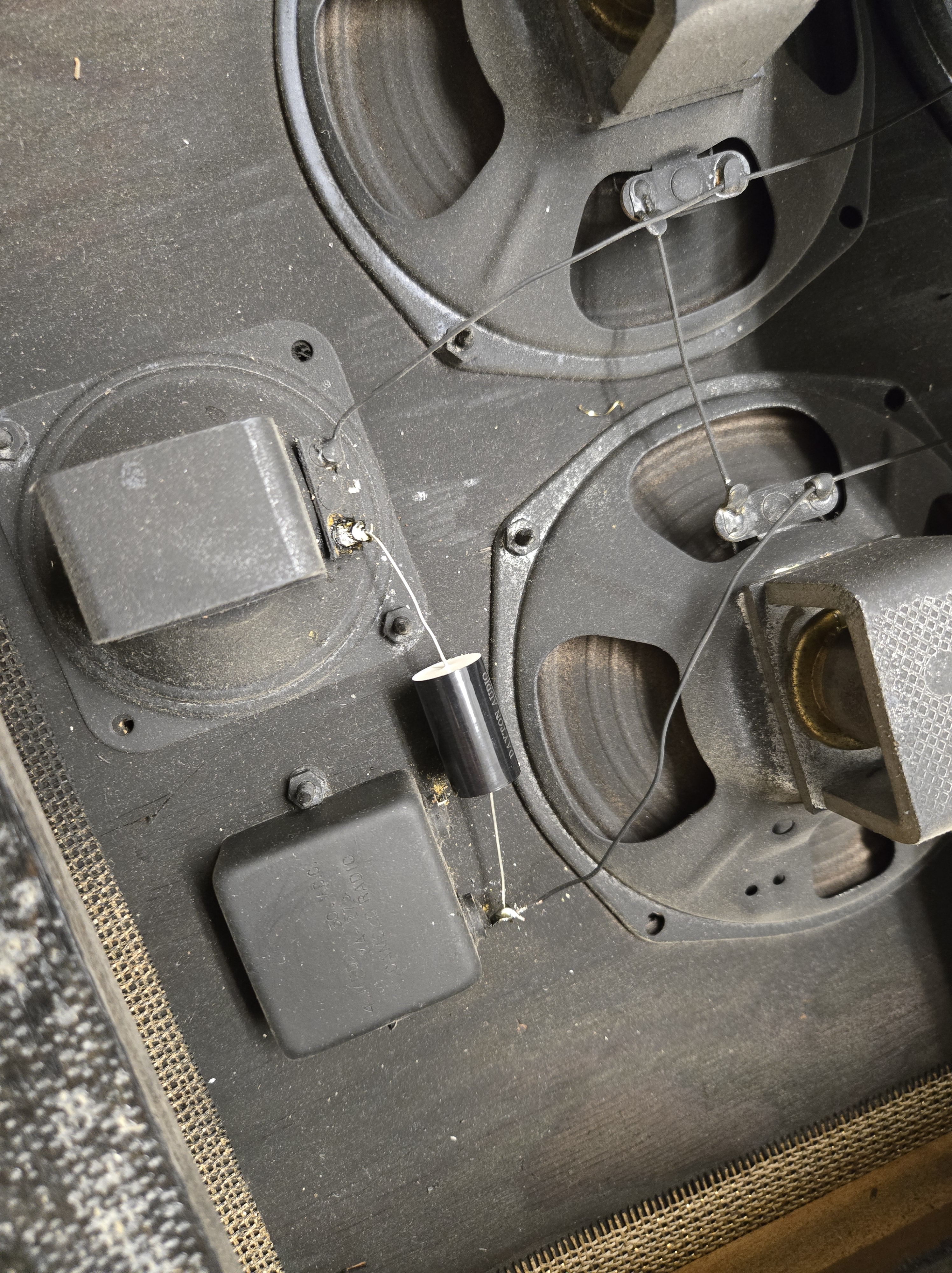
The drivers are arranged in series-parallel with the tweeter in parallel with the whole stack, through a simple crossover, for a nominal impedance of 8 Ohms. The simple first-order crossover used a single 4 uF capacitor. This is an oil-paper capacitor block. These are somewhat more reliable than other styles of vintage capacitor, although given the age and manufacturing tolerances, it was definitely due for replacement to ensure it would perform reliably for a long time to come. Each was replaced with a new 4 uF polypropylene capacitor, rated for a much higher voltage, which should offer decades of life compared with more precise transient response.
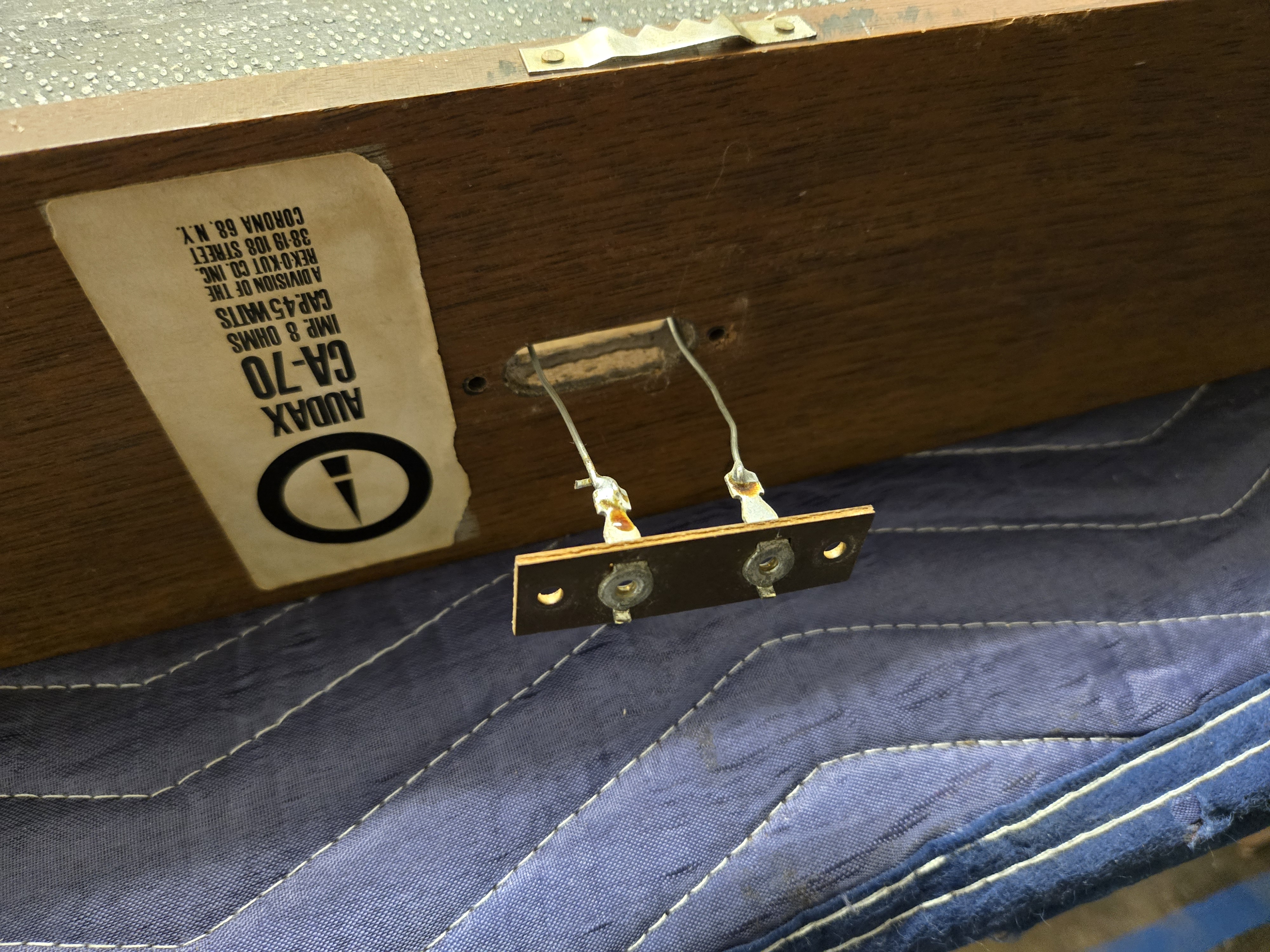
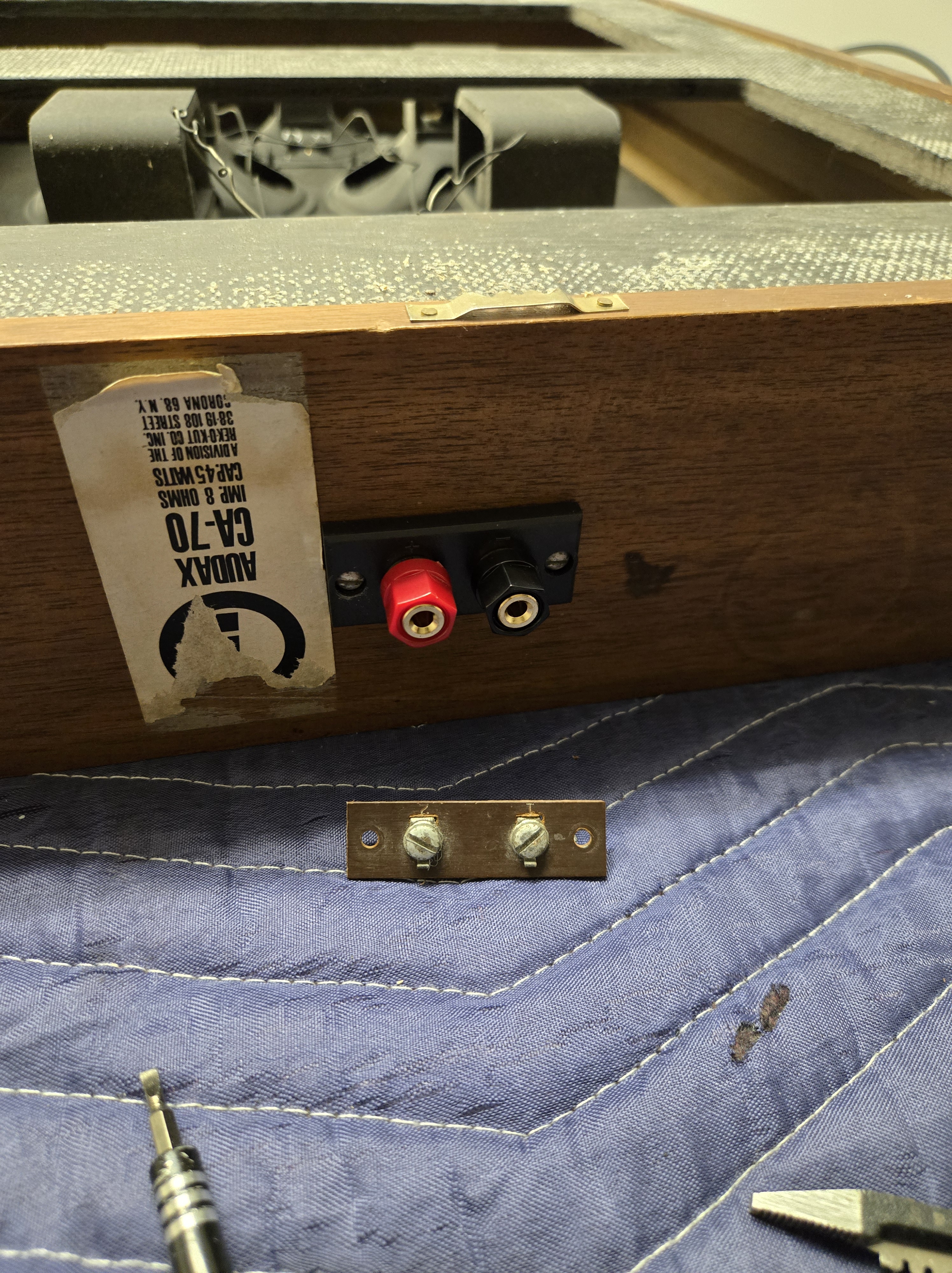
These originally came with basic screw terminals mounted on phenolic board; that’s not a great pairing for modern equipment and high end speaker cables. The spacing was perfect for a swap over to modern, standard spacing 5-way binding posts for your choice of banana plugs, spades, pins, or bare wire. (Interestingly enough, “5-way” referes to the fact that the assembly is made from 5 components, but there are in fact only 4 different ways to hook up cables to this type of conector.)
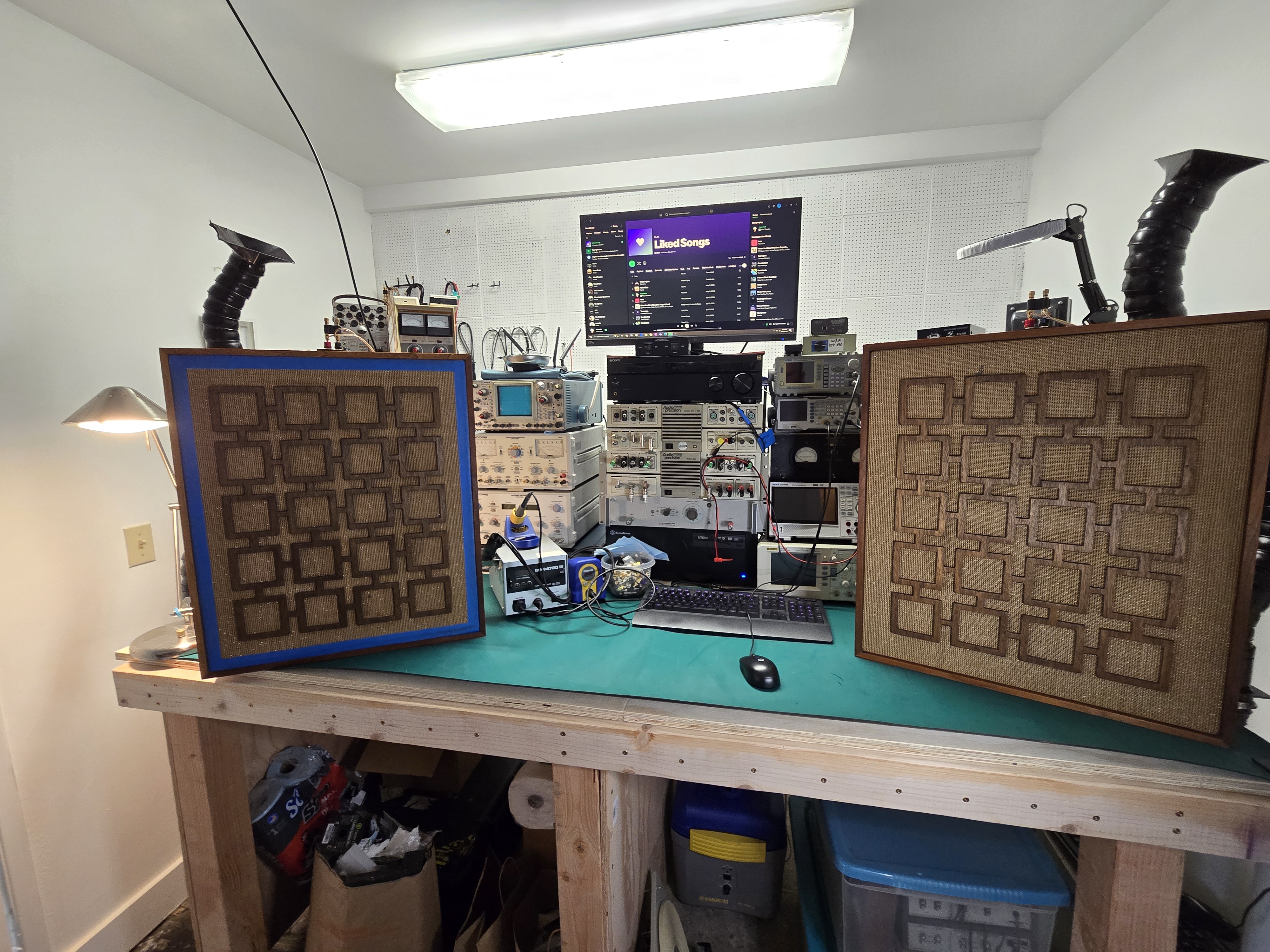
While waiting for these to finish their glow up, I hooked them up and started their break-in. As you’d expect, these needed some time to stretch their legs after resting in storage for decades. After about 20 hours of break in time playing a variety of styles of music at moderate volume, they’d had a chance to fully unlimber, and were sounding fantastic and ready to go to a new home. They have a really wide soundstage and fantastic mid-range definition, offering excellent listening from far left to right, unlike some of the excessive directivity you get with some more modern speakers. They sounded best when listening to jazz, vocals, classical music, acoustic performances, and early rock – just about anything that was current in the 50s and 60s. These had a very different character from many other designs of speakers I’ve heard throughout the years.
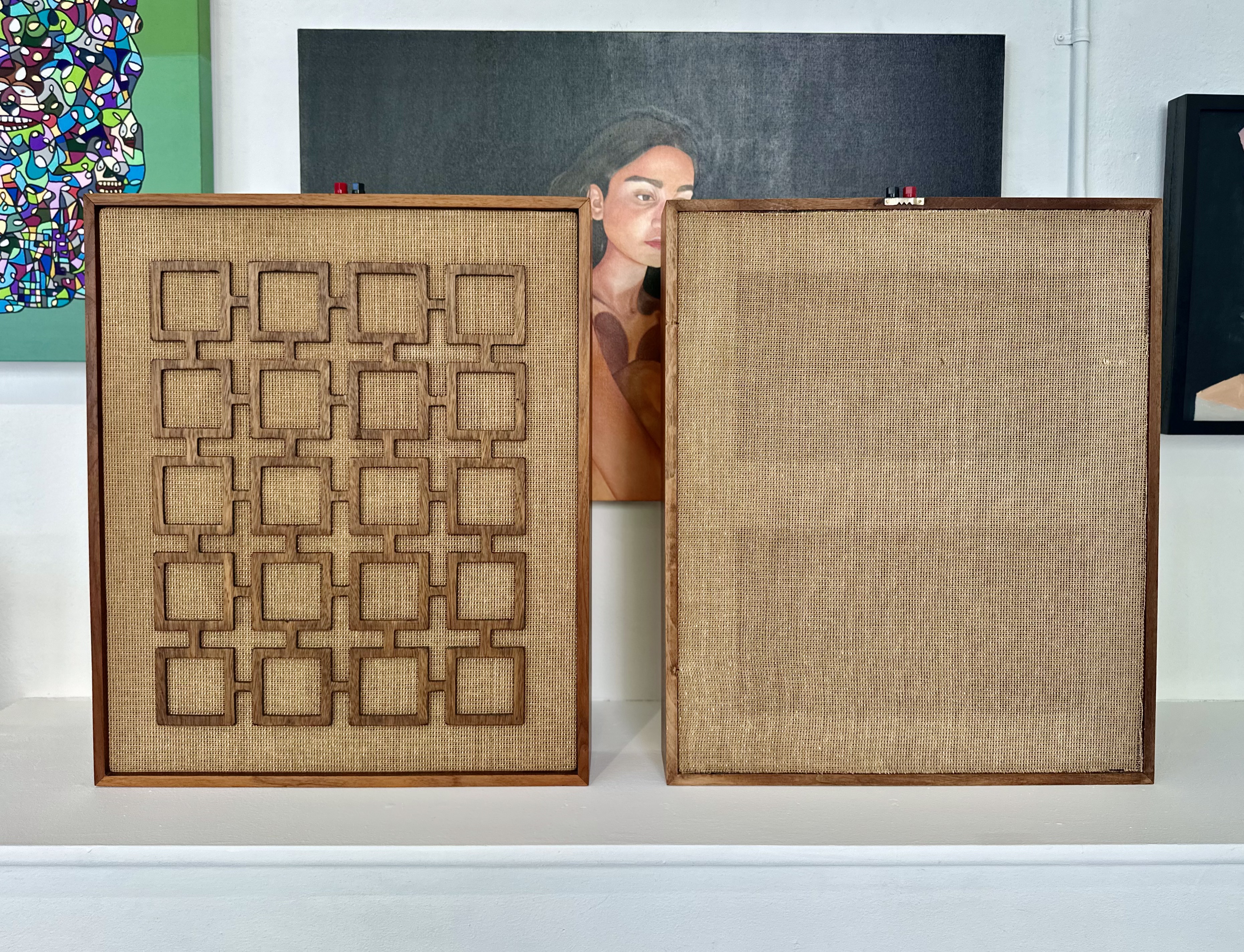
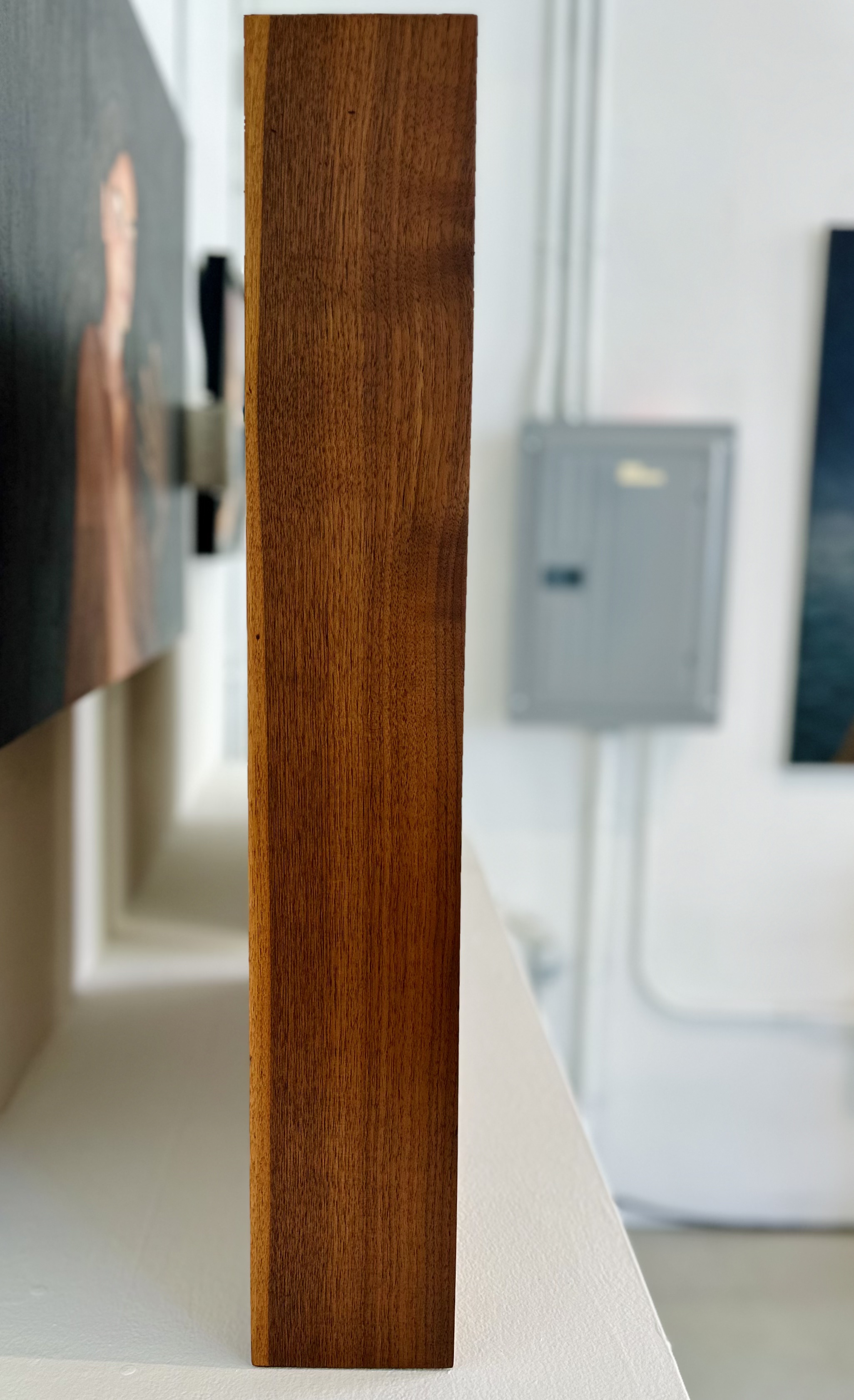
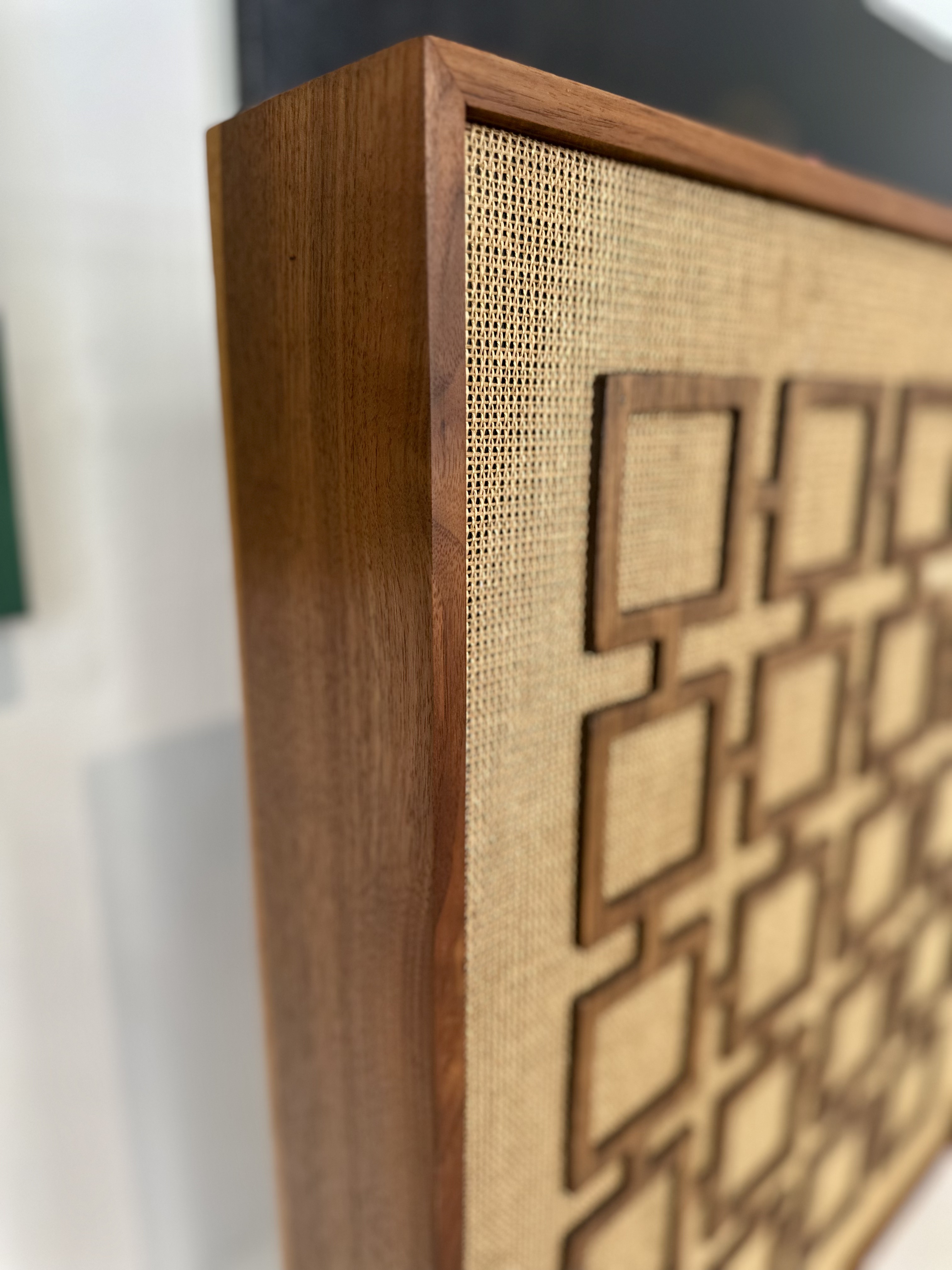
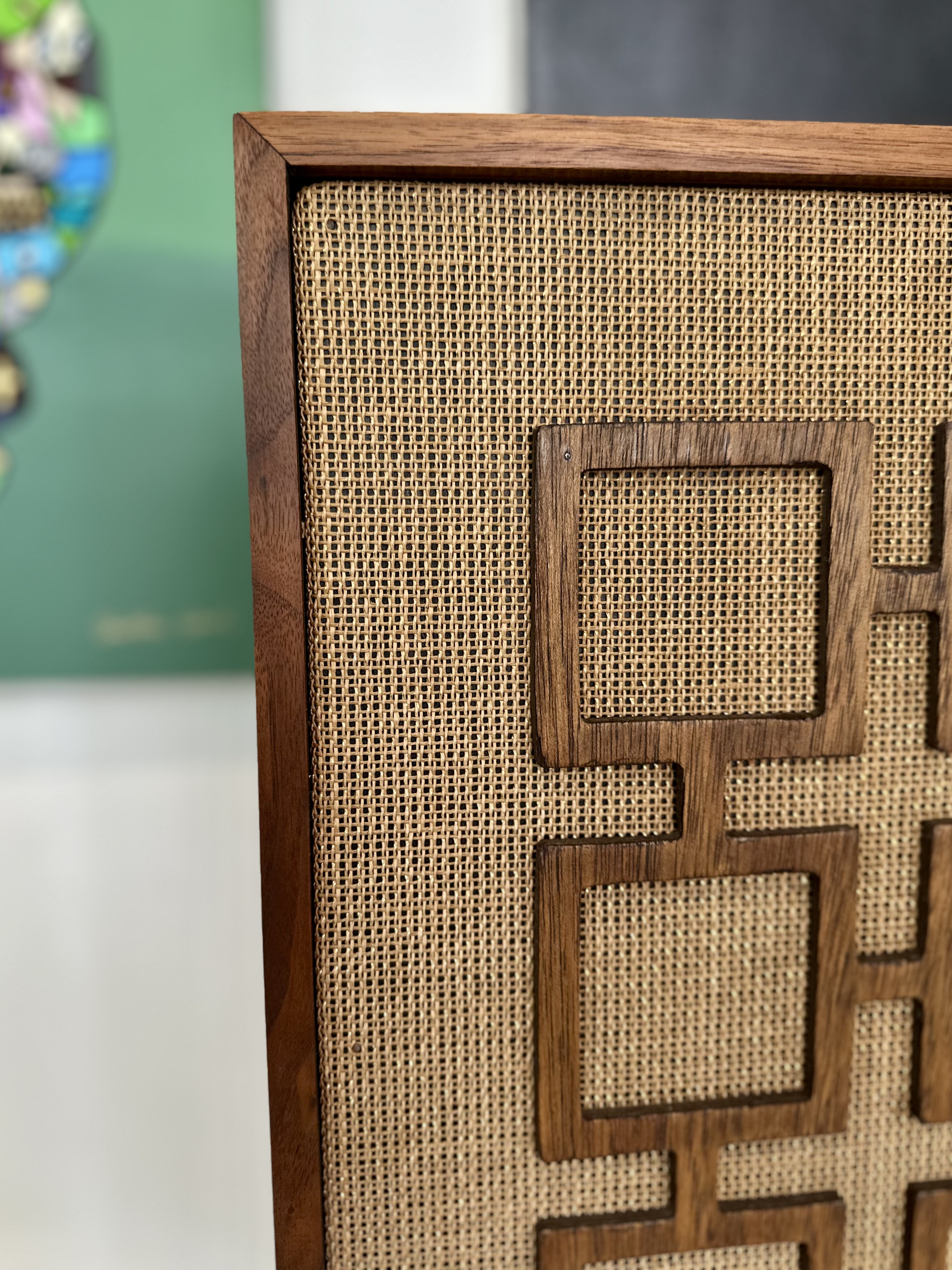
With a freshly refinished wood case and wood lattice, carefully cleaned rattan covering, and refurbished electrical components these are better than new and will make an absolutely beautiful centerpiece of someone’s vintage audio system, or a wonderful addition to their mid-century modern home decor. And in fact, they did! Within just a few days, these were snapped up, selling for $695 to a local collector. Happy listening!

